← All women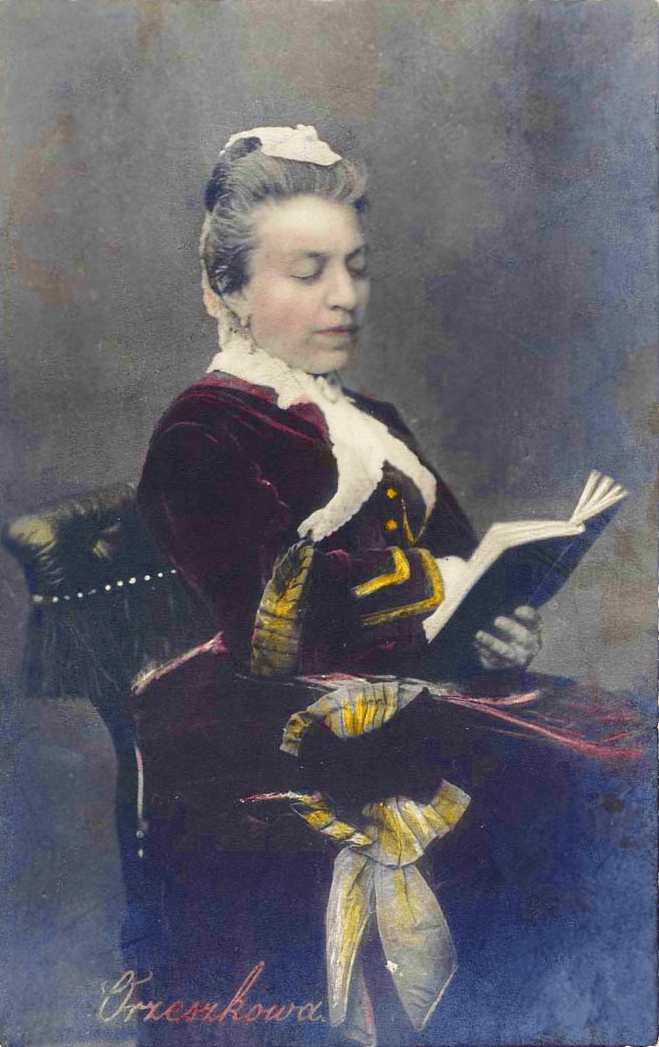
Polish · Literature · Activism
Eliza Orzeszkowa
June 6, 1841 – May 18, 1910
Early Life and Background
Eliza Orzeszkowa was born on June 6, 1841, in Milkowszczyzna, a small village in what is now Belarus, at the time part of the Russian Empire. She hailed from a noble Polish family, which provided her with the privilege of education uncommon for women of her era. Influenced by the intellectual atmosphere of her household, she was educated by private tutors and developed a strong interest in literature and social issues from a young age.
Career Beginnings and Development
Eliza married Piotr Orzeszko at the age of sixteen. However, the marriage ended in separation due to personal and ideological differences. Her writing career began following this separation, reflecting her commitment to social reform and women's education. Orzeszkowa's early works addressed issues like women's rights, Polish independence, and social justice, influenced heavily by the positivist movement.
Major Works and Accomplishments
Throughout her career, Eliza published numerous works, with one of her most famous novels being "On the Niemen" ("Nad Niemnem"), published in 1888. This novel is considered a masterpiece of Polish literature, exploring Polish identity and the perseverance of cultural values under foreign oppression. Her other notable works include "Marta" and "Cham," both of which emphasize social issues and advocate for the empowerment of women.
Awards, Honors, and Recognition
Eliza Orzeszkowa was nominated for the Nobel Prize in Literature in 1905, underscoring her influence and contribution to Polish literature and European thought. Her works were recognized internationally, making her an important literary figure in the promotion of realism and social consciousness in literature.
Personal Life
Eliza's personal life was marked by her separation from her husband, which allowed her the freedom to pursue her literary and social activism career. Despite personal challenges, she remained dedicated to her mission of enlightening society and advocating for the marginalized.
Legacy and Historical Impact
Eliza Orzeszkowa's legacy is profound. Her novels not only enriched Polish literature but also heightened awareness of social issues such as women's rights, inequality, and nationalism. Her commitment to portraying the struggles of the rural poor and advocating for women's education left a lasting impact on Polish society and literature.
Later Life and Death
In her later years, Eliza moved to Grodno, where she continued to write until her passing on May 18, 1910. Her death marked the end of an era for Polish literature, but her works continue to be celebrated and studied for their social relevance and literary beauty.
Dated achievements
2 indexed.
- Jun061841Literature
Birth of Eliza Orzeszkowa
Eliza Orzeszkowa was born in Milkowszczyzna on June 6, 1841.
View details Wikipedia: Eliza Orzeszkowa - May181910Literature
Death of Eliza Orzeszkowa
Eliza Orzeszkowa passed away on May 18, 1910, in Grodno.
View details