← All women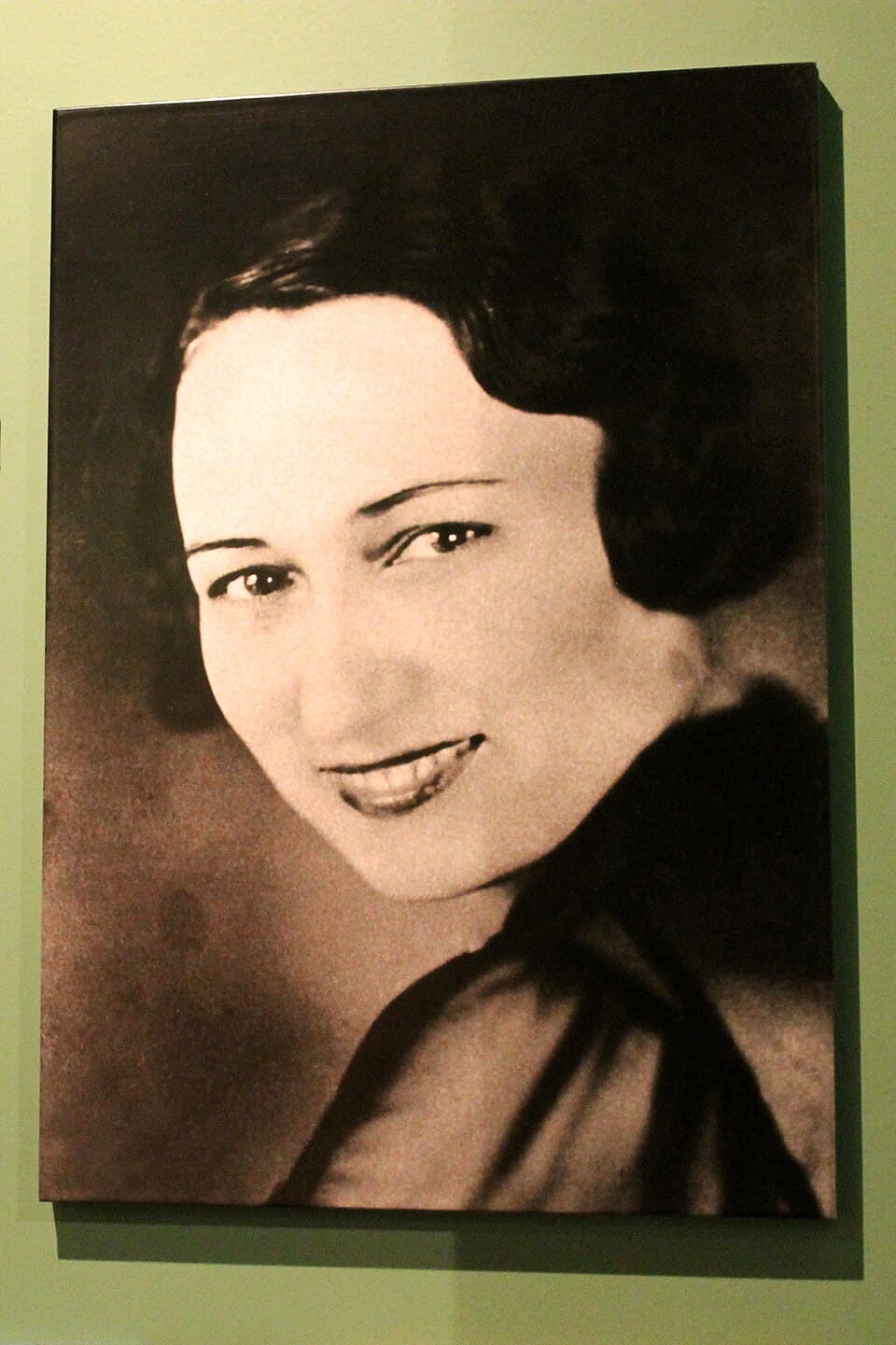
American · Sports · Activism
Effa Manley
March 27, 1897 – April 16, 1981
Early Life and Background
Effa Louise Brooks (later Effa Manley) was born on March 27, 1897, in Philadelphia, Pennsylvania, to Bertha Ford Brooks, a seamstress.[10][2][8] Many popular sources long listed her birth year as 1900, but detailed archival research by the Society for American Baseball Research (SABR) supports the 1897 date, which is now widely accepted in scholarly treatments.[10][1]
Manley grew up in a racially mixed household. Her mother was married to an African American man, and Effa was raised alongside Black half‑siblings, with a Black stepfather as the household’s male figure.[10][14] Although some accounts suggest she had white biological parents, she chose to live and be recognized as a Black woman in a society rigidly structured by racial segregation.[3][14] This choice—and the lived experience of racism she witnessed among family and neighbors—shaped her later activism and her deep identification with Black communities.
In Philadelphia, Manley attended local public schools. According to later biographical summaries, she graduated in 1916 from Penn Central High School, completing vocational training in practical subjects such as cooking, sewing, and oral expression.[7] These skills, combined with a keen eye for fashion and presentation, later informed her reputation as a stylish, socially connected woman who used public events and spectacle strategically in her baseball and civil‑rights work.
After high school, she moved to New York City, drawn by its economic opportunities and vibrant Black cultural and political life.[2][10] Harlem’s flourishing organizations, churches, and civic groups provided a fertile training ground for her development as an organizer, bookkeeper, and community leader. The context of Jim Crow discrimination, Depression‑era economic hardship, and emerging civil‑rights campaigns in Northern cities gave her an early education in the mechanics of protest and the importance of collective action.
Career Beginnings and Civil-Rights Activism
Before becoming known in baseball, Manley worked a variety of jobs, including in millinery and clerical work, which honed her administrative skills and financial discipline.[10] In Harlem, she became involved with local campaigns against discriminatory hiring and racist business practices. The most notable of these was the "Don’t Buy Where You Can’t Work" movement, an economic protest strategy that urged Black consumers to boycott white‑owned businesses that refused to employ Black workers.[10]
On September 16, 1935, Manley helped organize and served as treasurer for a major "Don’t Buy Where You Can’t Work" parade and boycott in Harlem, which drew thousands of participants.[10] As treasurer, she managed funds for leaflets, banners, and organizing meetings, providing essential infrastructure for the campaign. The boycott pressured several businesses to open jobs to Black employees, demonstrating the power of coordinated consumer activism in the pre‑civil rights era.
This experience established Manley as a capable organizer in New York’s Black community and highlighted the central role women played in the administration of social movements. Her work in Harlem foreshadowed the way she later used baseball promotions, benefit games, and community initiatives to connect sports with civil‑rights and relief efforts.
Entry into Negro League Baseball
Effa’s path into baseball leadership began with her relationship with Abraham (Abe) Manley, a businessman and baseball enthusiast. The couple met in New York and married in 1933.[10][14] Abe soon became involved in Negro League club ownership, and Effa joined him in those ventures.
In 1935, Effa and Abe Manley purchased the Brooklyn Eagles franchise in the Negro National League.[10][5] The team represented Black professional baseball at a time when Major League Baseball remained segregated. Ownership required substantial business acumen: arranging travel, scheduling games, managing gate receipts, and negotiating contracts in a financially precarious ecosystem where teams often folded or relocated.
In 1936, the Brooklyn Eagles merged with the Newark Dodgers to form the Newark Eagles, co‑owned by Effa and Abe.[10][1][13] While Abe held the formal ownership, sources consistently note that Effa took on the primary day‑to‑day management of the club. She handled payroll, booking stadium dates, transportation logistics, and promotional events, and she was deeply involved in personnel decisions. Over time, she became effectively the top executive of the Eagles and one of the most visible officials in Black baseball.[10][12]
From the mid‑1930s through the 1940s, Manley emerged as one of the first women of any race to run a professional baseball team.[12][17] She attended league meetings, argued with fellow (male) owners, and insisted on professional standards in player treatment and operations. Though some accounts loosely describe her as "the first woman to run a baseball team," historians generally note that she was among the earliest and most prominent women in such a role, even if precise comparative dating of all women executives is difficult.[12][18]
Building the Newark Eagles: Team Management and Community Work
As business manager, Manley combined meticulous administration with savvy marketing. She was known for decorating the ballpark, organizing special promotional days, and cultivating relationships with local media to boost attendance.[10][12] Her fashion sense—often wearing stylish outfits and hats—became part of her public persona and signaled that a woman could be authoritative and glamorous in a male‑dominated sports world.
Manley insisted on professional treatment for her players. She demanded prompt pay, suitable accommodations on the road, and organized travel, and she often intervened personally to resolve disputes and support players facing hardship.[12] Her approach contrasted with the sometimes haphazard operations of other Negro League clubs and earned the Eagles a reputation as a stable, well‑run organization.
Beyond baseball operations, she used the Eagles as a platform for community work. During the 1940s, she organized benefit games and special events to raise funds for Black servicemen and for civil‑rights causes. In 1943, she coordinated a "Day for Jackie Robinson" at Yankee Stadium, honoring Black soldiers and integrating wartime patriotism with racial justice messaging, though published sources do not provide an exact date for the event.[16] These activities reflected her belief that a Black baseball team should serve its community on and off the field.
Championship Glory: The 1946 Negro World Series
Under Manley’s leadership, the Newark Eagles assembled an exceptionally strong roster in the mid‑1940s, including future Major League stars Monte Irvin and Larry Doby.[1][2][12] The 1946 season marked the peak of the club’s success.
In 1946, the Eagles won the Negro National League pennant and advanced to the Negro World Series against the powerhouse Kansas City Monarchs.[2][10] The series was intensely competitive, showcasing high‑level Black baseball just as Major League Baseball was beginning to integrate.
On October 5, 1946, at Ruppert Stadium in Newark, the Eagles defeated the Monarchs 3–2 in Game 7 to clinch the Negro World Series title.[2][10] Manley’s day‑to‑day management—ensuring the team’s financial stability, organizing logistics, and maintaining morale—was critical to this success. The championship validated her vision of a professionally run club and solidified her reputation as an outstanding baseball executive.
For the broader history of the Negro Leagues, the 1946 championship symbolized the league’s competitive excellence just before integration began to dismantle its economic foundations. For women’s history, it marked a rare instance of a woman serving as the effective top executive of a championship professional baseball team in the United States.
Confronting Major League Baseball and Defending Negro League Rights
The late 1940s brought dramatic change to Black baseball. Major League Baseball’s integration, beginning with Jackie Robinson in 1947, opened new opportunities for individual Black players but destabilized Negro League franchises, as star performers left and fan interest shifted.[8][17]
Manley had long argued that Major League clubs owed compensation to Negro League teams that had developed these players. She maintained that the Negro Leagues were legitimate professional organizations whose contracts deserved recognition rather than being ignored or violated.[10][12]
On July 24, 1948, she signed an agreement with the New York Giants granting them the contract of Monte Irvin in exchange for $5,000 in compensation.[10][4] This deal made her one of the first Negro League executives to secure such payment from a Major League team and helped establish a precedent that MLB franchises should negotiate and compensate, not simply poach, Negro League talent.[15]
Despite such efforts, the financial pressures of integration proved overwhelming. In 1948, the Newark Eagles franchise folded.[10][12] Manley sold the club and shifted her energies toward preserving the memory of the Negro Leagues and advocating for former players, whom she believed had been denied due recognition and financial security.
Awards, Honors, and Recognition
During her lifetime, Effa Manley did not receive the full measure of public recognition her work warranted. She was known within Black baseball circles as a forceful, competent executive and occasionally featured in press accounts, but mainstream institutions largely overlooked her contributions.[11][12]
Her most significant honor came posthumously. In 2006, the National Baseball Hall of Fame convened a special Committee on African American Baseball to reconsider the contributions of Negro League players and executives.[2][10] On February 27, 2006, that committee elected Effa Manley to the Hall of Fame, explicitly citing her leadership of the Newark Eagles and her advocacy for Black players.[2][7][14] She thus became the first woman ever elected to the Hall of Fame in Cooperstown.
On July 30, 2006, she was formally inducted at the Hall’s annual Induction Ceremony in Cooperstown, New York, her plaque installed among baseball’s greatest figures.[1][8][5] As of the mid‑2020s, Manley remains the only woman in the National Baseball Hall of Fame, a fact often noted by historians discussing gender disparities in sports leadership and recognition.[5][12][16]
Beyond the Hall, Manley’s life has been the subject of multiple scholarly and popular works. Historian Bob Luke authored The Most Famous Woman in Baseball: Effa Manley and the Negro Leagues, a detailed biography.[11][13] More recently, Rachael Robinson and others have contributed to renewed interest in Manley through books such as Baseball’s Leading Lady: Effa Manley and the Rise and Fall of the Negro Leagues.[16][19] Articles in outlets such as History.com, Smithsonian Magazine, and MLB.com have further disseminated her story to broad audiences.[8][16][4]
Personal Life
Effa Manley’s personal life intertwined closely with her professional work. Before marrying Abe, she had an earlier marriage to a man named Bush, which ended in divorce sometime between 1916 and 1932.[6] Little detailed information survives about that relationship, reflecting broader historical patterns in which women’s early marriages are sparsely documented unless connected to public events.
Her marriage to Abe Manley in 1933 proved foundational to her later career. The couple shared a passion for baseball and for community advancement, though Abe’s health and involvement fluctuated over the years.[10][14] Some sources indicate that she became sole owner of the Newark Eagles after Abe’s death during the late 1940s, managing the team until she sold it in 1948.[7] The marriage itself was marked by collaboration in business and social life, with Effa often taking the more visible role in league meetings and community events.
Manley did not have children. She expressed maternal concern for her players, often describing them in familial terms and intervening in their lives beyond the ballpark, from financial assistance to counseling on personal matters.[10][12] Her social life included participation in Harlem’s nightlife and civic organizations, where she cultivated connections that supported both her activism and her promotion of the Eagles.
Later Life and Death
After the Newark Eagles folded in 1948, Manley devoted much of her energy to preserving Negro League history and advocating for former players.[10][12] She wrote letters to Major League officials, journalists, and historians, arguing that Negro League veterans deserved pensions and that their statistics and accomplishments should be properly documented.
She also became a kind of unofficial archivist and "keeper of the flame" for Black baseball, amassing clippings, memorabilia, and records related to the Eagles and other teams.[11] Her efforts laid groundwork for the later emergence of museums, research organizations, and institutional recognition of Negro League history.
In her final years, Manley lived in California. According to biographical accounts, she suffered a heart attack and died on April 16, 1981, in Los Angeles, California, at age 84.[10][1][7] She passed away decades before the Hall of Fame and Major League Baseball accorded full recognition to the Negro Leagues and to her own contributions.
Legacy and Historical Impact
Effa Manley’s legacy spans several domains: sports management, civil‑rights activism, women’s leadership, and historical memory. As co‑owner and business manager of the Newark Eagles, she demonstrated that a woman could not only participate in professional sports administration but excel in it, running a championship‑winning club in an era when nearly all executives were men.[2][12]
Her insistence on fair treatment for players—prompt pay, decent accommodations, and respect—contrasted with more exploitative practices and helped establish higher standards in Negro League operations.[12] Her advocacy for contractual rights, notably in the Monte Irvin compensation agreement with the New York Giants, challenged Major League Baseball’s tendency to ignore Black clubs’ interests and influenced later debates about economic justice in sports.[10][4]
As a civil‑rights activist, Manley connected economic protest, wartime patriotism, and sports culture. The 1935 "Don’t Buy Where You Can’t Work" campaign and her wartime benefit games show how she leveraged organizational skills and public spectacle to pursue racial equality.[10][16] In this sense, she stands within a lineage of women who used behind‑the‑scenes leadership and logistical expertise to drive social movements.
Her posthumous induction into the National Baseball Hall of Fame in 2006 has become a central reference point in discussions of gender and race in sports. Being the first—and as of the 2020s, the only—woman in the Hall underscores both her singular achievements and the persistent exclusion of women from top‑level recognition in baseball history.[5][16] Historians and journalists frequently cite her story to illustrate the need for broader acknowledgment of women’s contributions, not only as players in women’s leagues but as executives, promoters, and activists.
Today, Manley is celebrated as "baseball’s leading lady" and "the most famous woman in baseball," titles that reflect both her pathbreaking role and the renewed interest in Negro League history.[11][16][19] Her life narrative illustrates how a woman born into a working‑class Philadelphia household at the turn of the century navigated racial and gender barriers to become a central figure in Black professional baseball and a symbol of the ongoing struggle for equity and remembrance in American sports.
Dated achievements
7 indexed.
- Mar271897Sports
Birth of Effa Louise Brooks (Effa Manley)
Effa Louise Brooks, who would become Negro Leagues executive Effa Manley, was born in Philadelphia, Pennsylvania.
View details Effa Manley - SABR Biography Project - Sep161935Activism
Organizer and treasurer of Harlem "Don't Buy Where You Can't Work" protest
Manley helped organize and served as treasurer for the landmark Harlem economic boycott campaign demanding jobs for Black workers.