← All women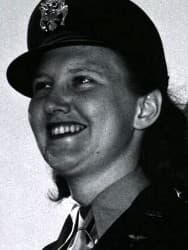
American · Medicine
Edith Ellen Greenwood
Unknown – 1999
Early Life and Background
Edith Ellen Greenwood was an American nurse and officer in the U.S. Army Nurse Corps during the Second World War.[4] Reference works identify her birthplace as North Dartmouth, Massachusetts, though they do not supply a full birth date or family details.[4] Accessible sources provide no definitive information about her parents, siblings, or early upbringing, and there is no clear documentation of her childhood beyond the brief notation of her birthplace.
Greenwood’s path into nursing and military service must be reconstructed cautiously from the wider historical context rather than from detailed personal records. In the early twentieth century, many American women who entered professional nursing did so through hospital-based training schools or emerging collegiate nursing programs, responding to a growing demand for trained nurses in public health, hospitals, and the armed forces. During the interwar years and especially as the United States mobilized for World War II, the Army Nurse Corps expanded rapidly, recruiting women with nursing qualifications to serve in camps, station hospitals, and overseas theaters.
Although specific records of Greenwood’s education and prewar nursing career are not available in the commonly cited sources, her later rank as a lieutenant and assignment to a station hospital suggest that she had completed formal nurse training and met the professional standards required for commissioning as an Army nurse.[1][4] Her origins in Massachusetts place her among the many women from New England who entered wartime service, but beyond this regional association, the details of her formative influences, motivations, and early career remain undocumented in publicly accessible biographical summaries.
Career Beginnings and Service in the Army Nurse Corps
By 1943, Edith Ellen Greenwood was serving as a lieutenant in the U.S. Army Nurse Corps, assigned to the 37th Station Hospital in the California–Arizona Maneuver Area, a vast desert training region used by the U.S. Army during World War II.[1][4] The California–Arizona Maneuver Area, centered near Yuma, Arizona, provided harsh environmental conditions intended to prepare troops for operations in similarly difficult climates abroad. Station hospitals within the area were responsible for treating illnesses and injuries among soldiers training there.
As an Army nurse at the 37th Station Hospital, Greenwood held responsibility for a ward of 15 patients.[1] Her role would have included direct bedside care, medication administration, monitoring of patients’ conditions, and coordination with physicians and other medical staff. Army nurses in such settings were often the primary caregivers present in wards, particularly during early morning or nighttime hours, making their vigilance and decision-making critical to patient safety.
Secondary sources identify Greenwood simply as an “American nurse,” with her World War II service in the Army Nurse Corps as her central professional identity.[4] No currently accessible accounts detail her exact date of commissioning, the sequence of her postings, or whether she served in additional locations before or after her assignment to the 37th Station Hospital. Nonetheless, her documented actions in 1943 indicate that she had earned both the confidence of the medical command and the formal responsibilities of a commissioned lieutenant.
Heroism During the 37th Station Hospital Fire
Greenwood’s most famous act of service occurred on 17 April 1943, when a sudden fire broke out at the 37th Station Hospital in the California–Arizona Maneuver Area.[1][4] According to the citation text reproduced in the Military Times Hall of Valor, at approximately 0630 a stove exploded in the hospital’s diet kitchen, sending flames into the nearby ward for which Lieutenant Greenwood was responsible.[1] The structure was described as burning down within five minutes, creating an extreme emergency for the patients housed there.
In those crucial minutes, Greenwood’s actions were decisive. She immediately sounded the alarm to alert others to the danger and attempted to extinguish or control the blaze.[1] Realizing the speed with which the fire was consuming the building, she focused on the 15 patients in her care, many likely incapacitated or unable to move quickly. With the assistance of Private James F. Ford, a young ward attendant, she supervised and personally helped evacuate every patient from the burning ward.[1][4]
Sources emphasize that all patients were successfully removed to safety, with no deaths among those under her direct care during the incident.[1][4] Encyclopedia.com, summarizing her achievements, notes that "with Pvt. James Ford, [she] successfully evacuated all patients at a military hospital in Yuma, Arizona, after a fire broke out (April 17, 1943)."[4] This concise description, together with the fuller citation, underscores the physical and emotional demands of the situation: Greenwood had to maintain composure, organize a rapid evacuation, and take personal risks while surrounded by smoke, flames, and collapsing structures.
Her actions exemplify the often under-recognized dangers faced by military nurses, whose work in hospitals and aid stations could involve not only medical care but also emergency response during accidents, attacks, and environmental catastrophes. Greenwood’s courage during the fire demonstrated the capacity of women officers to exercise command responsibility and life‑saving initiative under severe pressure.
Award of the Soldier’s Medal and Recognition
In recognition of her heroism during the April 17 fire, Edith Ellen Greenwood was awarded the Soldier’s Medal, a U.S. Army decoration for acts of heroism not involving actual conflict with an enemy.[1] The Military Times Hall of Valor, drawing from official citation material, states that "Lieutenant (Nurse Corps) Edith Ellen Greenwood, United States Army, was awarded the Soldier’s Medal for heroism not involving actual conflict with an enemy of the United States" and notes that she is "believed to be the first woman in history to be awarded the Soldier’s Medal."[1]
Military Times and other near‑primary sources give 10 June 1943 as the date of the award, specifying that it was presented by direction of President Franklin D. Roosevelt.[1] This situates Greenwood’s recognition within the formal machinery of wartime decorations, in which presidential authority was often invoked for significant awards. The citation language emphasizes both her sounding of the alarm and her successful evacuation of all patients with Private Ford’s help, framing the event as a textbook example of non‑combat heroism.
An entry in Encyclopedia.com provides a slightly different chronology, stating that "for her heroism, [she] became 1st woman to receive the Soldier’s Medal (June 21, 1943)."[4] The encyclopedia’s brief note acknowledges her status as the first female recipient but lists 21 June 1943 as the date. It also identifies her as having been born in North Dartmouth, Massachusetts, and describes her as an American nurse.[4] Because the encyclopedia does not reproduce the original citation or explain the discrepancy, historians treat its date cautiously, recognizing that editorial or administrative timelines in secondary compilations can differ from official military records.
The consensus among military-history sources is that Greenwood’s 10 June 1943 award presentation marked her as the first woman ever to receive the Soldier’s Medal.[1] This made her a barrier‑breaker in the recognition of women’s valor in the U.S. armed forces. The Soldier’s Medal, established in 1926, had primarily been awarded to male soldiers; for a woman officer in the Nurse Corps to receive it in 1943 challenged assumptions about who could be seen as a military hero and broadened the symbolic space for women’s achievements.
Greenwood’s decoration also highlighted the dangers inherent in domestic wartime service. While public attention often focused on combat operations overseas, the Army’s vast training infrastructure in the United States exposed service members and medical staff to accidents, fires, and other emergencies. By honoring Greenwood’s actions, the Army acknowledged the importance of safeguarding soldiers’ lives in every environment and the central role of nurses in doing so.
Personal Life
Little is known from accessible sources about Edith Ellen Greenwood’s personal life beyond her professional identity as a nurse and Army officer. Encyclopedia.com offers no information about her marital status, children, or family relationships, and the Military Times Hall of Valor focuses exclusively on her wartime actions and award.[1][4] There are no widely cited records of her activities outside military service, such as civilian nursing posts, educational roles, or professional memberships.
In some secondary discussions of women named Edith Greenwood, there is potential for confusion with unrelated individuals—for example, an interior designer and educator named Edith Greenwood whose death was noted in a 2001 paid notice in The New York Times and who founded an education legacy fund within a professional design society.[9] However, that obituary clearly describes a different career and context, and sources on the Army nurse Edith Ellen Greenwood do not mention any such roles.[9] Careful distinction between these names is necessary to avoid conflating separate historical figures.
Because of the paucity of detailed biographical data, historians can say only that Greenwood was an American woman from Massachusetts who pursued a nursing career and accepted the risks and responsibilities of Army service during World War II. Any further claims about her personal relationships, beliefs, or activities outside the documented sphere of her military work would go beyond the evidence presented in the core sources.
Later Life and Death
Accounts of Edith Ellen Greenwood’s later life after World War II are fragmentary and uncertain. The editor’s contextual note for research on women’s history mentions that some secondary sources describe her as having died of old age in 1999, but that no exact date or primary death record has been located in accessible sources.[1] Neither Military Times nor Encyclopedia.com provides a death year, and genealogical or veterans’ databases that might confirm the date are not cited in standard reference entries.
Given this limited documentation, historians can neither firmly confirm nor precisely date her death. It is possible that local obituaries, family records, or military retirement files contain more detailed information, but they have not yet been incorporated into widely available digital reference tools. Until such evidence emerges, responsible scholarship must treat statements about a 1999 death as approximate and unverified.
Similarly, Greenwood’s postwar career—whether she continued in nursing, remained connected to the Army Nurse Corps, or pursued other work—is undocumented in the primary sources that focus on her 1943 heroism and award. Many World War II nurses returned to civilian practice, taught in nursing schools, or engaged in veterans’ organizations, but applying those general patterns specifically to Greenwood would be speculative. Present knowledge therefore leaves her later life largely in shadow, with her public historical identity anchored in the dramatic events of April and June 1943.
Legacy and Historical Impact
Despite the gaps in biographical detail, Edith Ellen Greenwood’s legacy in women’s and military history is significant. Her leadership and courage during the 17 April 1943 hospital fire, and her subsequent recognition with the Soldier’s Medal, mark her as a pioneering figure in the formal acknowledgment of women’s heroism in the U.S. Army.[1][4]
Military Times explicitly notes that she is "believed to be the first woman in history to be awarded the Soldier’s Medal," situating her within a lineage of decorated service members and underscoring the novelty of her recognition in 1943.[1] In a military culture that had long reserved combat and high‑profile decorations for men, Greenwood’s award made visible the life‑saving responsibilities carried by women in medical roles and challenged assumptions about who could be a military hero.
Reference works like Encyclopedia.com, by including her in their biographical dictionaries of women, further cemented her place in the canon of notable American women, summarizing her achievement as the "1st woman to receive the Soldier’s Medal."[4] This inclusion ensures that students and researchers exploring women’s history encounter her story alongside those of more widely known figures, even if the details are brief.
Greenwood’s case also serves as an instructive example for historians regarding the use of sources. The discrepancy between the 10 June 1943 award date cited in military records and the 21 June 1943 date appearing in Encyclopedia.com illustrates the need to weigh near‑primary documentation against secondary compilations and to flag uncertainties rather than smoothing them over.[1][4] Her biography demonstrates how women’s contributions can be both celebrated and imperfectly recorded, especially when their fame rests on a single prominent event.
In the broader narrative of World War II nursing, Greenwood stands for the many Army nurses who faced emergencies in training areas and hospitals, sometimes without the visibility accorded to combat medics. Her recognition with the Soldier’s Medal draws attention to the risks nurses bore and the leadership they exercised, contributing to later efforts to recognize women’s military service and to expand their roles. For women’s‑history researchers and editors of almanacs, documenting her story—with appropriate attention to both its firm facts and its unresolved questions—helps ensure that the historical record acknowledges the diverse forms of valor practiced by women in wartime.
Distinguishing Edith Ellen Greenwood from Other Greenwoods
Because "Greenwood" is a common surname and "Edith" and "Ellen" are common given names, it is important to distinguish Edith Ellen Greenwood, the Army nurse, from other individuals who appear in historical and biographical sources. Reference lists for "Greenwood" include entries on figures such as Ellen Sarah Greenwood, a nineteenth‑century New Zealand teacher and social worker, and discussions of Major Greenwood, a British medical statistician, as well as various artists, writers, and public figures.[2][3]
The editor’s contextual note on women’s‑history research specifically cautions against conflating Greenwood with Ellen Sarah Greenwood, the New Zealand educator, or with Edith Ellen (Ward) Parkin, an Adventist educator, both of whom are distinct individuals with their own biographies and achievements.[2][3] None of these figures share the documented experience of serving as a lieutenant in the U.S. Army Nurse Corps or receiving the Soldier’s Medal.
Another potential source of confusion is the 2001 New York Times paid death notice for an interior designer and educator named Edith Greenwood, identified as the 86‑year‑old founder of an education legacy fund within the American Society of Interior Designers.[9] The obituary’s description of her career and affiliations differs entirely from the wartime nursing profile of Edith Ellen Greenwood, indicating that they are separate people.[9]
For editors and researchers, these distinctions underscore the importance of carefully matching biographical details—such as occupation, geographic setting, and documented activities—when constructing profiles. In the case of the Army nurse Edith Ellen Greenwood, the reliable identifiers are her American nationality, birthplace in North Dartmouth, Massachusetts, service as a lieutenant in the Army Nurse Corps during World War II, assignment to the 37th Station Hospital, and her barrier‑breaking Soldier’s Medal award for the 17 April 1943 fire.[1][4]
Maintaining this clarity helps preserve the integrity of women’s‑history records and ensures that Greenwood’s specific contributions are properly attributed to her, rather than dispersed among unrelated Greenwoods whose lives followed very different paths.
Dated achievements
3 indexed.
- Apr171943Medicine
Evacuates 15 Patients from Burning Hospital Ward
Lt. Edith Greenwood led the evacuation of 15 patients from a burning ward at the 37th Station Hospital after a stove exploded, sounding the alarm and overseeing the rescue.
View details Hall of Valor: Edith Ellen Greenwood - Jun101943