← All women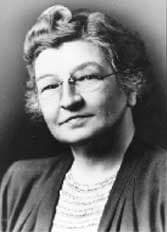
American · Science
Edith Clarke
February 10, 1883 – October 29, 1959
Early Life and Background
Edith Clarke was born on February 10, 1883, in Ellicott City, Maryland. After losing both parents by the age of twelve, Clarke developed a resilience that would carry her through her pioneering career. Inspired by her engineer brother, she was drawn to engineering and mathematics from an early age. Her educational journey was marked by both brilliance and determination. She attended Vassar College, studying mathematics and astronomy, graduating in 1908. Determined to pursue engineering, Clarke worked as a "computer" for AT&T before enrolling at the Massachusetts Institute of Technology (MIT).
Career Beginnings and Development
In 1919, Clarke became the first woman to earn a Master of Science degree in electrical engineering from MIT. She defied societal norms by entering into an overwhelmingly male-dominated field. Clarke's talent and hard work were quickly recognized by General Electric, where she became the first professionally employed woman electrical engineer in the United States in 1922. At GE, she was initially hired as a supervisor of women "computers", but her potential would soon see her conducting her own research and development.
Major Works, Discoveries, and Accomplishments
Clarke's most famous invention was the Clarke calculator, a graphical device she patented on September 1, 1925. This instrument, filed on June 8, 1921, significantly sped up calculations necessary for power transmission line computations. On February 8, 1926, she became the first woman to deliver a paper at the American Institute of Electrical Engineers (AIEE) convention, presenting on "Steady-State Stability in Transmission Systems". This breakthrough marked the recognition of her expertise in the field.
Awards, Honors, and Recognition Received
Among her numerous accolades, in 1948, she was elected the first female Fellow of the AIEE, underscoring her pioneering contributions to electrical engineering. Additionally, in 1954, she received the Society of Women Engineers Achievement Award. Clarke's contributions were so substantial that she was posthumously inducted into the National Inventors Hall of Fame in 2015 for her invention of the Clarke calculator.
Personal Life
Clarke's personal life was largely focused on her career. She did not marry, choosing instead to dedicate herself to breaking barriers in engineering. Her life in society often echoed the isolated perseverance necessary to excel in a field dominated by men.
Legacy and Historical Impact
Edith Clarke left an indelible mark on the field of electrical engineering. She not only advanced technical knowledge but also paved the way for women in engineering, challenging stereotypes and expanding opportunities for future generations. Her textbooks, particularly "Circuit Analysis of A-C Power Systems", became key resources in the field.
Later Life and Death
Clarke's later years continued to be productive and influential. She became the first woman to teach electrical engineering as a full professor at the University of Texas at Austin in 1947, a position she held until her retirement in 1957. Edith Clarke passed away on October 29, 1959, in Olney, Maryland, leaving behind a legacy of innovation and progress.
Dated achievements
5 indexed.
- Feb101883Science
Birth in Ellicott City, Maryland
Born in Ellicott City, Maryland; orphaned at twelve.
View details Library of Congress Name Authority File - Jun081921Science
Files patent for the Clarke calculator
Filed application Serial No. 476,075 for the Clarke Calculator.
View details