← All women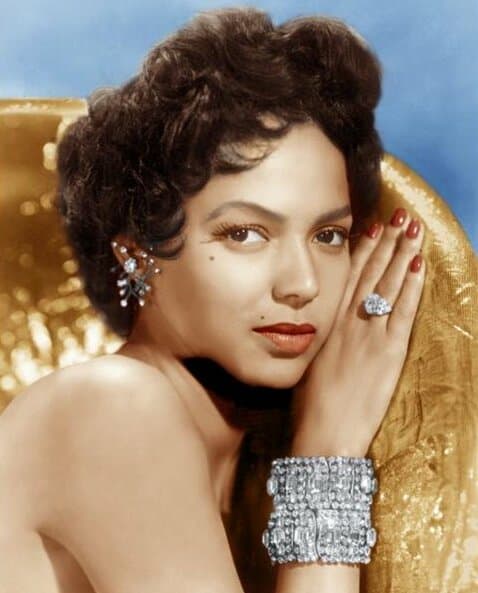
American · Arts
Dorothy Dandridge
November 9, 1922 – September 8, 1965
Early Life and Background
Dorothy Jean Dandridge was born on November 9, 1922, in Cleveland, Ohio, United States.[1][2][13][16] She was the younger of two daughters of Ruby Jean Butler Dandridge, an entertainer and actress, and Cyril H. (or Cyrus) Dandridge, a cabinet maker and minister.[1][4][7][9][13] Her parents’ marriage was troubled, and they separated soon after Dorothy’s birth, leaving Ruby to raise Dorothy and her sister Vivian largely on her own.[1][4][7] Ruby’s own aspirations and work as a performer in radio and film exposed Dorothy early to the world of entertainment and provided a model for how Black women might attempt to navigate the segregated industry.[1][3][4][11]
During Dorothy’s childhood, Ruby moved the family frequently while seeking performance opportunities and managing children’s acts.[5][7] The girls’ formal schooling was intermittent, as touring and rehearsals often took precedence over classroom instruction.[5][13] Dorothy’s upbringing unfolded against the backdrop of the Great Depression and the entrenched racial segregation of the era, which restricted where Black families could live, work, and attend school.[5][13] Cleveland’s growing African American community and its churches and social clubs provided some support, but opportunities for Black performers were sharply limited in mainstream institutions.[3][5]
Despite these constraints, Ruby nurtured her daughters’ talents, organizing them into performance groups that could earn money on the road.[5][13] Dorothy, shy offstage but confident in performance, developed early skills in singing, dancing, and comedic timing. The combination of a demanding stage mother, economic necessity, and a racially stratified entertainment world shaped a childhood that was both precarious and filled with artistic training—conditions that later enabled her to transition into professional film and nightclub work.[5][7]
Career Beginnings: Vaudeville and the Dandridge Sisters
In the early 1930s, Ruby Dandridge crafted a children’s vaudeville act that toured the segregated venues known collectively as the "Chitlin’ Circuit"—a network of theaters and clubs where Black performers could appear for predominantly Black audiences.[5][13] Dorothy and Vivian performed in this act from a young age, gaining experience onstage in front of live audiences and traveling through the South and Midwest.[5][13] By the mid‑1930s, the sisters joined with friend Etta Jones to form a teenage singing trio sometimes referred to as the Dandridge Sisters, which found success in prominent New York venues such as the Cotton Club and the Apollo Theater.[1][5][8][11]
These appearances were crucial to Dandridge’s development as a performer. At the Cotton Club, one of Harlem’s most famous nightspots, Black entertainers played to mostly white audiences under strict segregation rules.[5] Performing there placed Dorothy within a lineage of celebrated Black performers, including Duke Ellington and Cab Calloway, while also confronting her with the contradictions of fame in a racially unequal society. The Apollo Theater provided a Black audience base and a more supportive environment but was equally demanding in its expectations of talent.[5][13]
Onstage, Dorothy cultivated a persona that combined elegance, youthful charm, and vocal sophistication. These years established her reputation as a skilled singer and dancer and introduced her to entertainment professionals who would later facilitate her move to Hollywood. However, as with many Black performers, this early success did not immediately translate into stable film careers, and the trio eventually disbanded as each member pursued separate paths.[5][7]
Transition to Film: Bit Parts and Race Movies
Dandridge’s transition into film began in the mid‑1930s. Her first known screen appearance came in the Our Gang short "Teacher’s Beau", released on February 2, 1935, where she appeared uncredited among the children.[1][7][10] Although brief and anonymous, this role marked her entry into Hollywood’s studio system at a time when Black actors were rarely offered substantial parts.
Throughout the late 1930s, Dandridge obtained small roles in studio productions, often uncredited or limited to musical or specialty numbers. She appeared as a dancer, chorus girl, or extra in films that used Black performers to add entertainment value without disrupting predominantly white narratives.[1][5] These roles reflected the broader pattern of racial typecasting, as studios relegated Black women to marginal, stereotyped positions—even when they possessed exceptional talent.
A significant step forward came with her first credited film role in the race film "Four Shall Die", released on May 6, 1940.[4][7][13] Race films were independently produced for Black audiences and featured predominantly Black casts. Dandridge’s role as Helen Fielding allowed her to demonstrate dramatic abilities within a context that afforded more complexity than mainstream Hollywood typically permitted. Although the film did not reach wide white audiences, it showed that Black filmmakers and audiences recognized her potential.[4][7]
In 1941, she appeared in the mainstream musical "Sun Valley Serenade", performing in the "Chattanooga Choo Choo" number alongside the celebrated dance duo the Nicholas Brothers.[1] This high‑profile appearance showcased her performance skills and brought her to greater attention, but she remained confined to specialty roles rather than narrative leads.
Club Stardom and Hollywood Frustrations
As film roles remained limited, Dandridge increasingly turned to nightclub and cabaret work in the 1940s and early 1950s. Her beauty, poised stage presence, and rich voice made her a sought‑after entertainer in venues across the United States and abroad.[5][7][11] She performed in Los Angeles, New York, and internationally, cultivating the image of a glamorous chanteuse who could interpret jazz standards and popular songs with emotional nuance.
In 1951, she became the first African American to perform in the Empire Room of New York’s Waldorf‑Astoria Hotel, and she broke attendance records at the Mocambo nightclub in Hollywood, though specific dates are not reliably documented.[5] These engagements signaled a growing willingness among elite venues to showcase Black performers, even as segregation persisted in many aspects of American life. Dandridge’s success in these rooms demonstrated that she could attract diverse audiences and command high fees.
Despite her nightclub acclaim, Dandridge continued to face frustration in Hollywood. Producers often saw her as too glamorous or sophisticated for the stereotyped roles they reserved for Black women, and racist casting policies prevented her from being paired romantically with white male leads.[1][5] As a result, she declined many offers that would have required her to play maids or other demeaning characters, preferring to wait for parts that matched her abilities and self‑respect.[5][7]
Breakthrough Film Roles: Bright Road and Carmen Jones
A turning point came in 1953first starring dramatic film role in "Bright Road", playing a compassionate schoolteacher opposite Harry Belafonte.[1][3][4][14] The film, based on a short story by Mary Elizabeth Vroman, depicted a rural Black school and focused on the relationship between the teacher and a troubled student. Dandridge’s performance was praised for its warmth and sincerity, demonstrating her ability to carry a narrative centered on Black characters without relying on stereotype.[1][3]
Her true breakthrough, however, came with "Carmen Jones", released in 1954.[1][2][5] Produced and directed by Otto Preminger, the film was a musical adaptation of Bizet’s opera Carmen, set in a wartime American context with an all‑Black cast. Dandridge played the title role, a seductive yet complex heroine whose relationships drive the story. Though her singing voice was dubbed by mezzo‑soprano Marilyn Horne due to studio concerns, her acting and screen presence were central to the film’s success.[1][2]
Carmen Jones was widely acclaimed, and Dandridge’s performance drew particular praise for its intensity, sensuality, and emotional depth.[1][2][5] The film’s commercial success demonstrated that an all‑Black cast could attract broad audiences, challenging Hollywood assumptions that such projects were financially risky. Dandridge’s image—elegant gowns, dramatic close‑ups, and complex character work—established her as a major star and redefined possibilities for Black actresses.
Awards and Honors: Oscar and Globe Nominations
On March 30, 1955, at the 27th Academy Awards, Dandridge became the first African American woman nominated for the Academy Award for Best Actress for her role in Carmen Jones.[1][2][5][10][11][16] The nomination placed her in competition with leading white actresses and signaled unprecedented recognition of a Black woman’s performance in a major film. Although she did not win, the nomination itself was historic, following Hattie McDaniel’s earlier Supporting Actress win but advancing Black women’s visibility into the lead category.[1][2]
That same evening, Dandridge also served as the first African American woman to present an Oscar, awarding the prize for Best Film Editing.[10] Her presence onstage as both nominee and presenter made her a focal point of the ceremony, symbolizing a tentative shift in Hollywood’s approach to race and gender, even as deeper inequalities remained.
Dandridge’s work in Carmen Jones also earned her a nomination for a BAFTA Award for Best Actress in a Leading Role, further confirming her international impact.[11] Later, in 1959, she received a Golden Globe nomination for Best Actress in a Motion Picture – Musical or Comedy for her performance in "Porgy and Bess", which would be her final appearance in an American feature film.[1][7][8][10] These honors established her as one of the most celebrated Black actresses of her generation, even as the industry struggled to provide her with consistent, high‑quality work.
Iconic Visibility: Life Magazine and Nightclub Engagements
In conjunction with the success of Carmen Jones, Dandridge achieved a landmark in media representation. The October 1, 1954 issue of Life magazine featured her on its cover, making her the first Black woman ever to appear on the cover of Life.[1][4][6][10] The photograph presented her as a glamorous, modern movie star and reached millions of readers, many of whom rarely saw Black women portrayed in such a central, dignified way. Secondary sources sometimes misstate the cover date as November, but archival evidence confirms the October 1 issue.[7][8][12]
In live performance, she continued to break barriers. On April 11, 1955, she opened a headlining engagement at the Empire Room of the Waldorf‑Astoria Hotel in New York, becoming the first Black performer to do so.[1][4][10] The Empire Room was one of the city’s most prestigious venues, frequented by wealthy, largely white clientele. Her booking there followed earlier, less‑documented performances in the same room in 1951 and marked a clear acknowledgment of her star status.[5]
These achievements in media and nightlife reinforced Dandridge’s role as a symbol of changing racial dynamics. Her Life cover challenged visual exclusion in mainstream publications, while her Empire Room engagement contested exclusion in elite entertainment spaces. Both events underscored her dual identity as artist and barrier‑breaker.
Later Screen Work: Porgy and Bess and Declining Opportunities
Following Carmen Jones, Dandridge sought substantial dramatic roles that would build on her success. She appeared in films such as "Island in the Sun" (1957), which tackled interracial tension, and "Tamango" (1958), about a slave rebellion.[1][5] While these projects offered more serious themes, they often positioned her within narratives framed by white perspectives and limited the depth of her characters.
In 1959, Dandridge starred as Bess in "Porgy and Bess", an adaptation of the Gershwin opera directed by Otto Preminger.[1][7][8][10] The film reunited her with Preminger and cast her opposite Sidney Poitier. Although the production was troubled and the film later drew criticism for its portrayal of Black life, Dandridge’s performance was again recognized with a Golden Globe nomination for Best Actress in a Musical or Comedy.[1][7][8] Yet Porgy and Bess would mark her final appearance in an American feature film; afterward, suitable roles remained scarce.
As Hollywood failed to offer her leading parts, Dandridge took roles in lower‑budget European productions and continued nightclub work. Financial difficulties, including disputes with managers and mismanagement of her earnings, forced her to declare bankruptcy and sell or lose assets.[5][7] The gap between her public image as a glamorous star and her private struggles grew increasingly stark.
Personal Life: Marriages, Motherhood, and Strain
Dandridge’s personal life intersected deeply with her career pressures. In 1942, she married dancer Harold Nicholas, of the famed Nicholas Brothers.[1][7][11] The couple had one daughter, Harolyn Suzanne Nicholas
The marriage to Harold Nicholas was troubled. Reports describe Nicholas as frequently absent, focused on his own career, and unfaithful.[7][11] Dandridge shouldered significant responsibility for Harolyn’s care and faced mounting medical and institutional costs. The couple divorced in the late 1940s, leaving Dandridge a single mother with a disabled child in a society with limited support systems for such families.[7][11] In 1959, she married Jack Denison, a nightclub owner.[7][11] This second marriage also became a source of stress. Denison allegedly mishandled her finances, contributing to the depletion of her savings and eventual bankruptcy.[5][7][11] The marriage ended in divorce in 1963.[7][11] Romantic relationships with other men, including director Otto Preminger, were complicated by racial politics and career concerns; some partners reportedly discouraged her from taking certain roles or contributed to emotional turmoil.[5][7] Harolyn’s situation weighed heavily on Dandridge throughout her life. Facing financial strain and limited options, she eventually placed her daughter in a state institution, a decision that caused her enduring grief.[7][11] These personal burdens—combined with institutional racism, typecasting, and economic instability—formed the emotional backdrop to her later career and health struggles. By the early 1960s, Dandridge’s career had sharply declined. Offers for film roles were rare, and she often relied on nightclub performances and occasional appearances to sustain herself.[5][7] Ongoing financial problems, including tax debts and the aftermath of mismanaged funds, placed her under severe stress. She reportedly sold her home and lived in smaller accommodations as she attempted to rebuild.[5][7] Dandridge also struggled with emotional health. She was prescribed antidepressant and other medications, reflecting anxiety and depression related to career setbacks, personal losses, and chronic financial insecurity.[5][13][15] Barbiturates and similar drugs were commonly given to entertainers at the time, often without close monitoring, contributing to a broader pattern of accidental overdoses among performers. On September 8, 1965, Dandridge was found dead in her West Hollywood apartment at the age of 42.[1][2][9][13][16] An autopsy concluded that she died from an overdose of barbiturates or an antidepressant medication; sources describe the overdose as accidental.[1][9][13][15] She died just days before a planned return to the stage at the Basin Street East nightclub in New York, suggesting she hoped to revive her career.[12] Her death shocked fans and colleagues and prompted immediate comparisons to other Hollywood tragedies. Despite the brevity and turbulence of her life, Dorothy Dandridge occupies a central place in the history of film, entertainment, and Black women’s representation. She is widely recognized as the first African American woman nominated for the Academy Award for Best Actress, for Carmen Jones.[1][2][5][10][11][16] This milestone, along with her firsts as the first Black woman on the cover of Life magazine and the first Black performer to open at the Waldorf‑Astoria’s Empire Room, situates her as a trailblazer who expanded the boundaries of where Black women could appear and be celebrated.[1][4][6][10] Dandridge’s career exemplifies both advancement and constraint. Her success demonstrated that Black actresses could carry major films and attract international acclaim, yet the industry’s systemic racism prevented her from sustaining that success on equal terms with white peers. The scarcity of quality roles, refusal to cast her opposite white romantic leads, and reliance on limited nightclub circuits reveal how structural discrimination curtailed her potential.[1][5][10] Her story has become a case study in how individual breakthroughs do not automatically transform institutions. In the decades following her death, Dandridge’s legacy has been reexamined and celebrated. Biographies such as Donald Bogle’s Dorothy Dandridge: A Biography have explored her life in depth.[14] The 1999 HBO film "Introducing Dorothy Dandridge", starring Halle Berry, brought her story to a new generation and emphasized her influence on later Black actresses.[1][11] She has been honored on the Hollywood Walk of Fame, and retrospectives, scholarly articles, and documentaries continue to highlight her artistic achievements and historical significance.[11][15] Within the broader context of women’s and civil‑rights history, Dandridge serves as a symbol of the complex interplay between talent, race, gender, and industry power. Her image—poised, glamorous, and determined—challenged prevailing stereotypes of Black women, while her struggles exposed the cost of being "the first" in systems slow to change. Her life and work helped pave the way for later generations of Black actresses, including Diahann Carroll, Cicely Tyson, and Halle Berry, who have cited her as an inspiration.[10][11] Today, Dandridge is remembered not only for her beauty and tragic narrative but for her artistry and courage in demanding roles and recognition that matched her abilities. Her performances in Bright Road, Carmen Jones, and Porgy and Bess remain essential viewing for understanding the evolution of Black female stardom in American cinema. As an emblem of both possibility and injustice, Dorothy Dandridge occupies a lasting place in the almanac of women’s history.Later Life, Health Struggles, and Death
Legacy and Historical Impact
Dated achievements
8 indexed.
- Nov091922Arts
Birth in Cleveland, Ohio
Dorothy Jean Dandridge was born in Cleveland, Ohio, to Ruby Dandridge and Cyril Dandridge.
View details Dorothy Dandridge - Wikipedia - Feb021935Arts
First known film appearance in Teacher's Beau
At about age 12, Dandridge made her first uncredited film appearance in the Our Gang short Teacher's Beau, released February 2, 1935.