← All women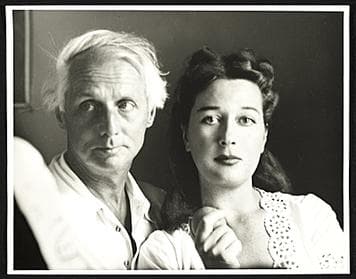
American · Arts
Dorothea Tanning
August 25, 1910 – January 31, 2012
Early Life and Background
Dorothea Tanning was born on August 25, 1910, in Galesburg, Illinois. She grew up in a comfortably middle-class family, the second of three daughters born to Andrew and Amanda Tanning. Her deep-seated interest in the arts was evident from a young age, drawing inspiration from the books she read and the paintings she admired in magazines. Tanning briefly attended Knox College before moving to Chicago to pursue her own artistic ambitions.
Career Beginnings and Development
In the late 1930s, Tanning moved to New York City, where she was swept up by the avant-garde art scene. Here, she encountered the works of German painter Max Ernst and other surrealists, profoundly influencing her early style. Her career took off when she participated in the "31 Women" exhibition at the Peggy Guggenheim’s gallery in 1943. In that same year, she met Ernst, and they married in 1946. Her early works predominantly featured surreal, dreamlike landscapes that became her trademark.
Major Works and Accomplishments
Notable among her works is the painting "Birthday," completed in 1942, which opened doors for her into the surrealist circles. Tanning's art evolved over time, embracing more abstract and ambiguous forms. Her later works included sculptural pieces, notably soft fabric sculptures that combined her painterly style with three-dimensional form. She is particularly known for "Poppy Hotel," completed in 1964, encapsulating thematic elements that paralleled her earlier work while showcasing her growth as an artist.
Awards, Honors, and Recognition
Tanning’s contributions to surrealism were significant, and she garnered widespread acclaim. Her works were exhibited in prominent museums worldwide, including the Guggenheim Museum in New York and the Tate Modern in London. She was honored with exhibitions both in the United States and Europe, illustrating her extensive influence across the Atlantic.
Personal Life
In 1946, Tanning married Max Ernst in a double wedding with fellow artists Man Ray and Juliet Browner. The couple split their time between France and the United States until Ernst's death in 1976. Tanning continued to travel between the countries, transitioning into a phase of publishing poetry and prose alongside her continued work in visual arts.
Legacy and Historical Impact
Tanning's versatility across mediums and her energetic engagement with surrealism have left a lasting mark on the art world. Her creations expanded the boundaries of surrealist art, incorporating humor and a distinctly personal mythology. Tanning's intersections with literature and visual art have paved the way for contemporary artists and established her as a benchmark in multiple genres.
Later Life and Death
In her later years, Tanning focused more on writing, which allowed her to reflect on her expansive career. She passed away peacefully in her sleep on January 31, 2012, at her home in Manhattan, leaving behind a legacy characterized by constant creativity and exploration.
Dated achievements
2 indexed.
- Aug251910Arts
Birth of Dorothea Tanning
Dorothea Tanning was born in Galesburg, Illinois, on August 25, 1910.
View details Dorothea Tanning, Surrealist, Dies at 101 - Jan312012Arts
Death of Dorothea Tanning
Dorothea Tanning passed away at her home in Manhattan on January 31, 2012.