← All women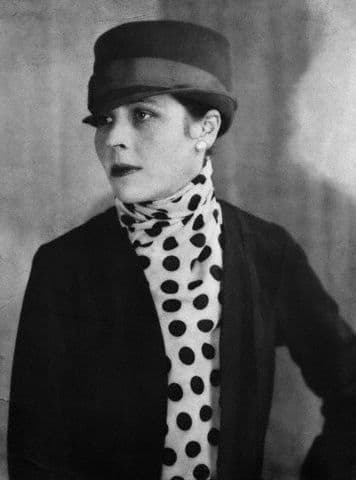
American · Literature · Arts
Djuna Barnes
June 12, 1892 – June 18, 1982
Early Life and Background
Djuna Barnes was born on June 12, 1892, in Storm King Mountain, New York, into a rather unconventional family. She was the second of four children in a household that promoted non-traditional and artistic lifestyles. Her father, Wald Barnes, was a composer and musician, while her grandmother, Zadel Barnes, was an activist and writer who greatly influenced Djuna's early development. The environment of creativity and lack of formal education allowed Djuna to develop a unique voice from an early age.
Barnes left her family home in 1912 and moved to New York City with her mother and siblings after her parents' divorce. There, she enrolled briefly at the Pratt Institute and tutored under artist Charles Webster Hawthorne, paving her path into the world of art and writing.
Career Beginnings and Development
Barnes began her literary career as a journalist in New York, writing for publications such as the Brooklyn Eagle and The New York Press. Her work during this period often explored controversial topics which allowed her to develop a critical voice in both interviewing and storytelling. Her early forays into theatre also included writing one-act plays, showcasing her burgeoning versatility as an author.
Major Works and Accomplishments
In the 1920s, Barnes moved to Paris, a city alive with avant-garde artistic movements, which provided a fertile ground for her creative pursuits. There she befriended literary giants like Gertrude Stein, James Joyce, and Ezra Pound. Her first major publication was the collection of poems titled The Book of Repulsive Women in 1915.
Nightwood, published in 1936 and considered her magnum opus, is a modernist novel celebrated for its rich language and complex narrative structure. T.S. Eliot, who championed her work, wrote the introduction to the novel, which is hailed as a significant contribution to both modernist literature and LGBTQ representation in literature, tackling themes of love, identity, and societal marginalization.
Recognition and Awards
Barnes’s work did not garner wide commercial success during her lifetime but was critically acclaimed within artistic circles. In later years, as her contributions to literature gained broader recognition, Nightwood was frequently included in academic discussions and literary canon focused on modernist literature.
Personal Life
While not publicly open about her sexuality in an era less accepting of diversity, Barnes's relationships with women and the exploration of gender and sexuality were profoundly woven into her writing. This personal engagement with themes of sexual identity contributed to critical interpretations of her work within LGBTQ studies.
Legacy and Historical Impact
Barnes's legacy extends beyond her written works; she was a critical figure in the expatriate modernist literary circle in Paris. Her contribution to the LGBTQ narrative within her writing is often acknowledged as courageous during a period when such perspectives were marginalized. Barnes is frequently cited alongside her contemporaries for her unique literary style and her ability to captivate the complex ethos of her time.
Later Life and Death
In the later stages of her life, Barnes withdrew significantly from the public and literary scene, choosing to live reclusively in Greenwich Village, New York. She continued to write, although published little after 1940. Djuna Barnes passed away on June 18, 1982, leaving behind a rich legacy that continues to resonate in literary studies today.
Dated achievements
2 indexed.
- Jun121892Literature
Birth of Djuna Barnes
Djuna Barnes was born on June 12, 1892.
View details Wikipedia - Djuna Barnes - Jun181982