← All women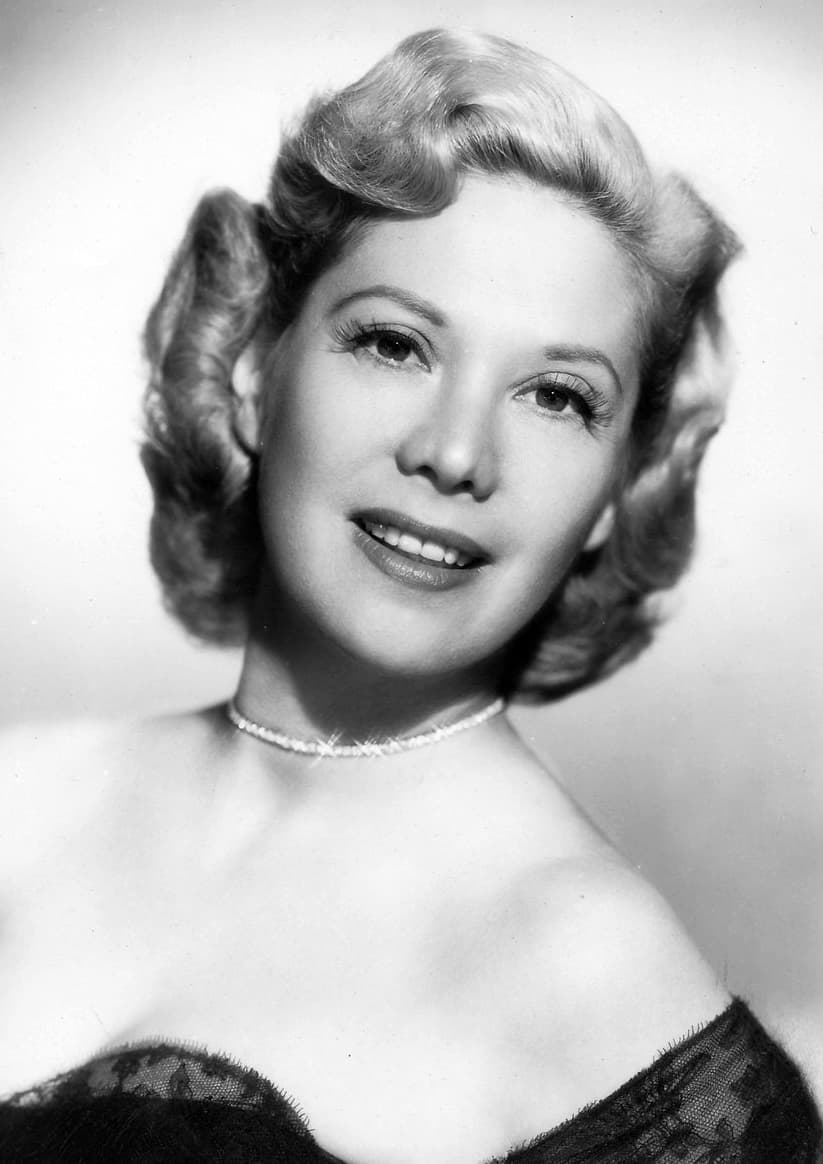
American · Arts
Dinah Shore
February 29, 1916 – February 24, 1994
Early Life and Background
Dinah Shore was born Frances Rose Shore on February 29, 1916, in Winchester, Tennessee, to Russian‑Jewish immigrant parents Samuel and Anna Shore.[1][6] Her father ran a local clothing store, and the family soon moved to Nashville, where Shore spent most of her childhood.[1][11] Several sources give her birth name as Frances or Fannye Rose Shore; the variation reflects the anglicization of a Yiddish given name.[1][3][7]
At 18 months old, Shore contracted polio, a common but often devastating disease in the early 20th century.[3][6] She recovered with what sources describe as the Sister Kenny treatment, though the exact timing of this terminology may reflect later understandings.[3] The illness left her with a slight limp, but it did not prevent her from leading an active life. The experience of early disability, combined with her mother’s encouragement, helps explain both her resilience and the emphasis on performance as a form of overcoming.
Shore grew up in Nashville, attending Hume‑Fogg High School, where she became a cheerleader and continued to develop her singing talent in school and community settings.[3][11] Her family’s Jewish identity placed them in a small minority within the largely Protestant South, and Shore’s later persona—combining Southern charm with cosmopolitan ease—can be read as an adaptation to those cultural cross‑pressures.
After high school she enrolled at Vanderbilt University, an elite institution in Nashville. She majored in sociology and graduated in 1938, an accomplishment in itself at a time when relatively few women completed four‑year degrees.[3][6][9] While at Vanderbilt she sang on radio station WSM and in campus productions, gaining experience with microphones and audiences that would later prove crucial.[12]
Career Beginnings: Radio and Recording
Upon graduating in 1938, Shore moved to New York City to pursue a professional singing career.[3][6][9] The Jewish Women’s Archive notes that she began making her first network radio appearances that summer, marking the transition from gifted amateur to professional entertainer.[9] She sang initially on local stations, auditioning widely until she secured more prominent spots.
Shore’s early recordings were made with bandleader Xavier Cugat, positioning her within the vibrant big‑band scene that dominated popular music in the late 1930s.[3][6] Around this time she adopted the stage name "Dinah", reportedly after achieving success with the song of that name.[3][6] The new name carried both a jazzy flair and a biblical resonance, aligning her with a lineage of American female vocalists whose stage names signaled distinct personas.
Her national breakthrough came in 1940. She appeared on comedian Eddie Cantor’s radio show for the first time that year, gaining exposure to a massive audience.[9] At the same time, her recording of "Yes, My Darling Daughter" sold around half a million copies, an impressive commercial success for a young singer without a big‑band brand behind her.[9] The combination of Cantor’s show and the hit single "launched her career," establishing her as a major recording artist.
Throughout the 1940s, Shore became one of the decade’s top recording stars. She cut numerous hits, including "Baby, It’s Cold Outside", "Buttons and Bows", "I’ll Walk Alone", and "Blues in the Night", many for the RCA label.[2][5][6][9] Her sultry contralto voice and relaxed, intimate delivery suited the era’s preference for crooners and torch singers. Unlike many female vocalists who were primarily band singers, Shore increasingly appeared as a solo artist, her name featured prominently on records and broadcasts.
World War II Service and Film Work
During World War II, Shore’s career intersected with national service. She performed extensively for members of the United States Armed Forces, both on radio and in person.[6] The USO and municipal histories describe her as the first female celebrity and first entertainer to visit GIs at or near the front lines, beginning in the early 1940s.[1] For these efforts she was later awarded the USO Medallion Award, recognizing her extraordinary contributions to troop morale.[1][6]
Shore’s wartime work extended beyond stage performances. She hosted programs for servicemembers, recorded messages, and participated in tours that required significant travel and personal risk.[1][6] Her presence helped to normalize women entertainers in military contexts, paving the way for later USO tours featuring female stars.
Concurrently, she pursued a career in film. In 1943, Shore appeared in her first movie, "Thank Your Lucky Stars", with Eddie Cantor.[5] She followed this with musical films such as "Up in Arms" (1944) and "Till the Clouds Roll By" (1946), and she lent her singing voice to Disney anthology films "Make Mine Music" (1946) and "Fun and Fancy Free" (1947).[5][6] While her film career was not as extensive as that of some contemporaries, these roles broadened her audience and further cemented her identity as a multi‑platform performer.
Transition to Television: The Dinah Shore Show
By the early 1950s, Shore was poised to ride the wave of a new medium: television. In 1951, NBC premiered "The Dinah Shore Show", a Chevrolet‑sponsored musical variety program.[1][6][9] On October 5, 1951, the series debuted in prime time, making Shore the first woman to host her own prime‑time television program in the United States.[1]
The show featured Shore singing, interacting with guests, and introducing musical performances. Her trademark sign‑off—a televised kiss accompanied by the exclamation "Mwah"—became iconic, reinforcing her image as a warm, accessible host.[1] In 1956, the program was rebranded as "The Dinah Shore Chevy Show", deepening its association with the sponsor and cementing Shore as one of television’s key pitchwomen.[6]
Shore’s television work won immediate acclaim. She received her first Primetime Emmy Award for "The Dinah Shore Show" in the mid‑1950s, with obituaries later noting that she would ultimately earn eight Emmys across her prime‑time and daytime work.[1][6][9] Her efforts helped establish the variety show as a staple of American television, blending music, sponsor messages, and celebrity conversation.
Later Television Career: Talk Shows and Innovation
After "The Dinah Shore Chevy Show" ended in the early 1960s, Shore continued to innovate in television formats. She hosted the daytime magazine‑style program "Dinah’s Place" from 1970 to 1974, combining cooking segments, interviews, and musical performances in a relaxed home‑like setting.[5][6] In 1974, she launched the daytime talk‑variety series "Dinah!", later known as "Dinah & Friends", which ran until 1980.[5][6][9]
"Dinah!" featured a wide range of guests—actors, musicians, authors, and public figures—engaged in conversation that was less formal than prime‑time fare. Shore’s style was characterized by warmth, humor, and an ability to put guests at ease, qualities that influenced later daytime hosts. The show’s format anticipated the rise of personality‑driven talk programs that would dominate daytime television in subsequent decades.
Over the course of her television career, Shore won a total of nine Emmys (including daytime awards), a Peabody Award, and a Golden Globe, confirming both industry and critical respect.[5][6][9] Her Golden Globe, earned in the mid‑1950s, recognized her contributions to American song, while the Peabody honored the quality and innovation of her broadcasting.[6]
Dinah Shore and Golf: Breaking Barriers in Sports
Beyond entertainment, Shore became a significant figure in women’s golf. An avid player herself, she participated in pro‑am events and developed friendships with professional golfers.[11] In 1967, she broke a longstanding gender barrier by becoming the first female member of Hillcrest Country Club in Los Angeles, a prestigious private golf club.[1] This membership symbolized the erosion of male‑only policies at elite recreational institutions.
Her most enduring contribution came in 1972, when she co‑founded and hosted the Colgate‑Dinah Shore Women’s Circle tournament at Mission Hills Country Club in Rancho Mirage, California.[1][11] The tournament offered a substantial purse and high visibility on the LPGA Tour, quickly becoming one of its flagship events. Over time, it evolved into a major championship, known variously as the Nabisco Dinah Shore, the Kraft Nabisco Championship, and later the ANA Inspiration.[1]
Shore’s involvement went beyond lending her name; she actively promoted the event, appeared on television coverage, and helped attract sponsors. Her presence as a celebrity advocate for women’s golf contributed significantly to the sport’s legitimacy and visibility.[8][11] French sources emphasize that she was a "determining" contributor to the development and valorization of professional women’s golf in the United States.[11]
Awards, Honors, and Recognition
Across her career, Shore received numerous honors. In addition to her Emmy Awards, Peabody, and Golden Globe, she was recognized with the USO Medallion Award for her World War II entertainment service.[1][6] On February 9, 1960, she was awarded a star on the Hollywood Walk of Fame for her recording and television contributions.[1][4]
In 1991, the Television Academy inducted her into its Hall of Fame, honoring her role as a trailblazer in early television.[12] The Academy’s tribute describes her as a central figure in defining the variety‑show format and as a host whose warmth made audiences feel personally connected.[12]
These recognitions underscore the breadth of Shore’s influence: she was not only popular with audiences but also deeply respected by industry peers and institutions. Her awards mark her as one of the few women of her generation to receive sustained, high‑level recognition across both prime‑time and daytime broadcasting.
Personal Life
Shore’s personal life intertwined with Hollywood’s golden age. She married actor George Montgomery in 1943Melissa Montgomery, born in 1948, and later adopted a son, John David, in 1954.[11][13] Their marriage lasted until 1962
In 1963, Shore married businessman Maurice F. Smith, though this second marriage ended in divorce the following year.[13] She was also linked romantically with several prominent men, including, in later years, golfer Arnold Palmer, reflecting her deep engagement with the world of professional golf. However, she generally kept her private life secondary to her public persona as entertainer and host. Shore maintained close ties to Nashville and Vanderbilt University. She remained a symbol of local pride, frequently cited as one of the city’s most successful cultural exports.[12] Her Jewish heritage, though not always foregrounded in publicity, has been emphasized in later scholarship and by organizations such as the Jewish Women’s Archive, which situate her within the broader history of Jewish contributions to American popular culture.[6][9] Dinah Shore’s legacy spans several domains: radio and recording, television innovation, wartime entertainment, and women’s sports. As a recording artist, she helped popularize the intimate, conversational style of singing that defined mid‑century American pop. Her numerous hits in the 1940s and 1950s contributed to the soundtrack of wartime and postwar America.[2][6][9] As a television pioneer, Shore demonstrated that a female host could anchor a long‑running prime‑time variety show and later redefine daytime talk formats. Her success challenged gender norms in broadcasting, making it easier for subsequent generations of women hosts to be taken seriously in prime‑time and daytime slots.[1][12] Her wartime service as an entertainer for the armed forces, notably as the first female celebrity to visit front‑line troops, exemplifies the role of cultural labor in morale and national identity. The USO Medallion Award recognizes that such emotional and artistic work can be critical in times of conflict.[1][6] In women’s golf, Shore’s significance is profound. By using her fame to launch and sustain a major LPGA tournament, she helped secure corporate sponsorship, media coverage, and public respect for women professional golfers.[1][8][11] Her status as the first female member of Hillcrest Country Club further illustrates her willingness to challenge exclusionary practices.[1] For women’s history, Shore stands as a figure who repeatedly broke barriers without framing herself as a formal activist. Instead, she worked within mainstream entertainment and sport, using charm, professionalism, and persistence to expand the spaces in which women could excel. In her later years, Shore continued to appear on television, including the interview program "A Conversation with Dinah" from 1989 to 1992, which offered in‑depth discussions with guests.[5] She also remained active in golf and charitable activities. Her final television work reflected a shift from performance to conversation, as she explored subjects in more reflective format. Shore was diagnosed with ovarian cancer in the early 1990s.[10] On February 24, 1994, she died in Beverly Hills, California, at age 77.[1][2][3][6] An Apple TV biography notes that she passed away less than a week before her 78th birthday, underscoring the poignancy of her leap‑day birth and near‑leap‑day death.[10] Obituaries and tributes emphasized her warmth, professionalism, and pioneering role in television. The Roanoke Times summarized her career by noting her eight Emmys and long‑running shows, while other accounts highlighted her contributions to women’s golf and her status as one of the most popular American singers of the 1940s.[1][2][6][9] Dinah Shore’s death marked the close of a uniquely cross‑media career. Yet her influence endures in the templates she helped create: the singer‑host variety show, the relaxed daytime talk program, and the celebrity‑supported women’s sporting event. For historians of women’s achievements, her life offers a case study in how sustained visibility and professional excellence can quietly transform cultural norms around gender, media, and sport.Legacy and Historical Impact
Later Life and Death
Dated achievements
13 indexed.
- Feb291916Arts
Birth of Dinah Shore
Frances Rose Shore, later Dinah Shore, born in Winchester, Tennessee, to Russian-Jewish immigrant parents.
View details Wikipedia: Dinah Shore - Jun011938Arts
Post-Vanderbilt move to NYC and career start
In 1938, Dinah Shore graduated from Vanderbilt University and moved to New York, marking the start of her professional career.