← All women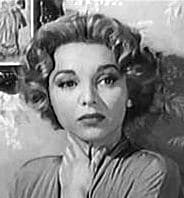
American · Arts
Decoy TV Series
1957 – present
Overview
Decoy was not a woman, but a landmark American television crime drama whose significance lies in its historic center: the first American police series to feature a female protagonist. Broadcast in syndication from 1957 to 1958, the series starred Beverly Garland as Patricia “Casey” Jones, an undercover officer with the New York City Police Department. In women’s television history, Decoy is remembered as a barrier-breaking program that proved a woman could anchor a police procedural at the center of the action.
Concept and creation
The series emerged during a period when American television was still defining the language of crime drama. Police procedurals were usually built around male detectives, male authority figures, and male-centered action. Decoy departed from that pattern by placing a policewoman at the narrative core. Casey Jones was not an assistant, a romantic interest, or a token supporting character; she was the lead investigator, frequently sent undercover to confront the criminal underworld of New York City.
The show was created for syndication rather than a major network, which gave it a different distribution pattern from the dominant network dramas of the era. That business model may have limited its reach, but it also allowed the series to take an unusual risk: centering a female law-enforcement officer in a hard-edged crime format. This decision gave Decoy a distinct place in television history. Contemporary and later accounts have described it as the first American police series with a female protagonist and the first television policewoman show.
Production and style
Decoy ran for 39 black-and-white half-hour episodes. It was notable for its location shooting in New York City, a practice that was still uncommon in American television drama of the 1950s. The city was not merely a backdrop; it was part of the program’s identity. The streets, storefronts, night scenes, and urban textures helped give the show a documentary flavor that distinguished it from more studio-bound productions of the time.
The production also emphasized realism. Reports and retrospective accounts describe Margaret Leonard, a former New York City police detective, as the technical adviser who supplied case ideas and contributed to the authenticity of the policewomen’s work portrayed in the series. That detail is important in understanding the show’s historical role. Decoy did not simply place a woman in a male television format; it tried to construct a believable professional environment around her.
Each episode reportedly opened with a tribute to the Bureau of Policewomen of the New York City Police Department. That on-screen dedication signals the program’s intention to honor women in law enforcement as a professional group, not merely as a dramatic novelty. In the context of the 1950s, that gesture was meaningful. Policewomen remained far less visible than male officers, and television rarely placed them in positions of authority or action.
Beverly Garland as Casey Jones
Beverly Garland’s performance as Patricia “Casey” Jones is the reason the series remains famous. Garland brought toughness, composure, and credibility to the role, portraying a woman who could move through dangerous situations without surrendering her identity as a professional officer. Casey Jones was often assigned undercover work, which fittingly matched the title Decoy. Her job depended on intelligence, adaptability, and the ability to enter spaces where authority was not openly granted.
That characterization mattered because television in the 1950s often offered women limited archetypes. Garland’s Casey Jones challenged those conventions. She was neither decorative nor passive. She was a working police officer solving crimes, confronting suspects, and carrying episodes as the central figure. This made the character an early template for the female procedural lead and an important precursor to later women-led action and detective shows.
Broadcast history and cancellation
The series premiered on October 14, 1957 and ended its original broadcast run on July 7, 1958. Production ended a little earlier, on May 29, 1958, because the producers lacked the funds to continue. The short run should not be mistaken for insignificance. Many pioneering works have brief lives, especially when they confront industry assumptions ahead of their time.
Decoy demonstrated that a woman could lead a police action series, but the television marketplace of the 1950s was not yet organized to fully reward that innovation. The show’s cancellation reflects the financial fragility of syndicated programming and the commercial risk attached to unconventional premises. Even so, the program left behind a compact body of work that later historians would treat as a key milestone in the evolution of female representation on television.
Historical significance
For women’s history, Decoy occupies an important place because it helped normalize the idea of women as authoritative figures in genre television. Before later shows such as Police Woman and many contemporary female-led procedurals, there was Decoy, a series that made a New York policewoman the anchor of the story. It proved that a woman could carry an action-oriented crime series and do so in a role associated with masculine authority.
The program’s significance is amplified by the way it anticipated later developments. It helped establish a pathway for female-led police dramas and showed that audiences could accept a woman in an investigative lead. Retrospective commentary has repeatedly returned to the series as “TV’s first female cop” show and as a founding example of women-centered procedural storytelling. That continued recognition is itself part of the historical record: it demonstrates that the show’s impact outlasted its initial run.
Legacy
Although Decoy was not a long-running hit, its legacy is unusually durable. It is cited in histories of television as the first American police series with a female lead and one of the earliest examples of a woman driving an entire crime narrative. The show also stands as an early example of location shooting in New York, adding another layer to its importance as a production milestone.
Its long-term influence can be seen in the way later generations of viewers, critics, and historians describe Beverly Garland’s role. Rather than treating Casey Jones as a novelty, they now see her as a prototype for later women who would occupy central positions in police and detective fiction. In that sense, Decoy helped expand the possibilities of what television could imagine for women in law enforcement.
The series remains a reminder that historical firsts often begin with modest, even fragile productions. Its cultural legacy rests on a simple but transformative premise: a woman could be the lead in a police drama, and audiences could believe it. That idea has become common in later television, but Decoy helped make it possible.
Later recognition
Decades after its original broadcast, the series continued to receive attention in retrospectives and anniversary pieces. Commentators in 2017, 2020, and 2021 revisited the show as a foundational work in female-led crime television. Those later reassessments are important because they preserved a program that might otherwise have faded from popular memory. For women’s history, that preservation matters: early breakthroughs often require active recovery to remain visible in the historical record.
As a result, Decoy is now understood not just as an old television series but as a landmark in the representation of women’s professional authority. Its central figure, Casey Jones, remains one of the earliest examples of a woman occupying the full narrative space of a police procedural, and that achievement continues to define the series’ place in television history.
Dated achievements
6 indexed.
- Oct141957Arts
Premiere of Decoy — first American police series with a female lead
Decoy premiered in syndication, making Beverly Garland's Patricia "Casey" Jones TV's first female police protagonist in an American drama series.
View details Decoy (TV series) - Wikipedia - May291958Arts
Production of Decoy concludes due to lack of funds
Filming on Decoy ended on May 29, 1958, after financial constraints halted further production of the pioneering policewoman drama.