← All women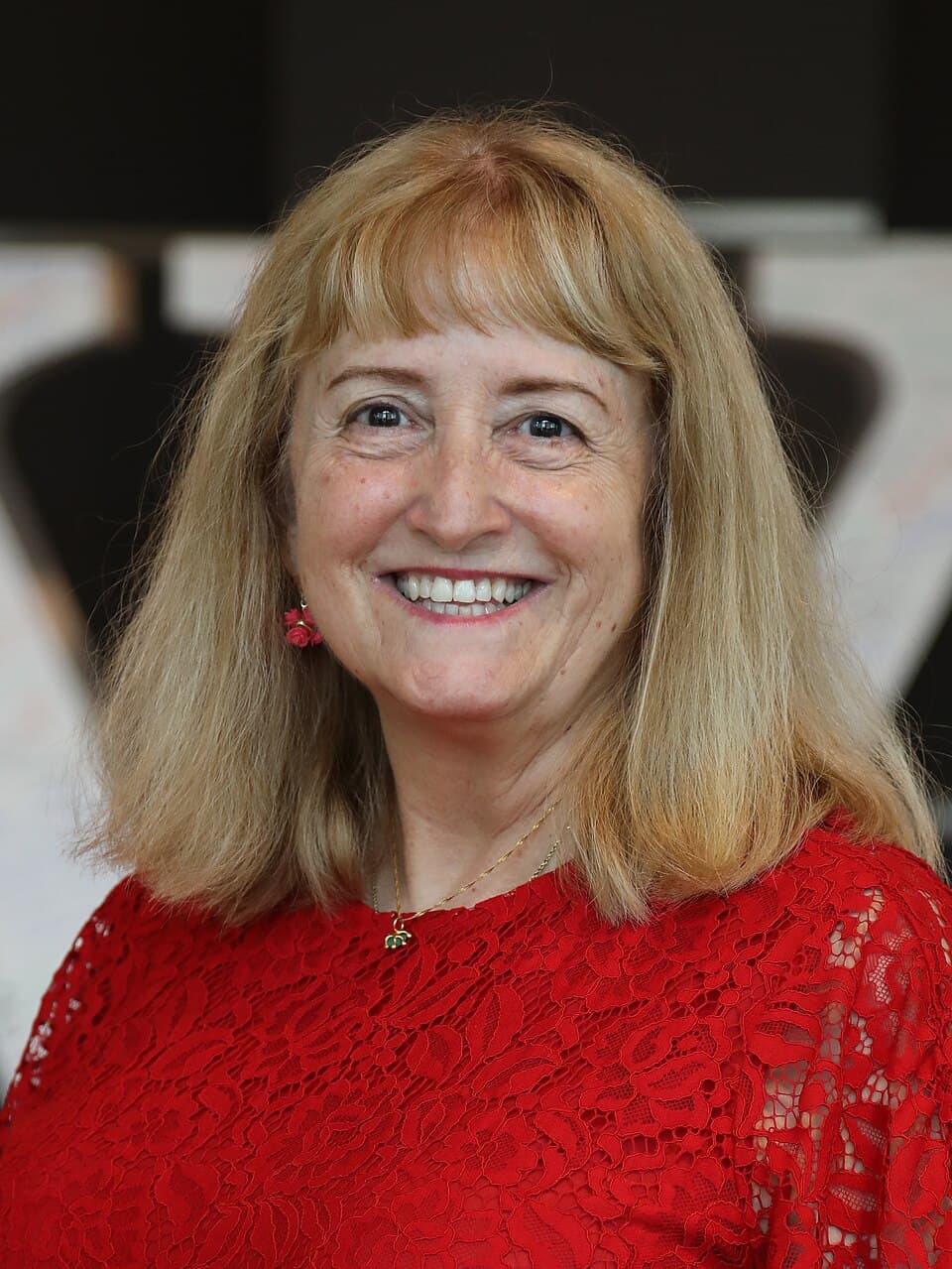
American · Activism
Dame Rosie Stephenson-Goodknight
December 5, 1953 – present
Early life and background
Rosie Gojich Stephenson-Goodknight, known on Wikipedia as Rosiestep, was born on December 5, 1953, in Gary, Indiana, United States.[1] Publicly available sources identify her as an American Wikipedia editor and note that she later became widely known for her work addressing the encyclopedia’s gender imbalance.[1][2] Detailed public information about her family background, schooling, and early personal life is limited in the sources provided, and those details are not consistently documented in reliable institutional profiles.
What is clear from the historical record is that Stephenson-Goodknight came to prominence in a digital environment that had already revealed how unevenly women were represented in reference works. Her later work suggests a strong interest in public knowledge, research, and visibility for overlooked figures. The choice to spend years improving biographies of women placed her within a broader movement of volunteer editors and activists who saw Wikipedia not only as a reference site, but also as a site where structural inequalities could be challenged.
Career beginnings and entry into Wikipedia
Stephenson-Goodknight began editing English Wikipedia in 2007 under the username Rosiestep.[1][2] That date marks the start of a long period of volunteer work that would eventually make her one of the most recognized editors focused on women’s history and biography.[1][2] Like many influential Wikipedians, she built her reputation through sustained, unpaid editorial labor rather than through a formal institutional appointment at the outset.
Her editing career developed in parallel with a growing awareness inside and outside Wikimedia of the encyclopedia’s content gap. In 2015, she co-founded Women in Red, a project devoted to creating and improving articles about women so that red links—unwritten biographies and entries—could become blue links, or published articles.[1][2] The project addressed a core structural problem: not only were women underrepresented as subjects, but many notable women were absent altogether from the encyclopedia’s coverage. Women in Red quickly became one of the best-known Wikimedia initiatives aimed at correcting that imbalance.
Stephenson-Goodknight’s work as an editor was not only about quantity, though she was credited with creating thousands of new articles.[1][2] It was also about method. Her approach connected reliable sourcing, community organization, and public advocacy. She helped demonstrate that editing Wikipedia could be a meaningful form of civic participation and historical recovery, especially for subjects long marginalized in mainstream reference culture.
Women in Red and the gender-gap movement
The significance of Women in Red lies in its combination of symbolism and practical output. The project’s name referred to the red links that appear when Wikipedia contains a link to a page that does not yet exist. By focusing on women’s biographies, Stephenson-Goodknight and collaborators sought to reduce the visual and statistical evidence of absence. In the Wikimedia Foundation’s 2019 profile, she described creating 5,000 new articles, underscoring the scale of the effort.[2]
This work unfolded in an era when the underrepresentation of women on Wikipedia had become a widely discussed issue. The Wikimedia Foundation noted that at the time Women in Red was founded, only about 15 percent of Wikipedia biographies were about women.[2] That imbalance reflected larger patterns in historical recordkeeping, source availability, and editorial culture. Stephenson-Goodknight’s contribution was important because she helped transform complaint into action: rather than merely diagnosing the problem, she helped create a sustained editing network designed to change the encyclopedia’s content one article at a time.
Her activism also helped elevate the idea that volunteer editors could address systemic bias through organized labor. In doing so, she became one of the leading public faces of the movement to improve representation in open knowledge spaces. Her role was especially notable because much of this work was carried out in a field where women’s labor has often been undervalued, whether in traditional archives, libraries, or digital communities.
Major honors and recognition
On January 15, 2016, Stephenson-Goodknight received the Wikimedia community award Wikimedian of the Year during celebrations marking the Wikimedia Foundation’s 15th birthday.[1][2] The recognition was presented by Wikimedia co-founder Jimmy Wales and acknowledged her leadership in Women in Red and her broader efforts to combat the content gender gap.[1][2] The award marked her as one of the movement’s most influential volunteers and gave institutional visibility to the cause of gender equity in Wikipedia.
Her recognition continued in later years. On April 12, 2017, the Wiki Education Foundation announced that she would serve as a Visiting Scholar at Northeastern University, using access to university library resources to support Wikipedia improvement work.[5] On October 18, 2018, Wikimedia District of Columbia presented her with its Distinguished Service Award for her contributions to Wikipedia and her work closing the gender gap.[3] On August 15, 2019, she was elected to the Board of Directors of Wikimedia District of Columbia, formalizing a leadership role within the chapter.[3] On September 12, 2019, the Wikimedia Foundation profiled her work with Women in Red and highlighted her as a leading organizer in the effort to combat gender bias on Wikipedia.[2]
These honors are significant not just as personal achievements, but because they document a shift in how Wikimedia communities evaluate impact. Stephenson-Goodknight was recognized for work that combined editorial production, mentorship, organization, and cultural change. Her honors made visible a kind of labor that often happens behind the scenes: identifying missing women, researching their lives, writing articles, and helping others do the same.
Later leadership and public role
Stephenson-Goodknight’s public presence expanded through speaking, training, and chapter leadership. In the available sources, she is identified as serving on Wikimedia DC’s board beginning in 2012 and later continuing that involvement through the 2019 election.[3] The available documentation also shows her as a visible representative of the gender-gap movement in profiles and institutional features.[2][3] She has been described as an advocate for the value of Wikipedia as a public knowledge platform and as someone whose editing work has inspired broader participation in the Wikimedia community.
Her institutional recognition culminated in a further signal of status in Wikimedia circles when, according to her Meta-Wiki user page, she was knighted in 2018 as a Dame of the Order of St. Sava of Diplomatic Pacifism by the Ministry of Foreign Affairs in Serbia.[3] That honor is part of the record of her public distinctions and illustrates the breadth of her recognition beyond the United States. It also reflects the international visibility of Wikipedia-related activism, which can cross national boundaries when it addresses representation in global knowledge systems.
Personal life
Reliable sources in the provided set do not offer extensive detail about Stephenson-Goodknight’s spouse, children, or private family life. The biographical record is instead centered on her public identity as an editor, organizer, and advocate. That focus is itself historically instructive: unlike many traditional biographies of notable people, her significance is rooted less in inherited status than in volunteer service, community leadership, and sustained public contribution to an open platform.
In the available sources, she is consistently described through her editing work, her role in Women in Red, and her relationship to Wikimedia institutions.[1][2][3] Because the record provided here does not reliably document personal relationships beyond her name and public role, a rigorous biographical account should avoid speculation. The absence of detail does not diminish her historical significance; rather, it reflects the way many digital-age figures become known primarily through their civic and intellectual labor.
Legacy and historical impact
Stephenson-Goodknight’s legacy lies in the measurable and symbolic effects of her work. She helped make the absence of women on Wikipedia visible, and then helped build a practical response to that absence. The Wikimedia Foundation’s description of her as a co-founder of Women in Red and a creator of thousands of articles makes clear that her influence was both organizational and editorial.[2] She helped move the conversation about bias from critique to implementation.
Her career also illustrates the importance of volunteer expertise in digital public culture. Wikipedia is one of the most consulted reference works in the world, and who appears in it—and how they appear—shapes public memory. By focusing on biographies of women, Stephenson-Goodknight contributed to a correction of historical omission. Her work sits at the intersection of women’s history, online activism, and knowledge equity, and it shows how a determined individual can help reshape a large collaborative platform.
For women’s history specifically, her importance is amplified by the fact that many women’s lives have been under-recorded in the sources on which encyclopedias rely. Women in Red and related editing campaigns have helped recover thousands of such lives for public view. Stephenson-Goodknight’s role in that work makes her a significant figure in the history of digital feminism and open knowledge. Her impact is ongoing, because the gender gap she helped confront remains a live issue in Wikimedia and beyond.
Later life and ongoing recognition
Stephenson-Goodknight remains living as of the latest reliable sources consulted here.[1][2] She continues to be associated with Wikimedia community leadership and with the public recognition of women’s biographies online. Her story is therefore not a completed historical arc but an ongoing example of how volunteer knowledge work can earn institutional respect, influence educational practice, and expand the historical record.
Her career demonstrates that the labor of documenting women’s lives is itself a historically significant act. By organizing, writing, mentoring, and advocating, she helped redefine what it means to be a public historian in the digital era. Her biography belongs in women’s history not because she occupied a traditional office or held elected political power, but because she used collaborative technology to challenge the patterns of omission that have long shaped reference culture.
Dated achievements
6 indexed.
- Dec051953Activism
Born: Rosie Gojich Stephenson-Goodknight
Birth of Rosie Gojich Stephenson-Goodknight in Gary, Indiana; later known as Rosiestep, she became a major figure in efforts to close Wikipedia’s gender gap.
View details Rosie Stephenson-Goodknight - Wikipedia - Jan152016