← All women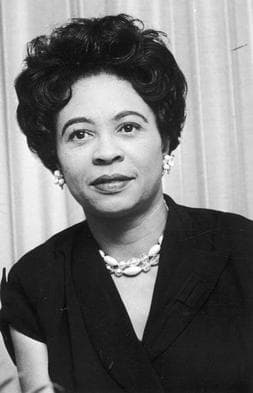
American · Activism · Politics · Literature
Daisy Bates
November 11, 1914 – November 4, 1999
Early Life and Background
Daisy Lee Gatson Bates was born on 11 November 1914 in the sawmill town of Huttig, Union County, Arkansas, a deeply segregated region of the U.S. South. She was born into a world structured by Jim Crow laws, racial violence, and the near-complete political disenfranchisement of Black people.[2][3][7] Most authoritative modern biographies, including the National Park Service and major reference works, accept 1914 as her birth year, although a few earlier sources offered slightly different dates.[2][3][8][10]
Bates’s childhood was marked by profound trauma. When she was a small child, her birth mother was abducted, raped, and murdered by white men; no one was ever prosecuted.[1][3][7][12] Raised thereafter by foster parents, Susie and Orlee Smith, she later recalled that her foster father gently but firmly explained that her mother’s killers would likely never face justice in the South’s racist legal system. This early confrontation with racial terror and legal impunity left an indelible mark on Bates and shaped her lifelong determination to fight white supremacy.[1][3][7]
Huttig was a company town centered on the lumber industry, and Black residents typically worked in low‑paid, physically demanding jobs with little protection or opportunity.[3][12] Educational prospects for Black children were limited; schools were segregated and underfunded. Bates’s formal schooling ended around the eighth grade, but she developed a strong interest in reading and writing, skills that would later underpin her work as a journalist and editor.[2][7][12]
As a teenager, Bates struggled with feelings of anger and helplessness over her mother’s death and the everyday humiliations of segregation. At about fifteen she met Lucius Christopher (L. C.) Bates, an older insurance salesman and former journalist who traveled throughout the South.[1][7] She began accompanying him on his routes, gaining exposure to Black communities beyond Huttig and learning more about the broader structures of racial discrimination in the region. These travels broadened her horizons and deepened her political awareness.
Marriage, Move to Little Rock, and Newspaper Beginnings
On 9 October 1942, Daisy Gatson married L. C. Bates in Arkansas.[2] The marriage quickly evolved into a close professional as well as personal partnership. L. C., born in 1901, had prior experience in journalism and activism, and he encouraged Daisy’s talents and political engagement.[3][7]
Around 1941, the couple moved to Little Rock, Arkansas’s capital city, at a time when the state’s Black population faced entrenched segregation in schools, public accommodations, and the workplace.[3][7] There they soon began publishing a weekly Black newspaper, the Arkansas State Press.[3][7][12] Founded in the early 1940s, the paper became one of the most influential African American newspapers in the state, noted for its uncompromising coverage of racial injustice.
The Arkansas State Press reported on police brutality, lynching threats, discriminatory hiring, voting barriers, and unequal schools. It also covered local NAACP campaigns, labor struggles, and national civil-rights developments often ignored or distorted by white-owned media.[1][3] Daisy increasingly took on editorial responsibilities, writing articles and editorials that challenged segregation and demanded equal treatment for Black Arkansans. Her work at the paper helped her cultivate relationships with attorneys, church leaders, and community organizers across the state.
Operating a Black newspaper that openly criticized white power structures carried significant risks. Advertisers were pressured to withdraw support; white officials threatened legal retaliation; and the Bates household faced intimidation and economic reprisals. Nevertheless, the paper’s circulation and influence grew, making it a vital voice for civil rights in Arkansas in the 1940s and early 1950s.[3][7][12]
Rise in the NAACP and Statewide Civil-Rights Leadership
Bates’s journalistic work intersected with formal civil-rights organizing through the National Association for the Advancement of Colored People (NAACP). She joined the NAACP and quickly became active in its Arkansas branches, helping to publicize desegregation lawsuits, fundraising campaigns, and membership drives.[1][3]
By 1952, Bates had emerged as one of the most prominent Black activists in the state. On 27 January 1952, she was elected president of the Arkansas State Conference of NAACP Branches, making her the first woman to hold this leadership position in the Arkansas NAACP.[8] In this role she coordinated local branches, worked closely with NAACP attorneys, and helped identify test cases to challenge segregation in education and public accommodations.
Her leadership coincided with a critical period in civil-rights litigation. The NAACP Legal Defense Fund, led by lawyers such as Thurgood Marshall, was pursuing cases that would culminate in the landmark Brown v. Board of Education decision in 1954. Bates used both her NAACP position and her newspaper to build public awareness of these efforts, encourage local plaintiffs, and prepare communities for the social upheavals that desegregation would bring.[1][3][7]
As a woman in a high‑profile leadership role, Bates confronted gender as well as racial barriers. The national civil-rights movement, like many political organizations of the era, often reserved top positions and public visibility for men. Bates nonetheless asserted her authority as state conference president, demonstrating logistical skill, media savvy, and a willingness to confront hostile officials. Her success helped expand expectations about women’s leadership in the movement.[1][8]
The Road to Little Rock: School Desegregation Strategy
Following the Supreme Court’s Brown v. Board of Education decision in 1954, which declared segregated public schools unconstitutional, resistance in Arkansas quickly hardened. Although some state leaders initially signaled cautious compliance, many local officials and segregationist groups vowed to maintain dual school systems by any means necessary.[2][7]
In this climate, Bates and the Arkansas NAACP began working toward desegregation in Little Rock, where the school board had adopted a gradual integration plan beginning in the mid‑1950s. Bates played a central role in recruiting and supporting Black students willing to attempt enrollment at white schools, particularly at Little Rock Central High School, the city’s flagship public high school.[3][7]
By 1957, Bates had become the key adviser to a group of nine students—later known as the Little Rock Nine: Ernest Green, Elizabeth Eckford, Jefferson Thomas, Terrence Roberts, Carlotta Walls, Minnijean Brown, Gloria Ray, Thelma Mothershed, and Melba Pattillo.[2][7] Her home at 1207 West 28th Street in Little Rock served as a planning center and safe meeting place. There, the students and their families discussed strategy, received counseling, and prepared themselves psychologically for the hostility they would encounter.[3][7]
Bates coordinated with NAACP lawyers on legal challenges and with national civil-rights organizations to attract media attention and potential federal support. Through the Arkansas State Press, she made the case that school desegregation was a moral and constitutional imperative, countering white supremacist narratives circulating in local and regional media.
The Little Rock Crisis: September 1957
The Little Rock school desegregation crisis brought Daisy Bates to national prominence. On 4 September 1957, the first day the Little Rock Nine attempted to enter Central High School, Bates coordinated their arrival and planned to escort them as a group.[7] Arkansas Governor Orval Faubus, however, had ordered the Arkansas National Guard to surround the school and prevent Black students from entering, claiming that their presence threatened public order.[2]
Due to miscommunication, the students did not all reach the school together. Eight met at Bates’s home and traveled as a group, only to be turned away by the Guard. The ninth student, Elizabeth Eckford, arrived alone and was surrounded by a jeering white mob as she tried to reach the doors of Central High, in scenes that were captured by press photographers and broadcast nationwide.[7][12] Bates, monitoring events and communicating with supporters and reporters, immediately understood the significance of the images and the depth of the crisis.
Over the ensuing weeks, Bates’s home became the operational headquarters of the desegregation effort. She organized transportation, media briefings, and security measures for the students, who faced daily threats and harassment.[3][7] The Bates residence itself was repeatedly targeted: segregationists hurled rocks, fired shots, and issued bomb threats, attempting to terrorize the family and halt integration.[3][12]
On 23 September 1957, following a federal court order, the Little Rock Nine again tried to attend classes. Local police escorted them into the building, but an enraged white mob gathered outside, attacking journalists and threatening to storm the school.[2] The students were removed for their safety. Bates, in regular contact with national NAACP leaders and federal officials, conveyed the gravity of the situation and the failure of state and local authorities to maintain order.[7]
That same evening, President Dwight D. Eisenhower decided to send federal troops to Little Rock, issuing an executive order that deployed the 101st Airborne Division and placed the Arkansas National Guard under federal control.[2][7] This extraordinary federal intervention was, in part, a response to the sustained advocacy and documentation provided by Bates and the NAACP.
On 25 September 1957, under the protection of the 101st Airborne and federalized Guard troops, the Little Rock Nine entered Central High School and completed their first full day of classes, becoming the school’s first Black students.[1][2][7] Bates continued to serve as their adviser and spokesperson, coordinating their daily routines, handling press inquiries, and supporting their families as the crisis dragged on throughout the school year.
Continuing Activism, Journalism, and The Long Shadow of Little Rock
The intense year of 1957–58 took a heavy toll on Bates and her husband. Economic reprisals and advertising boycotts forced the Arkansas State Press to suspend publication by the late 1950s.[3][7] The Bateses faced ongoing threats, legal harassment, and health challenges. Yet Daisy continued to speak, write, and organize in support of civil rights.
In 1962, Bates published her memoir, The Long Shadow of Little Rock, which recounted the events leading up to and during the Central High crisis from her perspective as an organizer and journalist.[8][10] The book provided detailed insight into the inner workings of the NAACP, the courage and suffering of the Little Rock Nine, and the pressures placed on the Bates family. Initially difficult to find due to limited distribution and political backlash, the memoir has since become a key primary source for historians of the civil-rights movement and has been reissued in later decades.
Throughout the 1960s, Bates remained active in civil-rights work beyond Arkansas. She traveled to other parts of the South, including working with organizations in the Mississippi Delta, where she helped support voter-registration efforts and community development projects.[3][10] Her experience navigating hostile authorities and national media during the Little Rock crisis made her a valuable adviser to younger activists confronting similar challenges.
National Stage: March on Washington and Public Recognition
Bates’s stature as a national civil-rights leader was publicly affirmed on 28 August 1963, when she appeared as one of the few women speakers at the March on Washington for Jobs and Freedom in Washington, D.C.[2][8] Although her time at the microphone was brief, she used it to honor the Little Rock Nine and highlight the ongoing fight for equal education in Arkansas. Her presence on the program reflected the movement’s recognition of her leadership, even as women activists continued to struggle for equal visibility.
In the decades that followed, Bates received increasing recognition for her contributions. In the 1980s, she was honored by organizations such as the American Association of Retired Persons (AARP) for community service, acknowledging her long record of public advocacy.[10] She remained a sought‑after speaker for schools, churches, and civic groups interested in the history and lessons of the Little Rock crisis.
As the civil-rights era receded into history, archival collections of Bates’s papers were assembled for research use. The Daisy Bates Papers, 1946–1966, housed at the Wisconsin Historical Society, include correspondence, speeches, and drafts of The Long Shadow of Little Rock, offering scholars a rich record of her thought and activism.[8]
Later Life, Honors, and Institutional Recognition
In her later years, Bates continued to live in Little Rock, even as her health declined. She remained engaged in community projects and mentoring younger activists, drawing on her experiences to counsel new generations confronting racism and inequality.[3][7]
On 7 February 1988, Arkansas Governor Bill Clinton issued a proclamation establishing the first official "Daisy Gatson Bates Day" in Arkansas, honoring her leadership in the Little Rock school integration crisis and her broader civil-rights work.[2] The state later designated the third Monday in February as an annual observance, making her one of the relatively few African American women for whom a U.S. state has created a specific holiday.
On 7 March 1990, the University of Arkansas at Fayetteville awarded Bates an honorary Doctor of Laws degree in recognition of her contributions to civil rights and social justice.[3] This honor was particularly notable given her limited formal schooling and the university’s own history of gradual desegregation. It symbolized an institutional acknowledgment that her activism had reshaped the legal and educational landscape of Arkansas.
Additional recognition came in the form of historic preservation. On 5 November 1997, the Daisy Bates House at 1207 West 28th Street in Little Rock was designated a National Historic Landmark by the U.S. Department of the Interior.[7] The designation recognized the residence as a key site in the Little Rock Central High School desegregation crisis, ensuring its protection and interpretation as a place of national significance. The house stands as a physical testament to the courage of the Bates family and the students they supported.
In the mid‑1990s, Bates received the Presidential Medal of Freedom from President Bill Clinton, the highest civilian honor in the United States, further cementing her status as a major figure in American civil-rights history.[10] (Some public summaries state that the medal was formally presented close to the end of the decade, but sources agree on the mid‑1990s timeframe.)
Personal Life
Daisy Bates’s personal life was closely intertwined with her activism. Her marriage to L. C. Bates was both a romantic partnership and a working alliance. Together, they invested their savings, energy, and safety in the Arkansas State Press and the broader civil-rights struggle.[3][7] They did not have biological children, but Bates often described the Little Rock Nine and younger activists as "her children," reflecting the deep emotional bonds formed during the crisis.
The couple’s home life was continually disrupted by threats and violence. During the Central High crisis, they endured constant phone calls, surveillance, and attacks on their property. These pressures, combined with strenuous work and financial strain, contributed to health problems for both Daisy and L. C. Bates.[3][12] L. C. died in 1980, leaving Daisy a widow; she continued to live in Little Rock and maintain her public advocacy despite her own declining health.
Legacy and Historical Impact
Daisy Bates occupies a central place in the history of the American civil-rights movement, particularly in the story of school desegregation. As a journalist, she used the Arkansas State Press to expose injustices and amplify Black voices, challenging the dominance of white-controlled media in the Jim Crow South. As a civil-rights organizer and NAACP leader, she coordinated grassroots activism and legal strategy at a pivotal moment in the struggle to enforce Brown v. Board of Education.
Her role in the Little Rock Central High School crisis of 1957 remains her most widely recognized contribution. Bates’s strategic planning, emotional support for the Little Rock Nine, and skillful handling of national media coverage helped transform a local integration battle into a constitutional showdown that forced the federal government to defend Black students’ rights. The images and narratives that emerged from Little Rock—shaped in part by her engagement with journalists—became enduring symbols of the civil-rights era.[2][7][12]
Bates’s legacy also illustrates the often under‑recognized leadership of Black women within the movement. Although men frequently occupied formal positions at the top of organizations and received more national publicity, women like Bates orchestrated logistics, built community networks, and sustained campaigns over many years. Her election as the first woman to lead the Arkansas State Conference of NAACP Branches signaled a shift in gender roles within civil-rights organizations and inspired later generations of women activists.[1][8]
Her memoir, The Long Shadow of Little Rock, has become a foundational text for scholars and students seeking to understand the emotional and strategic dimensions of the desegregation struggle. The book’s detailed account of behind‑the‑scenes negotiations, family dynamics, and personal sacrifice remains a vital complement to legal records and official narratives.[8][10]
Public commemorations—such as Daisy Gatson Bates Day, the National Historic Landmark designation of her home, and her Presidential Medal of Freedom—reflect a broader transformation in how Arkansas and the United States remember the civil-rights era. Once reviled by segregationists, Bates is now widely honored as a symbol of courage and principled resistance.
In the twenty‑first century, educators, museums, and historical sites continue to use Bates’s story to teach about the ongoing struggle for educational equity and racial justice. The National Park Service, for example, highlights her life in interpretive materials connected to the Little Rock Central High School National Historic Site and in classroom resources that situate her within larger narratives of American democracy.[3][7]
Later Years and Death
In her final years, Daisy Bates battled health problems, including strokes, but remained a respected elder in the civil-rights community. She continued to attend events when able, give interviews, and support efforts to preserve the history of Little Rock’s desegregation struggle.[3][7]
Bates died on 4 November 1999 in Little Rock, Arkansas, at the age of 84, following a series of strokes.[2][3][7] By the time of her death, she had lived long enough to see substantial, if incomplete, progress toward the goals she had pursued: legally desegregated schools, greater protections for civil rights, and broader public recognition of Black women’s leadership.
Her passing prompted tributes from political leaders, civil-rights organizations, educators, and former students, including members of the Little Rock Nine. They emphasized her courage, persistence, and personal sacrifices in the face of relentless opposition. Today, Daisy Bates is remembered as the "First Lady of Little Rock"—a title that captures both her central role in a defining civil-rights battle and her broader significance as a symbol of Black female leadership in the long struggle for justice.
Dated achievements
11 indexed.
- Nov111914Activism
Birth of Daisy Lee Gatson
Daisy Lee Gatson, future civil rights leader and journalist, is born in Huttig, Union County, Arkansas.
View details Wikipedia: Daisy Bates (activist) - Oct091942Activism
Marriage to L. C. Bates
Daisy Gatson marries Lucius Christopher (L.C.) Bates, with whom she would co-found the Arkansas State Press newspaper.