← All women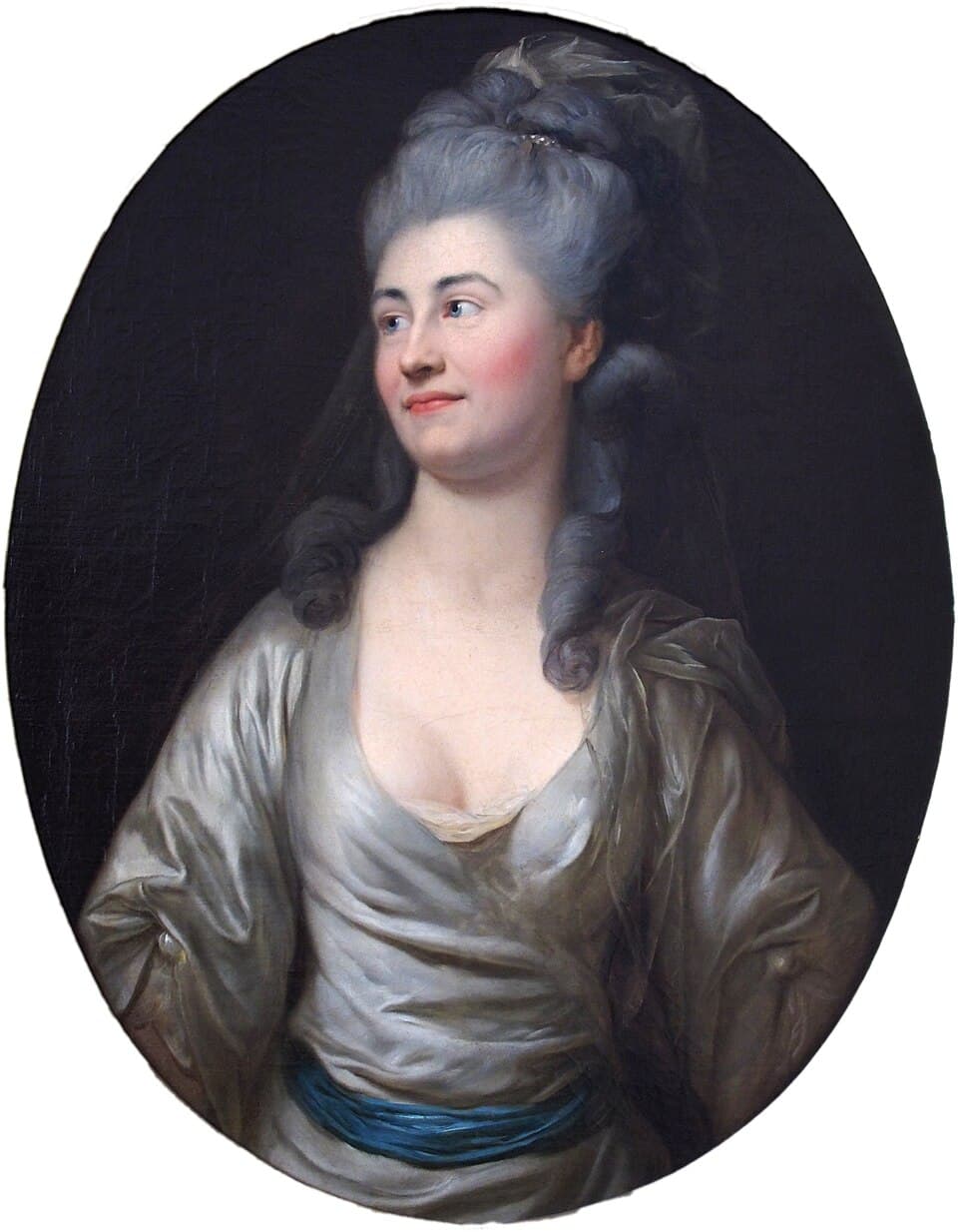
German · Arts
Corona Schroter
January 14, 1751 – August 23, 1802
Early Life and Background
Corona Elisabeth Wilhelmine Schröter was born on January 14, 1751, in Guben, located in what is now Germany. She was the daughter of Johann Friedrich Schröter, a musician, which allowed her early exposure to the world of music and arts. Growing up in a musically inclined family, she acquired skills in singing, acting, and playing instruments, which laid the foundation for her illustrious career.
Career Beginnings and Development
In 1771, Schröter moved to Leipzig, where she initially performed in private concerts before making her public debut as a singer. Her talents soon caught the attention of prominent individuals, setting the stage for her rising fame. By 1776, Schröter had relocated to Weimar, a cultural hub of the time, where she became a part of Duchess Anna Amalia of Brunswick-Wolfenbüttel's circle. Schröter joined the Weimar court theatre, where her skills as a singer and actress were prominently featured.
Major Works and Accomplishments
Schröter is perhaps best known for her collaboration with the famous German writer Johann Wolfgang von Goethe. She performed at Goethe's request in several of his productions, including the role of Iphigenie in his play "Iphigenie auf Tauris." Her performances helped popularize Goethe's works among contemporary audiences.
Beyond acting, Schröter made significant contributions as a composer, writing several lieder (songs) that were well-received during her time. Her ability to masterfully blend music with theatrical performance established her reputation as a versatile artist.
Awards, Honors, and Recognition
Throughout her career, Schröter received considerable acclaim from both peers and patrons, earning a respected position within the artistic community of Weimar. While not extensively documented in terms of formal awards typical of later periods, her influence and recognition were evident in the high-profile roles she was entrusted with and her revered status in cultural circles.
Personal Life
Corona Schröter remained unmarried throughout her life, dedicating herself fully to her artistic pursuits. Her close professional and personal association with Goethe was a significant aspect of her life, though purely platonic by historical accounts.
Legacy and Historical Impact
Schröter left a lasting legacy as a pioneer for women in the performing arts, during a time when such careers were male-dominated. Her contributions to musical theatre and her role in bringing Goethe's works to life on stage played a critical part in shaping the cultural environment of 18th-century Weimar.
Later Life and Death
Corona Schröter retired from her active role in the theatre in the early 19th century. She continued to live in Weimar, where she remained an influential figure until her death on August 23, 1802. Her passing marked the end of an era in Weimar's cultural landscape.
Dated achievements
2 indexed.
- Jan141751Arts
Birth of Corona Schröter
Corona Schröter was born on January 14, 1751, in Guben, Germany.
View details Wikipedia - Corona Schröter - Aug231802Arts
Death of Corona Schröter
Corona Schröter passed away on August 23, 1802, in Weimar, Germany.
View details