← All women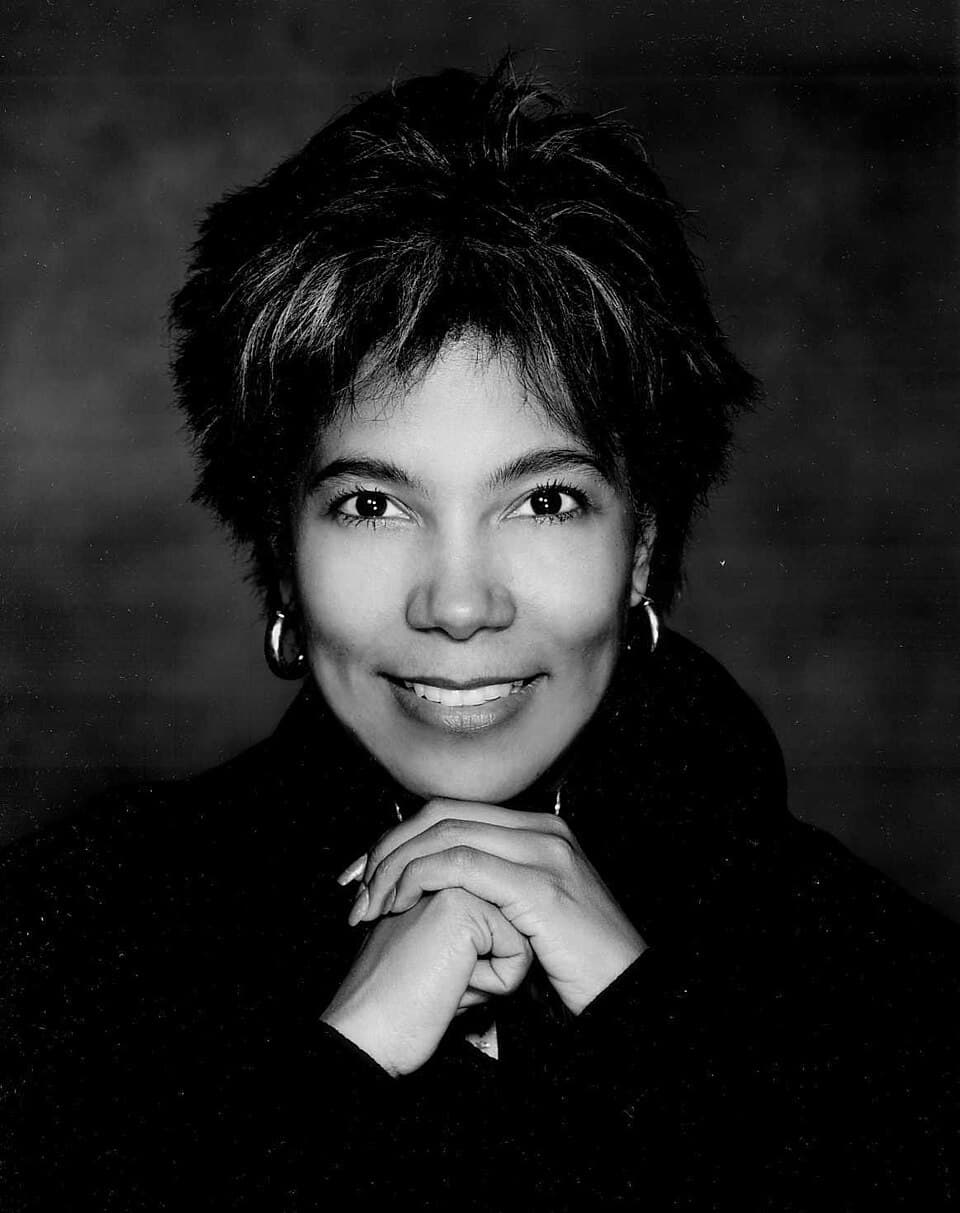
Canadian, American · Science
Claudia Alexander
May 30, 1959 – July 11, 2015
Early Life and Background
Claudia Joan Alexander was born on 30 May 1959 in Vancouver, British Columbia, Canada, into a family that would soon relocate to the United States.[1][6][9][14] She was raised in Santa Clara, California, in the heart of Silicon Valley, where her mother worked in the computer industry during the early years of the region’s technology boom.[10][11][12] Growing up amid rapid technological change, Alexander developed a love of science fiction, horseback riding, and storytelling, interests that would later inform both her scientific career and her side work as an author.[10][11]
As a child and teenager, Alexander initially imagined becoming a historian, drawn to narratives and the study of the past.[5][12] Her parents, however, encouraged her to consider engineering, a field they believed would provide strong career opportunities.[5][12] Seeking a compromise between her own interests and her family’s expectations, she found a path in the physical sciences, where the analytical rigor of engineering could be combined with curiosity about the natural world. This search ultimately led her toward geophysics and later planetary science.[1][5]
Education and Formative Scientific Training
Alexander enrolled at the University of California, Berkeley, where she studied earth science and ultimately completed an undergraduate degree in geophysics in the early 1980s.[5][11][12][14] According to later profiles, she graduated in 1983, although the widely available sources document only the year rather than the precise date.[12] At Berkeley she was exposed to tectonics, seismology, and the physics of Earth’s interior, experiences that strengthened her interest in planetary processes beyond Earth.[5][11]
She continued her studies at the University of California, Los Angeles (UCLA), earning a master’s degree in geophysics and space physics.[1][3][5][15] Her graduate work shifted her focus from Earth’s interior toward space plasma and planetary environments, preparing her for a career in space science. Alexander then pursued doctoral work at the University of Michigan, in the Atmospheric, Oceanic and Space Sciences program, specializing in space plasma physics and planetary magnetospheres.[1][2][3][5][10] She received her Ph.D. in 1985, with research that investigated the complex interactions between solar wind, magnetic fields, and planetary atmospheres.[1][2]
During her time at Michigan, Alexander encountered mentors and peers who were engaged in major NASA missions, exposing her to the culture of collaborative, long-duration space projects.[10] These experiences, combined with her technical training, positioned her to contribute to planetary missions at a time when data from the outer solar system were transforming scientific understanding.
Career Beginnings: USGS and Early Work at JPL
Following her doctoral studies, Alexander worked for the United States Geological Survey (USGS), further grounding her expertise in geophysics and the study of planetary surfaces.[1][3][5][6] Her work there engaged themes of tectonics and planetary structure, bridging conventional geology with emerging planetary science questions.
In the mid-1980s, Alexander joined NASA’s Jet Propulsion Laboratory (JPL), initially as a member of the technical staff.[1][3][5][11][14] She became involved with NASA’s Galileo mission to Jupiter, at first serving as a science coordinator before being promoted to project manager.[5][12][14] This rapid progression reflected both her scientific acumen and her ability to navigate the complex engineering and organizational demands of a major planetary mission.
At JPL, Alexander’s research interests were broad. She studied the evolution and interior physics of comets, Jupiter and its moons, magnetospheres, plate tectonics, space plasma, the solar wind, and the planet Venus.[1][3][5] Her work contributed to understanding how planetary environments interact with solar radiation and magnetic fields, and how these processes shape the surfaces and atmospheres of planets and smaller bodies.
Leadership on the Galileo Mission to Jupiter
The Galileo mission, launched in 1989, was designed to study Jupiter, its moons, and its magnetosphere. Over its 14-year journey, the mission returned unprecedented data, including detailed observations of the Galilean moons and their geologic activity. Alexander became one of the project managers and eventually the final project manager as the mission approached its end.[1][5][7][10][12]
On 21 September 2003, under Alexander’s leadership, the Galileo spacecraft was deliberately directed to plunge into Jupiter’s atmosphere, bringing the mission to a controlled conclusion.[15] This decision followed planetary protection principles: by sending the spacecraft into Jupiter, mission planners ensured there would be no risk of contaminating Europa, a moon that is considered a candidate for harboring a subsurface ocean and potential habitability.[15] The end-of-mission maneuver marked the completion of an eight-year orbital tour of Jupiter and a landmark chapter in planetary exploration.
Alexander’s role as final project manager has been widely noted in institutional profiles and memorials.[1][3][7][10][12][15] Many secondary sources describe her as a pioneering Black woman in planetary science and emphasize that she held a rare leadership position in a major NASA mission. While these accounts celebrate her as a barrier-breaking figure, available sources do not provide definitive, comparative evidence to document her as the first Black woman to lead a NASA planetary mission, so such claims are treated cautiously in historical analysis.
Rosetta and International Collaboration
In the late 1990s and 2000s, Alexander became deeply involved in the European Space Agency (ESA) Rosetta mission to comet 67P/Churyumov–Gerasimenko.[1][2][3][5][10][16] Rosetta was an ambitious mission designed to orbit a comet, deploy the Philae lander to its surface, and study how comets evolve as they approach the Sun. Alexander served as project scientist for NASA’s U.S. contribution to Rosetta, coordinating American instruments, data analysis, and scientific participation.[1][2][3][5][16]
Her work on Rosetta included not only scientific leadership but also extensive outreach and engagement with amateur astronomers. ESA notes that she played a key role in organizing a ground-based observing campaign for comet 67P, integrating observations from non-professional astronomers with the spacecraft’s data.[16] This effort exemplified her belief in making cutting-edge planetary science accessible and participatory, broadening the community involved in studying comets.
Alexander’s Rosetta role further entrenched her reputation as an expert on cometary physics and plasma environments. The mission’s discoveries—such as the detailed mapping of 67P’s surface and its complex outgassing behavior—added to the scientific narrative about how comets preserve materials from the early solar system and shape planetary atmospheres.
Other Scientific Contributions and Mission Involvement
Beyond Galileo and Rosetta, Alexander contributed to other major planetary missions. She was a member of the Cassini science team, involved in the mission that explored Saturn, its rings, and its moons.[10][14][16] Cassini expanded understanding of planetary rings, icy satellites like Enceladus and Titan, and the dynamics of giant-planet systems, areas aligned with her expertise in magnetospheres and plasma physics.
Her publications spanned comet science, geophysics, and planetary plasma physics. The Smithsonian National Air and Space Museum notes that she authored or co-authored 14 scientific papers and, in parallel, wrote science fiction and children’s books.[10] This dual commitment to research and storytelling underscores her belief that scientific ideas gain power when they are communicated in engaging, imaginative forms.
Alexander’s research topics included plate tectonics, space plasma, Venus, comets, Jupiter and its moons, solar wind interactions, and magnetospheric processes.[1][3][5][10][16] Across these domains, she contributed to a more integrated view of how solar and planetary environments interact, helping to connect geophysical processes with space physics.
Awards, Honors, and Recognition
During her career, Alexander received several honors recognizing both her scientific achievements and her role as a woman of color in research and engineering. A Caltech event description notes that she was a recipient of the Emerald Honor for Women of Color in Research and Engineering, an award that celebrated her contributions to planetary exploration and her visibility as a Black woman scientist in a field with few similar role models.[15]
In 2015, after her death, multiple institutions issued memorials and tributes. NASA’s Jet Propulsion Laboratory published an obituary titled “Dr. Claudia Alexander”, emphasizing her leadership on Galileo and Rosetta and her broad research portfolio.[3][4] ESA released a remembrance highlighting her role as U.S. Rosetta project scientist and her passion for outreach.[16] The Smithsonian’s National Air and Space Museum wrote an editorial, “Remembering Claudia Alexander—Space Scientist,” that detailed her career and underscored her impact on planetary science and STEM education.[10]
Media outlets and educational organizations also recognized her contributions. BlackAmericaWeb featured her in its “Little Known Black History Fact” series, presenting her as a leading NASA scientist who oversaw the tail end of one of the agency’s most successful missions.[12] The National Schools’ Observatory in the United Kingdom profiled her as an inspirational figure for students interested in exploring space and planetary science careers.[5] Collectively, these recognitions frame Alexander as an important figure in the history of women and Black scientists in space exploration.
Personal Life and Interests
Publicly available sources focus primarily on Alexander’s professional achievements and outreach work, providing limited detail about her private personal life. No widely cited sources document marriage, children, or long-term partnerships, and editorial standards therefore avoid speculation on such matters.
Her personal interests are better documented. She maintained a strong enthusiasm for science fiction, horseback riding, and writing.[10][11] She authored science fiction stories and children’s books that presented scientific ideas in accessible, imaginative formats.[10] These creative pursuits suggest a scientist who saw narrative and imagination as central to communicating complex concepts and inspiring young people.
Alexander was also committed to mentoring and education. The Smithsonian notes that she supported STEM education programs and established a scholarship program at the University of Michigan, aimed at assisting students and encouraging greater participation of underrepresented groups in science and engineering.[10] Her outreach work extended to collaborations with amateur astronomers, public lectures, and media appearances intended to demystify planetary science.
Legacy and Historical Impact
Alexander’s legacy in planetary science rests on both her scientific contributions and her role as a visible Black woman leader in a field historically dominated by white men. Her leadership as the final project manager of the Galileo mission and as project scientist for NASA’s role in Rosetta made her one of the most prominent women of color in planetary mission management during the late twentieth and early twenty-first centuries.[1][3][5][7][10][15][16]
Secondary sources frequently describe her as a pioneering Black woman in planetary science and as the first or only Black woman to lead a major NASA planetary mission.[10][12] However, the existing documentation does not provide comprehensive, comparative evidence across all NASA missions to verify these "first" claims conclusively. For that reason, careful historians treat such statements as important indicators of perception and representation rather than as fully documented firsts. What is clear is that her visibility and success challenged stereotypes and expanded ideas about who could shape the direction of planetary exploration.
Beyond representation, Alexander’s scientific work helped advance understanding of Jupiter’s system, comets, magnetospheres, and solar wind interactions, contributing to a more integrated picture of planetary environments. Her outreach—through scholarships, educational programs, amateur astronomy collaborations, and children’s books—broadened public engagement with space science and created pathways for students from underrepresented backgrounds.[5][10][16]
Institutional memorials from NASA, ESA, and the Smithsonian consolidated her place in the historical record of planetary exploration.[3][10][16] These tributes emphasize that her impact extended beyond technical contributions to include mentorship, storytelling, and public engagement, making her legacy multifaceted and enduring.
Later Life and Death
In her later years, Alexander continued to serve as project scientist for NASA’s U.S. contribution to the Rosetta mission, even as she faced serious illness.[1][2][3][16] NASA notes that she battled breast cancer for approximately a decade, yet remained professionally active and engaged in mission planning and outreach.[2][3]
On 11 July 2015, Alexander died at age 56 in California from complications of breast cancer.[1][2][3][7][9][14] At the time of her death, she was still serving as Rosetta project scientist for NASA, underscoring her commitment to planetary science until the end of her life.[2][3][16] In the days and weeks that followed, numerous tributes appeared from NASA, ESA, museums, and media outlets, reflecting the breadth of her influence.
NASA’s Jet Propulsion Laboratory published its obituary and tribute on 14 July 2015, highlighting her leadership roles and describing her as a "beloved colleague" whose work had left a lasting mark on planetary exploration.[3][4] ESA’s remembrance emphasized her scientific expertise and her enthusiasm for outreach, while the Smithsonian presented her as a key figure whose career spanned major missions and educational initiatives.[10][16] These accounts collectively portray a scientist whose professional achievements were matched by her commitment to opening doors for others.
Alexander’s death marked the end of a remarkable career, but her influence persists in the data and discoveries of Galileo, Cassini, and Rosetta; in scholarships and educational programs; and in the stories told about who leads and participates in planetary science. Her life stands as a significant chapter in women’s and Black history in STEM, illustrating both the possibilities and the structural challenges faced by underrepresented scientists in large institutions.
Dated achievements
4 indexed.
- May301959Science
Birth of Claudia Joan Alexander
Claudia Joan Alexander was born in Vancouver, British Columbia, Canada, later becoming a pioneering Canadian-American research scientist in geophysics and planetary science.
View details Claudia Alexander - Wikipedia - Sep212003Science
Galileo mission to Jupiter concludes under Alexander's leadership
As final project manager, Claudia Alexander oversaw the Galileo spacecraft's planned plunge into Jupiter's atmosphere on September 21, 2003, ending its historic mission.