← All women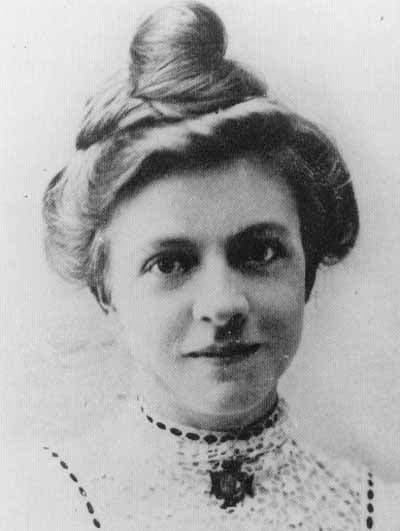
American · Medicine
Claara Maass
June 28, 1876 – August 24, 1901
Early Life and Background
Clara Louise Maass was born on June 28, 1876, in East Orange, New Jersey, to German immigrant parents Hedwig and Robert Maass.[1][2][8] She was the eldest of a large family, with sources indicating she was the oldest of nine or ten children, raised in a devout Lutheran household and in conditions of significant economic hardship.[8][12] Her parents had come to the United States seeking opportunity, but like many immigrant families in the late nineteenth century, they faced precarious employment and crowded urban housing.
Maass spent much of her childhood in the tenements of the Newark area, an environment that exposed her to disease, poverty, and the limited social support available to working-class families.[7] She left formal schooling around the age of fifteen to help support her family, taking a job at the Newark Orphan Asylum.[8] This work with vulnerable children appears to have deepened her sense of responsibility and compassion, while giving her practical experience in caregiving.
Her Lutheran faith was an important influence throughout her life. Later accounts emphasize that Maass understood nursing as a vocation grounded in religious duty and service, rather than simply a trade.[7][12] This fusion of faith, family obligation, and firsthand experience of suffering formed the backdrop against which she chose to enter the emerging profession of trained nursing.
Nursing Education and Career Beginnings
In 1893, at about seventeen years of age, Maass entered the Newark German Hospital School of Nursing, also known historically as the Christina Trefz Training School of Nurses.[2][6][8] Hospital-based training schools were a relatively new development in American health care, inspired by the reforms of Florence Nightingale and designed to provide structured clinical education for women.
Maass completed the rigorous two-year program and graduated in 1895.[2][8][12] Shortly afterward she was appointed head nurse at the hospital, a notable promotion for a woman in her early twenties.[2][6][8] As head nurse, she supervised other trainees and staff, managed wards, and participated in the care of medical and surgical patients in a rapidly modernizing institution.
Her work at Newark German Hospital gave her extensive exposure to infectious diseases common in crowded urban environments of the era, including typhoid, dysentery, and tuberculosis, as well as the everyday injuries of industrial labor.[6][8] The training also socialized her into the strict discipline, long hours, and hierarchical structure that characterized late nineteenth‑century nursing.
Contemporaries later described Maass as diligent, serious, and highly committed to patient welfare, qualities that would carry into her subsequent military service. Within a profession still struggling for recognition and adequate pay, her rapid advancement at the hospital signals both competence and the institution’s openness to women assuming greater responsibility.
Service in the Spanish–American War
At the outbreak of the Spanish–American War in April 1898, the U.S. Army faced a severe shortage of trained nurses to care for sick and wounded soldiers in new camps across the South and in overseas theaters.[2][6] Responding to nationwide calls for volunteers, Maass left her hospital post and joined the U.S. Army Medical Department as a contract nurse in 1898.[2][8][9]
During her first term of service, she worked with the Seventh U.S. Army Corps in camps in Florida and Georgia and later in Cuba.[2][6][8] Conditions in these camps were harsh: poor sanitation, contaminated water, and inadequate shelter contributed to disease outbreaks that killed far more soldiers than combat did.[6][9] Maass cared for patients suffering from malaria, typhoid fever, dysentery, dengue, and especially yellow fever, becoming highly skilled in managing tropical and enteric illnesses.[6]
Her work exemplified the critical but often under‑recognized role of women nurses in wartime. In addition to bedside care, nurses like Maass advocated for sanitary reforms and disciplined medical practice to mitigate the high mortality in the camps. Contract nurses were civilians, not military officers, and they operated within gendered hierarchies that limited formal authority while demanding intense labor and emotional resilience.
After completing this period of service, Maass returned briefly to civilian nursing. However, her experience with tropical disease and her demonstrated competence soon drew renewed attention from military medical leaders.
Return to Service and Yellow Fever Research
In 1900, Maass again volunteered to serve as a contract nurse and was sent first to the Philippines and then back to Cuba, where yellow fever remained a serious threat to both military personnel and civilians.[2][8] Her long experience caring for victims of the disease brought her into the orbit of the U.S. Army Yellow Fever Commission, led by Major Walter Reed, which had recently demonstrated that yellow fever was transmitted by mosquitoes rather than direct contact or fomites.[2][11]
While stationed in Havana, Maass worked at Las Animas Hospital, a key site for yellow fever treatment and research.[2] Reed’s experiments, conducted in 1900, used written informed consent and monetary incentives, an early attempt at ethical structure for human experimentation.[11] By the time Maass arrived, Reed’s work had largely concluded, but Cuban and American physicians, including Major William C. Gorgas and Dr. John Guitéras, continued to investigate questions of immunity and prophylaxis using mosquito inoculation.[2][11]
In this environment, Maass became intrigued by the possibility that carefully controlled deliberate infection might confer immunity, protecting future workers and soldiers from the frequently fatal disease. Her professional identity as a nurse, shaped by close contact with suffering and death, likely contributed to her willingness to consider personal risk in service of potential public benefit.
Human Experiments and Final Illness
In early 1901, Maass volunteered to participate in yellow fever experiments involving deliberate exposure to mosquitoes known to carry the virus.[1][2][11] The initial experimental bites produced only a mild illness, which she survived; physicians therefore believed she might have acquired immunity.[9][11] Sources describe multiple exposures over the months that followed, culminating in the final, fatal infection.
According to detailed accounts, on August 14, 1901 Maass allowed herself to be bitten by an infected Stegomyia fasciata mosquito, later reclassified as Aedes aegypti.[2][3] This exposure was undertaken with written consent and a monetary incentive of $100 in U.S. gold, standard for participants in these experiments.[11] Contrary to expectations, she developed a severe fever within a few days.
Spanish‑language sources note that she became dangerously ill on August 18, 1901 and deteriorated rapidly.[3] Despite receiving the best care available at Las Animas Hospital, Maass succumbed to the disease on August 24, 1901only woman and the only American to die as a direct result of these yellow fever experiments; two Spanish immigrants also died, provoking broader public concern.[2][11]
Maass’s death, alongside those of the other volunteers, triggered an immediate cessation of human inoculation experiments in Cuba.[11] Her case became central to later analyses of the ethical dimensions of research on deadly diseases, particularly regarding informed consent and acceptable risk.
Personal Life
There is limited documentation of Maass’s personal life outside her professional and military service. Available sources do not indicate that she married or had children.[1][2][8] Much of the historical record focuses on her work as a nurse, her religious commitments, and her role in yellow fever research, rather than private relationships.
Accounts from colleagues and later biographers portray her as serious, compassionate, and motivated by a strong sense of duty. Her Lutheran faith and immigrant background are consistently referenced as foundational influences.[7][8][12] While the absence of detailed personal information reflects both the brevity of her life and the gendered priorities of historical documentation, her actions suggest a woman deeply committed to service and to the emerging ideals of professional nursing.
Impact on Medicine and Research Ethics
Maass’s participation in the yellow fever experiments and her death in 1901 had significant implications for both tropical medicine and research ethics. By volunteering for deliberate inoculation, she contributed to a series of investigations that confirmed mosquito transmission and explored the possibility of induced immunity.[2][11] Although her fatal second infection demonstrated that immunity could be incomplete and that deliberate exposure carried grave danger, the overall body of research informed effective public health strategies.
Her case is often cited in discussions of early informed consent. Walter Reed had introduced written consent forms and monetary compensation for volunteers, recognizing both the risks involved and the need for explicit agreement.[11] However, the deaths of Maass and other participants highlighted the limitations of consent in situations where scientific knowledge was incomplete and risks could not be fully quantified.
In subsequent decades, medical historians and ethicists revisited the yellow fever experiments as a formative episode in the evolution of research standards. Maass’s story illustrates both the potential heroism of volunteers and the structural vulnerability of nurses and other caregivers who may feel moral pressure to accept personal danger for the sake of their patients and colleagues.
Posthumous Honors and Recognition
In the years and decades following her death, Clara Maass became an emblematic figure in nursing history. Within Cuba, her sacrifice was remembered locally, and on the 50th anniversary of her death in 1951, Cuba issued a commemorative stamp in her honor, reflecting international recognition of her role in the struggle against yellow fever.[9]
In the United States, formal institutional recognition accelerated in the mid‑twentieth century. On June 19, 1952, the Newark German Hospital—by then known as Lutheran Memorial Hospital—was renamed the Clara Maass Memorial Hospital, now the Clara Maass Medical Center.[2][7] Historians identify this as the first instance of a U.S. hospital being named after a nurse, underscoring the significance of her legacy in health care.[5]
During the centennial year of her birth, 1976, Maass was inducted into the American Nurses Association Hall of Fame, recognizing her as a pioneering figure whose life and death shaped both nursing practice and ethical discourse.[9][12] That same year, the U.S. Postal Service issued a commemorative stamp featuring her image.
The stamp was formally unveiled at a ceremony in Belleville, New Jersey, on August 18, 1976, and contemporary reports emphasize that she was the first nurse ever honored on a U.S. postage stamp.[1][5] This philatelic tribute brought her story to a wide public audience and cemented her place among nationally commemorated figures.
Additional honors include later induction into the New Jersey Hall of Fame, recognition by museums such as the U.S. National Museum of Health and Medicine, and inclusion in exhibitions on women in medicine and on U.S. postage stamps.[5][9][13]
Legacy and Historical Significance
Clara Maass’s legacy lies at the intersection of nursing history, tropical medicine, and bioethics. As a trained nurse who served in wartime camps and later volunteered for high‑risk experiments, she embodies the transition from informal caregiving to professional nursing grounded in scientific knowledge and institutional responsibility.
Her death in 1901 influenced both public sentiment and professional debate about human experimentation. The immediate cessation of yellow fever inoculation studies in Cuba following her demise and that of other volunteers illustrates the powerful impact of perceived martyrdom and the limits of societal tolerance for experimental risk.[11] Her case continues to be cited in discussions of research ethics involving infectious diseases and vulnerable populations.
For the nursing profession, Maass serves as an enduring symbol of courage and commitment. The naming of a major hospital after her, her induction into the ANA Hall of Fame, and her portrayal on U.S. and Cuban stamps all signal a broad recognition that nurses’ contributions to science and public health merit equal commemoration alongside those of physicians and military leaders.[2][5][9]
Her story also offers insight into the gender dynamics of early twentieth‑century medicine. As a young woman from a poor immigrant family, Maass achieved significant responsibility within hospital and military systems yet operated without the authority or protections afforded to male physicians. Her willingness to volunteer for dangerous experiments can be understood both as personal bravery and as a reflection of structural expectations placed on women caregivers.
Today, the Clara Maass Medical Center and various educational materials—articles, museum exhibits, and online resources—continue to present her life as a case study in the history of infectious disease and the moral complexities of medical progress.[5][11] For historians of women’s lives, she illustrates how a single individual’s choices can catalyze long‑term change in institutional practices and ethical norms.
Burial and Memory
After her death in Havana, Maass’s body was returned to the United States and interred at Fairmount Cemetery in Newark, New Jersey, the region where she had grown up and trained as a nurse.[13] Her grave became a focal point for local remembrance, particularly among the German‑American and Lutheran communities that had shaped her early life.
Over time, memory of Maass expanded beyond her immediate community to national and international scales. Historical articles, biographies, and academic discussions—such as those published in medical journals and nursing history monographs—have revisited her life with increasing analytical depth, situating her within broader narratives of women’s work, immigrant experience, and the ethics of human experimentation.[8][11][14]
In contemporary discourse, Clara Maass stands as both an individual and a symbol: a specific nurse whose decisions had concrete consequences, and a representative of countless caregivers whose labor and risk underpin advances in medical science. Her documented dates of birth, death, and commemoration anchor this legacy in time, making her story a fixture in chronologies of women’s history and medical progress.
Dated achievements
9 indexed.
- Jun281876Science
Birth of Clara Louise Maass
Clara Louise Maass was born in East Orange, New Jersey, the eldest of nine children in a German immigrant family.
View details Clara Maass - New Jersey Hall of Fame - Mar011901Science
First experimental yellow fever mosquito bite
Maass volunteered to be bitten by a mosquito infected with yellow fever as part of U.S. Army research in Havana, Cuba.