← All women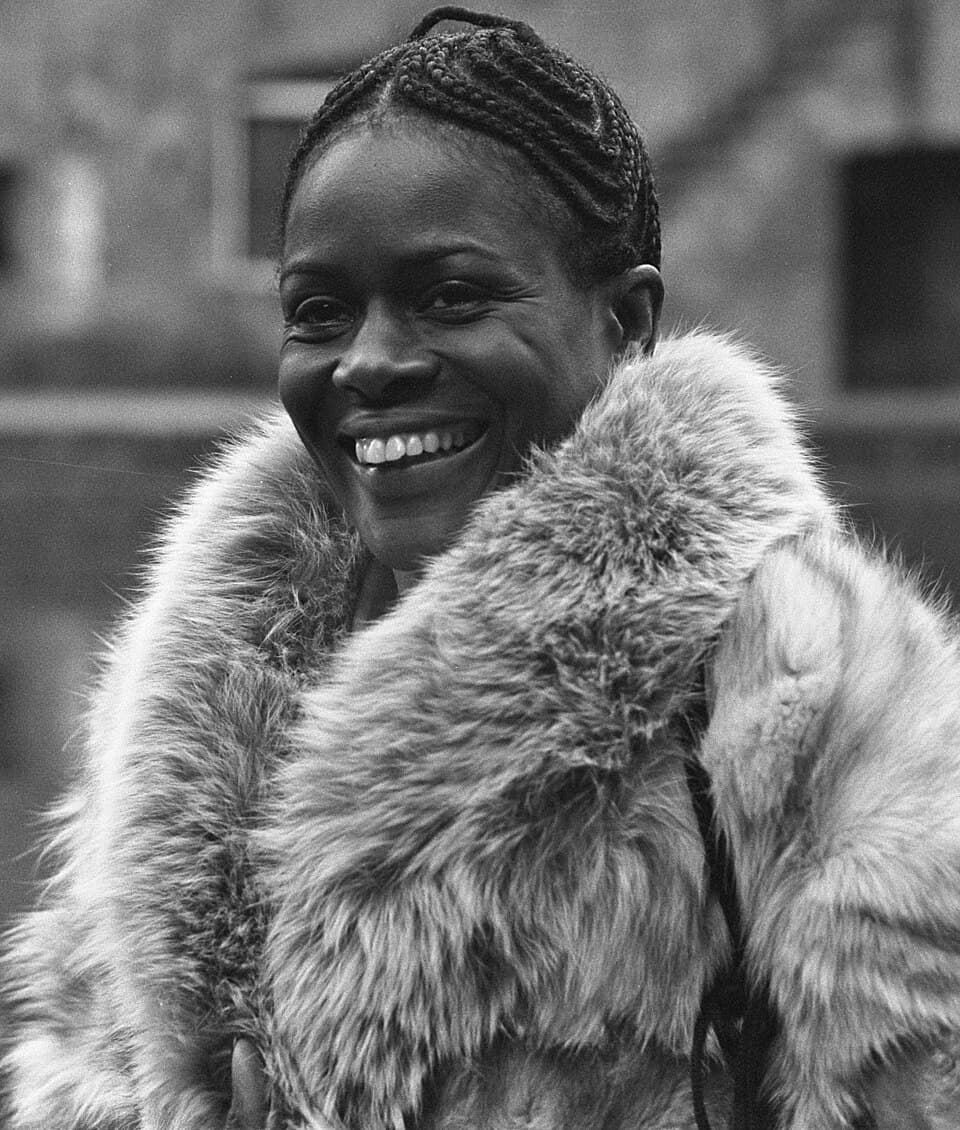
American · Arts · Activism
Cicely Tyson
December 19, 1924 – January 28, 2021
Early life and background
Cicely Tyson was born on December 19, 1924, in Harlem, New York City, to Caribbean immigrant parents from Nevis. Sources differ slightly on the exact birthplace within Harlem and on the spelling of her birth name, but major references agree that she was raised in New York City in a working-class family shaped by the experience of immigration, faith, and perseverance. Her mother, Theodosia Tyson, worked as a domestic servant, and her father, William Tyson, worked as a carpenter and painter. Tyson later described the importance of her mother’s discipline and her family’s emphasis on church, respectability, and self-determination in helping form her outlook as an artist and public figure.
Tyson grew up in East Harlem during the Harlem Renaissance’s afterglow and the Great Depression, in an environment where Black cultural life was rich but economic opportunity remained limited. She attended local schools, sang in church choirs, and became interested in the expressive power of performance at a young age. According to major biographical sources, she attended New York University and later studied acting at the Actors Studio, though her path into the profession was not straightforward. Before becoming an actress, she worked as a secretary and model. Her modeling career, especially her appearance in Ebony magazine, helped open doors in the entertainment world, but Tyson soon came to be known for choosing roles that carried more emotional and cultural substance than the stereotyped opportunities then commonly available to Black women.
Career beginnings
Tyson entered professional acting in the late 1950s and early 1960s, first on stage and then on television. Early in her career she appeared in Off-Broadway productions and won critical attention for performances in The Blacks and Moon on a Rainbow Shawl. Those years were important because they established a pattern that would define her work for decades: she was selective, disciplined, and committed to roles that portrayed Black women as psychologically complex rather than ornamental or subordinate. During a period when the American entertainment industry offered Black actresses very few dignified leading parts, Tyson built a reputation for artistic seriousness and quiet force.
Her television debut came in 1961 on Frontiers of Faith, and in the years that followed she began appearing in more visible dramatic roles. The major breakthrough arrived on September 23, 1963, when East Side/West Side premiered with Tyson as Jane Foster. That casting made her the first African American to star in a U.S. network television drama series, a milestone in television history. The role placed a Black woman in a central dramatic position on network television at a moment when such visibility was rare and often contested. Tyson’s presence in that series helped expand what American viewers could expect from television casting and paved the way for later breakthroughs by Black performers.
Film breakthrough and national recognition
Tyson’s film career developed more slowly than her television and stage work, but when it accelerated, it brought her national prominence. She appeared in A Man Called Adam (1966), The Heart Is a Lonely Hunter (1968), and other films before achieving her breakthrough with Sounder (1972), in which she played Rebecca Morgan, the wife of a sharecropper family struggling through the Depression in the rural South. The film brought her widespread acclaim and an Academy Award nomination for Best Actress, making her one of the most visible Black actresses in American cinema at the time. The performance was praised for its emotional restraint, moral seriousness, and refusal of caricature.
Tyson’s work on Sounder mattered not only as an artistic success but also as a challenge to the narrow range of images generally available to Black women in Hollywood. The role helped cement her public image as an actress who insisted on dignity, realism, and historical authenticity. Over time, this approach became one of the defining features of her career. She did not treat acting as mere visibility; she treated it as an opportunity to shift the public representation of Black women.
Historic television success
Tyson’s most celebrated television performance came in The Autobiography of Miss Jane Pittman, which first aired on January 30, 1974. In the title role, she portrayed an elderly formerly enslaved woman whose life spanned the centuries from slavery into the civil rights era. The performance was widely praised for its scope and emotional depth, and it became one of the defining television roles of the decade. At the 26th Primetime Emmy Awards on May 28, 1974, Tyson won two Emmys for the role: Outstanding Lead Actress in a Special Program – Drama or Comedy and Actress of the Year – Special. She became the first Black woman to win an Emmy as a lead actress in a television movie.
These victories were historically significant because they signaled that a Black woman’s performance, centered on Black historical memory, could receive the highest level of industry recognition. Tyson’s portrayal of Miss Jane Pittman combined personal endurance with collective history, giving a human face to the long arc of African American experience. In an era when network television rarely entrusted Black women with such expansive roles, the performance stood as a landmark in both acting and representation.
Tyson continued to work steadily in film and television through the 1970s and beyond. She received additional Emmy recognition, including a 1994 win for Oldest Living Confederate Widow Tells All. Her television roles often carried strong moral and historical dimensions, and she became known for elevating supporting parts into memorable dramatic statements. Later performances in series such as How to Get Away with Murder introduced her to new generations of viewers while reaffirming the durability of her screen presence.
Stage career and later achievements
Although many audiences knew Tyson primarily from screen work, she maintained a major stage career. Her theater performances were central to her artistic identity and helped establish her reputation as a serious actor long before her screen fame became widespread. In 2013 she won the Tony Award for Best Performance by an Actress in a Leading Role in a Play for The Trip to Bountiful. At 88, she became the oldest person to win a competitive acting Tony Award, a record that underscored both her longevity and the enduring force of her stage work.
Tyson’s late-career recognition continued to accumulate. She received a star on the Hollywood Walk of Fame in 2018, followed by an honorary Oscar at the Governors Awards the same year, making her the first Black woman to receive that distinction. Also in 2018, she was inducted into the American Theater Hall of Fame. These honors were more than ceremonial: they represented long-delayed institutional acknowledgment of a career that had consistently expanded the possibilities for Black actresses in American culture.
In 2020 Tyson was inducted into the Television Academy Hall of Fame, and she was announced as a recipient of a Peabody Career Achievement Award. These honors confirmed the breadth of her influence across media and her lasting importance as a performer whose work helped define television’s highest ambitions.
Awards, honors, and recognition
Tyson received numerous awards during her career, including multiple Emmy Awards, a Tony Award, a Kennedy Center Honor, the Presidential Medal of Freedom, an honorary Academy Award, and induction into both the American Theater Hall of Fame and the Television Academy Hall of Fame. She was also celebrated by cultural and historical institutions such as the National Portrait Gallery and the Hollywood Walk of Fame. Together, these recognitions trace the arc of a career that was often ahead of its institutional time.
Her honors also carried symbolic weight. She was repeatedly recognized not only for performance but for the broader cultural meaning of her career. Tyson became a standard-bearer for roles that portrayed Black women with moral complexity and historical gravity. In that sense, her awards document the gradual but real expansion of the American arts establishment’s understanding of excellence.
Personal life
Tyson was married to Miles Davis from 1981 to 1988. Their marriage linked two of the most prominent Black artists of the twentieth century, though Tyson generally kept her personal life private and guarded. Biographical accounts note that she had one daughter, Joan Tyson. Beyond these facts, Tyson consistently maintained a public image centered on her work rather than celebrity gossip or self-promotion.
Her privacy was part of her professional identity. Tyson often spoke about the discipline required to sustain a long career and about the importance of choosing work that aligned with her values. She was admired for elegance, poise, and intellectual seriousness, qualities that helped make her a model of Black womanhood for many audiences while also reflecting her own careful self-fashioning.
Legacy and historical impact
Cicely Tyson’s historical importance rests on more than a set of awards. She transformed expectations for Black women in American entertainment by insisting on roles that portrayed them as layered, resilient, and central to the national story. At a time when the industry frequently reduced Black women to servants, side characters, or stereotypes, Tyson made a career out of refusing those limits. Her work in East Side/West Side, Sounder, The Autobiography of Miss Jane Pittman, Roots, Oldest Living Confederate Widow Tells All, and The Trip to Bountiful helped broaden the emotional and historical range of mainstream acting.
Her influence extended into cultural memory and institutional recognition. Tyson became a symbol of artistic integrity, racial pride, and generational continuity. She was admired by audiences, peers, and younger performers who saw in her career a model of how to combine excellence with principle. She also helped normalize the presence of older Black women in leading roles, a contribution that remains especially significant in an industry that often marginalizes both age and race.
By the time of her death, Tyson had become one of the most honored actresses in American history, but her legacy was deeper than the honors themselves. She helped redefine the meaning of success for Black women in the arts: not mere visibility, but authority; not token inclusion, but historical presence. That is the enduring measure of her contribution.
Later life and death
In her later years, Tyson continued to appear publicly, receive awards, and speak about the importance of meaningful representation. She remained active in cultural life into her nineties and was celebrated by major institutions that recognized the lasting significance of her work. On January 28, 2021, Cicely Tyson died at the age of 96. Her death prompted tributes across the entertainment world and beyond, reflecting the breadth of her impact on stage, film, television, and the broader cultural imagination.
Her life and career remain central to the history of women in the performing arts, especially Black women who used the screen and stage to claim dignity in the face of exclusion. Tyson’s legacy continues in the standards she set, the roles she helped make possible, and the generations of performers who followed the path she helped create.
Dated achievements
15 indexed.
- Dec191924Science
Birth in Harlem, New York City
Cicely Tyson was born in Harlem, Manhattan, to Caribbean immigrant parents from Nevis, one of three children in a working-class family.
View details Cicely Tyson | Britannica - Sep231963Science
First African American to star in a TV drama series (East Side/West Side)
Tyson became the first African American to star in a U.S. network television drama series when East Side/West Side premiered on CBS.