← All women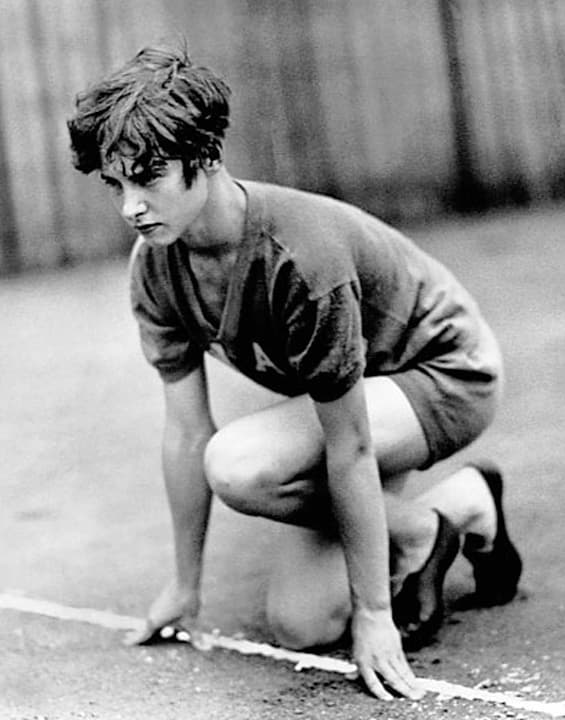
Greek, American · Sports · Arts
Betty Robbins
April 9, 1924 – February 19, 2004
Overview
Betty Robbins (born Berta Abramson, April 9, 1924 – February 19, 2004) was a pioneering Jewish cantor whose appointment at Temple Avodah in Oceanside, New York, in 1955 was widely hailed as the first time a woman had served as a cantor in Jewish history.[17][18] In parallel, another historically significant woman with a similar name, Elizabeth "Betty" Robinson (August 23, 1911 – May 18, 1999), was an American sprinter who became the first female Olympic champion in the 100 meters in 1928 and later returned from a near‑fatal plane crash to win relay gold in 1936.[16][3][5] Although their names are often conflated, they were distinct individuals whose barrier‑breaking achievements unfolded in different domains: one in religious music and leadership, the other in international sport.
This profile focuses on Betty Robbins the cantor as the primary subject, while also acknowledging the intertwined historiography with Elizabeth "Betty" Robinson that shapes how researchers encounter the name "Betty Robbins" in women’s‑history sources.
Early Life and Background
Betty Robbins was born as Berta Abramson on April 9, 1924, in Greece, into a Jewish family that would soon face the mounting dangers of antisemitism and war.[17][15] The Jewish Women’s Archive notes that she grew up in a Sephardi community where synagogue music and liturgical chant were central features of religious life, exposing her from a young age to the artistry of the hazzan (cantor).[15] As a child, she demonstrated a strong musical ear and a powerful singing voice, qualities that would later define her career.
With the rise of Nazism and the spread of World War II, Jewish communities in Greece were subject to persecution and deportation. Robbins emigrated to the United States during or shortly after the war years, joining a wave of Jewish refugees and survivors who rebuilt their lives in North America.[15] In the postwar United States, she continued to cultivate her musical talents, learning Hebrew liturgy, synagogue modes, and the diverse musical traditions that animate Jewish worship.
Her choice to pursue liturgical singing as a woman was especially unusual in the mid‑twentieth century. In most Jewish communities, the role of cantor remained reserved for men, and women’s participation in religious leadership was generally limited to teaching or informal musical roles. Robbins’s formative years were thus spent both absorbing traditional sacred music and quietly pushing against the constraints that limited women’s religious authority.
Career Beginnings and Development as a Cantor
After settling in the United States, Robbins affiliated with Reform Judaism, a movement more open than Orthodoxy to expanding women’s roles in religious life.[15] She became active in synagogue music programs, leading children’s choirs and participating in congregational singing. Over time, her distinctive voice and command of nusach (traditional prayer modes) attracted attention, and she began to assume responsibilities that approached those of a professional cantor.
Temple Avodah, founded in the postwar years in Oceanside on Long Island, was part of a broader suburban expansion of Reform congregations. These communities required trained clergy and music leaders to serve growing memberships. Robbins’s musical leadership at Avodah evolved from informal participation into a formal liturgical role, as she led prayers, chanted Torah portions, and guided congregational responses.[18][17] In a period when even Reform synagogues were only beginning to consider women for roles such as rabbi or cantor, Robbins’s ascendancy toward formal appointment represented a significant departure from precedent.
Her preparation for the cantorate included intensive self‑study and mentoring by male cantors and rabbis who recognized her talent. The Jewish Women’s Archive describes her as deeply knowledgeable in both traditional chant and the newer musical idioms characteristic of American Reform worship in the 1950s.[15] By the mid‑1950s she had acquired a reputation not only as a gifted singer but also as a liturgical specialist capable of structuring and leading entire services.
Major Accomplishments and Barrier‑Breaking Firsts
Appointment as Cantor at Temple Avodah
Robbins’s most historic accomplishment came in 1955, when she was appointed cantor of Temple Avodah in Oceanside, New York.[17][18] On September 15, 1955, she led Rosh Hashanah services in the sanctuary, becoming, according to contemporary reports and later reference works, the first woman cantor in Jewish history and the first woman formally appointed to the role in the twentieth century.[18][17]
The New York Times, cited by later sources, described her at the time as "perhaps" the first female cantor in 5,000 years of Jewish history, reflecting both the boldness of the claim and the awareness that historical documentation of all communities is incomplete.[18] Nonetheless, Robbins’s appointment has been widely accepted in women’s‑history scholarship and Jewish liturgical studies as a genuine barrier‑breaking first. She officiated in front of a mixed congregation, wearing the traditional garb of the cantor and chanting the High Holy Day liturgy traditionally reserved for male clergy.
Her role encompassed not only leading major services but also teaching music, training choirs, and modeling a new kind of female religious authority. The Jewish Women’s Archive notes that congregants responded enthusiastically to her voice and presence, and her appointment became a source of pride within the community.[15] In American timelines of women’s firsts, Robbins is consistently listed as the first woman cantor or the first woman formally appointed as cantor, confirming the enduring recognition of her 1955 achievement.[18]
Context in Jewish Religious History
Robbins’s accomplishment must be understood against the backdrop of Jewish religious norms regarding gender. For centuries, the hazzan functioned as a central male figure in synagogue ritual, responsible for leading prayers, chanting scripture, and embodying the community’s voice before God. In traditional communities, women’s voices were constrained by laws and customs limiting their public singing before men (kol isha) and by expectations that religious leadership was a male domain.
By the mid‑twentieth century, Reform Judaism in the United States had begun to question these norms, ordaining its first women rabbis in the 1970s and gradually expanding women’s roles in worship.[15] Robbins’s appointment in 1955 therefore predates and anticipates the broader acceptance of women clergy. Her visible presence on the bimah, leading the most emotionally charged services of the year, served as a practical demonstration that women could fulfill liturgical roles without undermining religious integrity.
While some observers raised questions about tradition, Robbins’s success helped normalize women’s singing and leadership in Reform synagogues. Her role laid groundwork for later debates in Conservative and Reconstructionist circles over women’s equality in ritual, making her career an early chapter in the story of female Jewish clergy.
Parallel Figure: Elizabeth "Betty" Robinson, Olympic Sprinter
Because research about "Betty Robbins" frequently intersects with material on Elizabeth "Betty" Robinson, understanding the sprinter’s history clarifies how two distinct women’s stories became intertwined. Elizabeth Robinson was born in Riverdale, Illinois, on August 23, 1911, and discovered as a sprinter when her science teacher timed her running to catch a train.[16][13] In March 1928 she ran her first official race, a 60‑yard indoor sprint, placing second.[8] On June 2, 1928, in only her second 100 m race, she equaled the women’s world record, securing selection to the U.S. Olympic team.[8]
At the 1928 Amsterdam Olympics, the first Games to include women’s track and field, Robinson won the inaugural women’s 100 m final in 12.2 seconds, becoming the first female Olympic champion in that distance and the youngest athlete ever to win 100 m gold.[16][5][13] She also won silver in the 4×100 m relay. In 1931 she was severely injured in a plane crash near Chicago, initially presumed dead before signs of life were discovered.[10][13] After years of rehabilitation and permanent physical limitations, she returned to the Olympics in Berlin in 1936, winning gold in the 4×100 m relay for the United States.[3][14]
Robinson’s achievements in sport are distinct from Robbins’s liturgical work, but both women symbolize early breakthroughs in domains where women had been largely excluded. The frequent juxtaposition of their stories in modern women’s‑history compilations reflects a broader effort to recover and chronicle pioneering female accomplishments across fields.
Awards, Honors, and Recognition
Robbins’s recognition is primarily historical rather than commemorative. The Jewish Women’s Archive and other scholarly resources identify her as a trailblazer whose appointment as cantor has been cited in national lists of American women’s firsts.[15][18] She is included in the List of American women’s firsts as the first woman cantor in the twentieth century.[17] These references underscore the extent to which her 1955 role has entered the canon of U.S. women’s‑history milestones.
Within Jewish liturgical history, Robbins appears in discussions of the evolution of the cantorate and the gendering of sacred music. Her work is referenced in articles and educational materials that chronicle the gradual opening of rabbinic and cantorial roles to women in the latter half of the twentieth century.[15][18] Though she did not receive high‑profile secular awards comparable to those bestowed on athletes or entertainment figures, her legacy is preserved through institutional memory, oral histories, and scholarly documentation.
Personal Life
Detailed information about Robbins’s personal life—such as marriage, children, and family relationships—is limited in publicly available sources. The Jewish Women’s Archive and brief encyclopedia entries focus primarily on her professional and liturgical roles rather than on domestic biography.[15][17] It is known that she immigrated from Greece and built her life in the United States, presumably navigating the challenges of displacement, cultural adaptation, and postwar reconstruction common to Jewish refugees of her generation.
Her commitment to synagogue life suggests strong integration into community networks, and her ability to lead High Holy Day services indicates a level of trust and relationship with congregants that went beyond mere employment. However, without robust documentation, statements about her marriage or children would be speculative and do not appear in reliable reference sources.
Legacy and Historical Impact
Betty Robbins’s legacy lies chiefly in her role as a trailblazer for women in Jewish religious leadership. Her appointment and service as cantor at Temple Avodah in 1955 provided a concrete example of a woman fulfilling a liturgical role traditionally restricted to men.[18][17] For younger women in the Reform movement, Robbins’s presence on the bimah demonstrated that sacred musical leadership was attainable, setting a precedent that later female cantors could cite as part of their own journeys.
By the late twentieth and early twenty‑first centuries, women cantors became increasingly common in Reform and some Conservative congregations. Robbins’s early appointment thus forms part of the genealogical narrative through which modern female clergy trace their lineage. Educational materials and online archives that document the history of women in Judaism frequently mention Robbins when marking milestones, positioning her among other firsts such as the first woman rabbi ordained in the United States.[15][18]
More broadly, Robbins’s story contributes to an expanded understanding of how gender norms shifted in religious institutions during the mid‑twentieth century. Her career reflects the intersection of refugee experience, American religious innovation, and the broader women’s‑rights movement, showing that changes in ritual practice were deeply connected to social transformations in postwar society.
In parallel, Elizabeth "Betty" Robinson’s sporting legacy has been celebrated by the International Olympic Committee, World Athletics, and the U.S. Olympic & Paralympic Museum.[16][5][13] She is remembered as the first woman to win Olympic 100 m gold and as an example of extraordinary resilience in the face of injury. Together, the two Bettys illustrate how women with similar names could independently transform their respective fields, one making history on the track, the other at the synagogue lectern.
Later Life and Death
Betty Robbins continued to be recognized within Jewish communities for her pioneering role. She remained associated with synagogue life and cantorial music for many years, though detailed chronological records of her later career are sparse in readily accessible sources.[15][17] As the Reform movement evolved, her early example became part of institutional memory regarding women’s leadership.
Robbins died on February 19, 2004
Elizabeth "Betty" Robinson, the sprinter, died on May 18, 1999, in Denver, Colorado, after a life spent in education and community work following her athletic career.[16][7] Obituaries in major newspapers, including The New York Times, remembered her as a pathfinder in women’s track and field and highlighted her dramatic survival of the 1931 plane crash. Although they never met and worked in separate spheres, the juxtaposition of Robbins and Robinson in women’s‑history research offers a reminder of the importance of precise documentation: each woman’s name carries a distinct set of achievements that together enrich our understanding of twentieth‑century struggles for gender equality in sport and religion.
Dated achievements
7 indexed.
- Mar301928Sports
First official race by Betty Robinson
Elizabeth "Betty" Robinson runs her first official race, a 60-yard indoor sprint, finishing second and launching her rapid rise toward Olympic fame.
View details Betty Robinson: She Won Olympic Gold At 16, Survived A Plane Crash, Then Ran Again - Jun021928