← All women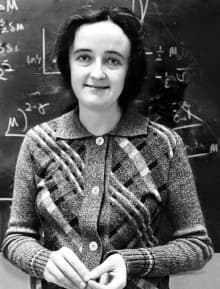
New Zealand, British · Science
Beatrice Tinsley
January 27, 1941 – March 23, 1981
Early Life and Background
Beatrice Muriel Hill Tinsley was born on January 27, 1941, in Chester, England, into a family deeply involved in science and academia. Her father was a clergyman and school principal, which often brought educational influences to the fore. In 1950, her family emigrated to New Zealand, a move marked by cultural and climatic transitions that Tinsley embraced wholeheartedly.
Tinsley’s early education took place in New Zealand, where she graduated from New Plymouth Girls' High School. Her passion for science was evident early on, and she pursued this ardor at the University of Canterbury, acquiring a Bachelor of Science in Physics and later a Master of Science in 1961, where she laid her foundational understanding of physics and astronomy.
Career Beginnings and Development
After completing her education, Tinsley moved to the United States with her husband Brian Tinsley, an atmospheric physicist, where she initially faced significant challenges establishing herself professionally due to gender biases and marital expectations. She enrolled at the University of Texas at Austin for her PhD, which she completed in 1966. Her dissertation on the evolution of galaxies immediately marked her as a rising star in astrophysics.
Post-PhD, Tinsley's professional life progressed at a measured pace due to her academic environment which was not especially conducive to women scientists at that time. Despite these challenges, she continued to work on areas she was passionate about.
Major Works and Accomplishments
Beatrice Tinsley made groundbreaking contributions to our understanding of cosmology and galactic evolution. She developed theoretical models that helped explain the evolution of galaxies, a critical piece in the puzzle of understanding the universe. These works were revolutionary, shedding light on the ways stellar populations and galaxies form and age.
In an era dominated by empirical observations rather than theoretical projections, Tinsley's insightful models profoundly shifted the paradigms of astrophysical research. Her work provided the mathematical foundation that supported the observational research others were conducting.
Awards and Recognition
Beatrice Tinsley's trailblazing efforts were formally recognized in 1974 when she became a professor of astronomy at Yale University. This was an enormous accomplishment and marked her as the first woman to hold such a position at Yale in her field, signifying a symbolic breakthrough for women in academia.
After her passing, her legacy was further cemented with the naming of the Beatrice M. Tinsley Prize by the American Astronomical Society, honoring outstanding creative and innovative research in astronomy or astrophysics.
Personal Life
Beatrice married Brian Tinsley, who she met at university. Together they had a complex relationship underscored by the contrasting expectations of gender roles in their time. They eventually divorced, but Beatrice remained deeply committed to her children and fostered their education and development.
Legacy and Historical Impact
Beatrice Tinsley’s research has had a lasting influence, not only through her direct contributions but also by paving the way for future generations of women scientists. Her determination to excel in a male-dominated discipline inspires continued advocacy for gender equality in STEM fields.
Tinsley's theoretical models remain a bedrock in cosmology, and her life demonstrates how perseverance and intellectual courage can overcome societal barriers.
Later Life and Death
Sadly, Tinsley's life was cut short by a terminal illness, and she passed away on March 23, 1981. Despite her untimely death at age 40, her academic legacy continues to influence astronomers and astrophysicists around the world to this day.
Dated achievements
1 indexed.
- Jan271941Science
Birth of Beatrice Tinsley
Beatrice Tinsley was born in Chester, England.
View details Wikipedia