← All women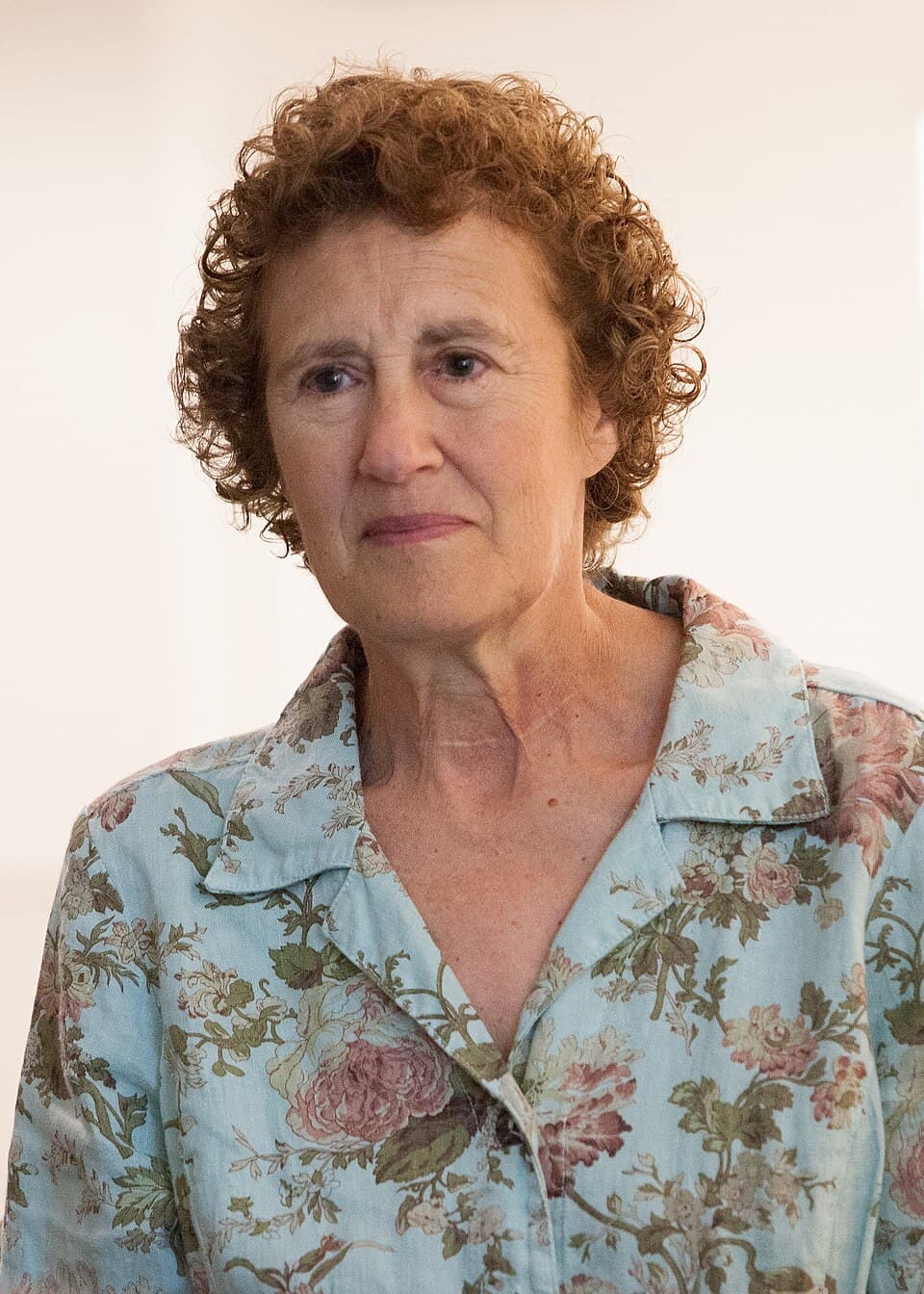
American · Science
Barbara Liskov
November 7, 1939 – present
Early Life and Background
Barbara Jane Liskov (née Huberman) was born on 7 November 1939 in Los Angeles, California, United States.[1][5] She grew up in the San Francisco Bay Area, where her family moved during her childhood.[6][7] Her parents, Jane and Moses Huberman, supported her education, and she showed strong aptitude for mathematics and analytical reasoning from an early age.[4]
Coming of age in the 1940s and 1950s, Liskov belonged to a generation of women for whom professional careers in science and engineering were rarely encouraged. Nonetheless, she pursued rigorous academic training. She attended public schools in San Francisco and later enrolled at the University of California, Berkeley, where she studied mathematics.[1][8] In 1961 she received a BA in Mathematics, a qualification that would become the foundation for her later work in theoretical computer science and programming languages.[1][10]
Education and Early Career
After graduating from Berkeley in 1961, Liskov moved to the Boston area, where she began working as a programmer at Mitre Corporation, a not-for-profit organization engaged in systems engineering and defense-related computing projects.[6][10] At Mitre, she gained practical experience in early computer systems and software development.
Following about a year at Mitre, she took another programming position at a Harvard University research group led by Oliver Selfridge, focused on language translation.[6] This experience further immersed her in the emerging field of computer science. During these years she considered pursuing graduate study in mathematics but found that her developing interests aligned more closely with computing and artificial intelligence.
In 1963, Liskov began doctoral studies in computer science at Stanford University, studying under John McCarthy, a pioneer of artificial intelligence and programming language design.[6][8] Her Ph.D. work focused on chess endgame play, developing a computer program capable of reasoning about endgame positions.[6][10] In 1968 she completed and was awarded her Ph.D. in computer science, becoming one of the first women—and widely reported as the first woman—to earn a Ph.D. from a U.S. computer science department.[1][3][4] This distinction reflects both her scientific achievement and the rarity of women in the field at the time.
Return to Mitre and Systems Work
After finishing her doctorate, Liskov returned to Mitre Corporation, where she worked on timesharing operating systems and software engineering.[6] Timesharing, a technique that allowed multiple users to share a single computer interactively, was central to expanding access to computing resources in the late 1960s and early 1970s. At Mitre, she contributed to the development of the Venus operating system, a low-cost interactive timesharing system designed to support several users on a small computer.[11][14] This work bridged theoretical computing concepts with the practical needs of organizations beginning to rely on computer systems for daily operations.
Her exposure to large, complex software systems at Mitre sharpened her interest in programming methodology: how to design, structure, and reason about programs so they remain understandable and maintainable as they grow. These experiences set the stage for her later innovations in data abstraction and programming language design.
MIT Faculty Appointment and Early Contributions
In 1972, Liskov joined the faculty of the Massachusetts Institute of Technology (MIT) in the Department of Electrical Engineering and Computer Science (EECS).[8][1] She became the first woman on MIT’s computer science faculty, a landmark in women’s representation at one of the world’s leading technical institutions.[8] At MIT, she began to develop the ideas that would become foundational in programming languages and software engineering.
In her first months as a faculty member, during the early 1970s, Liskov invented the notion of the abstract data type (ADT) and the accompanying principle of data abstraction
To explore these ideas concretely, Liskov and her group designed and implemented CLU, a programming language that was among the first to support data abstraction in a systematic way.[2][8] CLU introduced constructs for defining types together with their operations and enforcing encapsulation, concepts that later influenced mainstream object-oriented languages. Her work demonstrated that programming languages could enforce methodological discipline, not just provide syntax and basic control structures. Liskov’s research on programming methodology and language design during the 1970s and 1980s fundamentally reshaped how software engineers think about structuring code. CLU provided a rich environment for experimenting with data abstraction, generic types, and exception handling.[2][8] Through CLU, she showed that properly designed language features could make good software design practices the default, rather than optional guidelines. Her work formalized the idea that complex software systems should be built from well-specified modules with clear interfaces. This philosophy influenced the evolution of object-oriented programming, underscored by her later articulation of the Liskov substitution principle, developed with Jeannette Wing.[1][2] The principle states that objects of a subtype should be substitutable for objects of a supertype without altering desirable properties of a program, such as correctness. This idea refined the theoretical basis of subtyping and inheritance, providing guidance for the design of class hierarchies and interfaces. Liskov’s emphasis on abstraction and specification was further disseminated through her co-authored book Abstraction and Specification in Program Development with John V. Guttag in the mid-1980s, and later Program Development in Java: Abstraction, Specification, and Object-Oriented Design in 2001.[6] These texts codified principles of modular program design and rigorous specification, becoming influential resources for students and practitioners alike. Beyond programming languages, Liskov made major contributions to distributed systems, which deal with computers working together across networks. She led the design and implementation of Argus, one of the first high-level programming languages to support the implementation of distributed programs.[2][3] Argus provided constructs for atomic transactions and distributed execution, enabling developers to reason about correctness in systems where components might fail or communicate imperfectly. She also directed work on Thor, an object-oriented database management system that integrated data abstraction concepts with persistent storage.[2][8] Thor aimed to provide programmers with a simpler way to store and retrieve complex objects while maintaining guarantees about consistency and reliability. In distributed systems research, Liskov contributed to the development of Viewstamped Replication, a replication technique that ensures correct behavior when computers fail by crashing.[8][6] Viewstamped Replication and related fault-tolerance methods are widely used in modern distributed services to maintain availability and correctness despite failures. Her research extended into online storage systems providing confidentiality and integrity, anticipating contemporary concerns about secure, reliable cloud storage.[8] At MIT, Liskov rose through the academic ranks, eventually becoming an Institute Professor and Ford Professor of Engineering, one of the highest honors the institute confers on faculty.[1][8] She taught courses in programming languages, software engineering, and distributed systems, influencing generations of students who would themselves shape industry and academia. Her oral history and institutional profiles describe her significant work in MIT administration on issues of faculty equity and related matters, reflecting her commitment to improving conditions for women and underrepresented groups in science and engineering.[6] As one of the earliest women in a senior computer science faculty position at MIT, she served as a mentor and role model, demonstrating the viability and importance of women’s leadership in technical departments historically dominated by men. Liskov’s research has been recognized with numerous prestigious awards. She was named a fellow of the Association for Computing Machinery (ACM) and the American Academy of Arts and Sciences, and she is a member of the National Academy of Engineering, the National Academy of Sciences, and the Massachusetts Academy of SciencesNational Academy of Inventors
In 2004, she received the IEEE John von Neumann Medal for fundamental contributions to programming languages, programming methodology, and distributed systems.[2][8] She was awarded a lifetime achievement award from the Society of Women Engineers in 1996 and was named one of the 50 most important women in science by Discover magazine in 2003.[8] Her most widely noted honor is the ACM A.M. Turing Award, the highest distinction in computer science. She received the 2008 award formally in March 2009 for her work on the design of programming languages and software methodology that led to the development of object-oriented programming.[1][8] The award citation emphasized her contributions to data abstraction, fault tolerance, and distributed computing. On 26 April 2012 she was inducted into the National Inventors Hall of Fame, recognizing her foundational work on data abstraction and CLU, which made programs more reliable and secure.[9] In 2014 she received the Weizmann Women & Science Award, which honored her both as a pioneering scientist and as a role model, noting that she was the first woman on MIT’s computer science faculty and among the first women to earn a doctorate from a U.S. computer science department.[7] On 25 April 2018 the Franklin Institute presented her with its Computer and Cognitive Science Award for seminal contributions to computer programming languages and methodology, enabling the implementation of reliable, reusable programs.[5] She has also received the ACM SIGPLAN Programming Languages Achievement Award (2008) and the IEEE Computer Society Pioneer Award (2018), among other honors.[8] Biographical sources indicate that Barbara Liskov’s birth name is Barbara Jane Huberman and that she later took the surname Liskov, reflecting marriage, although detailed public information about her spouse and family life is limited.[1][3][4] In interviews, she has focused primarily on discussing her professional trajectory, research, and experiences as a woman in computer science, rather than on personal details.[6] Her life narrative highlights the balancing act faced by many women academics of her generation, managing the demands of research, teaching, and institutional service while navigating environments that were not initially designed to accommodate women’s careers in science and engineering. She has spoken about the importance of supportive colleagues and mentors, as well as the value of persistence and confidence in pursuing ambitious research goals.[6] Barbara Liskov is widely regarded as one of the foundational figures in modern software engineering. Her introduction of abstract data types and the accompanying methodology of data abstraction fundamentally changed how programmers conceptualize and structure software.[1][8] By emphasizing interfaces, modularity, and encapsulation, her work enabled the creation of large, complex systems that remain maintainable and robust. CLU and Argus served as laboratories for pioneering ideas in programming language design and distributed computing. Concepts that originated or were refined in these systems—such as strict encapsulation of state, exception handling, parameterized types, and transactional semantics for distributed operations—have influenced many later languages and frameworks. The Liskov substitution principle, in particular, has become a standard reference point in the theory and practice of object-oriented design, guiding the construction of safe inheritance hierarchies and API contracts.[1][2] Her work in distributed systems, including Viewstamped Replication and secure online storage, helped establish techniques that underpin contemporary cloud services and large-scale web applications.[8] These contributions are central to the reliability and resilience of modern digital infrastructure. From a women’s-history perspective, Liskov’s career holds special significance. She was among the earliest women to earn a Ph.D. in computer science in the United States and the first woman on the MIT computer science faculty.[3][7][8] Her achievements challenged stereotypes about women’s capabilities in technical fields and opened pathways for later generations of women computer scientists. Recognition through major awards, including the Turing Award and induction into the National Inventors Hall of Fame, has ensured that her contributions are visible in mainstream narratives of computing history. Liskov continued active research and teaching at MIT for decades, transitioning into emerita status after her retirement from full-time duties in 2014.[6] She remains an Institute Professor and continues to be associated with MIT’s Computer Science and Artificial Intelligence Laboratory (CSAIL).[1][17] Her later work includes research on techniques for implementing databases on multicore machines for scalability and performance, and investigations into new directions for programming languages.[8] She has given numerous invited lectures, interviews, and oral histories reflecting on the evolution of computer science, her research, and her experiences as a woman in the field.[6][7] These narratives serve as important historical documents, offering insight into the development of programming languages, distributed systems, and academic computer science from the 1960s onward. As of the mid-2020s, Barbara Liskov is living, and institutions such as ACM, MIT, and the National Inventors Hall of Fame continue to celebrate her contributions. Public acknowledgments, including social media commemorations of her birthday by ACM, help keep her legacy present in the consciousness of the computing community and the broader public.[20]Programming Languages, Data Abstraction, and CLU
Distributed Systems: Argus, Thor, and Replication
Leadership, Teaching, and Mentorship
Major Awards and Honors
Personal Life
Legacy and Historical Impact
Later Life
Dated achievements
6 indexed.
- Nov071939Science
Birth of Barbara Liskov.
Barbara Liskov was born in Los Angeles, California, U.S., later becoming a pioneering American computer scientist.
View details Barbara Liskov - Biography - Mar102009Science
ACM A.M. Turing Award presented to Barbara Liskov.
Barbara Liskov received the 2008 ACM A.M. Turing Award for her contributions to programming language and system design.