← All women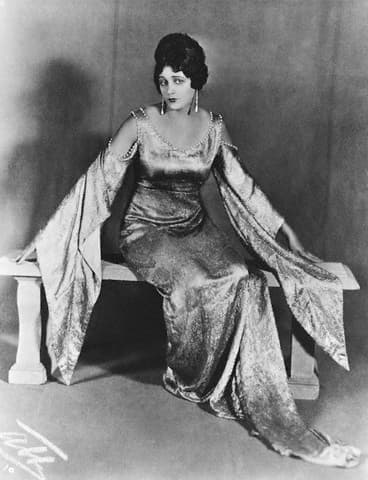
American · Arts
Barbara La Marr
July 28, 1896 – January 30, 1926
Early Life and Background
Barbara La Marr, born Reatha Dale Watson on July 28, 1896, in Yakima, Washington, later became known as a stunning and provocative figure in early Hollywood. Her family had dramatic roots—her father was a methodist minister, and her mother, a housewife with an inclination for theater. Reatha's formative years were marked by constant movement around the United States, which likely fueled her restlessness and ambition. By her teenage years, the Watson family settled in California, a place bustling with burgeoning opportunities in the motion picture industry.
Career Beginnings and Development
La Marr's entrance into the world of entertainment was as audacious as her persona would later suggest. She found initial success as a writer; by her late teens, she'd published poetry, articles, and screenplays. Seeking more direct involvement in the film industry, she made her screen debut in the early 1920s. Her striking looks and charismatic presence quickly caught the attention of producers, propelling her into starring roles.
La Marr's sultry screen presence earned her the moniker "the girl who was too beautiful," a reflection of both her allure and the societal perceptions of beauty during the era. Her notable films include "The Eternal City" (1923) and "Rose of the Devil's Road" (1922). She offered audiences a new type of femme fatale, commanding the silent screen with both grace and intensity.
Major Works and Achievements
One of her most significant contributions was in "The Eternal City," where her performance as Donna Roma provided a new dimension to female characters in silent cinema. La Marr broke ground with daring portrayals, often playing women of complex moralities, which both reflected and challenged societal norms.
Awards and Recognition
Although the silent film era did not popularize formal awards as seen today, La Marr's impact was evident through her immense popularity and frequent media coverage. Her style was emulated by many, and her personal life was as scrutinized as her career.
Personal Life
Barbara La Marr's life off-screen was as dramatic as her film roles. She was married and divorced several times, with relationships often making headlines. Her son, Marvin, known later as Don Gallery, was adopted by actress ZaSu Pitts following La Marr's untimely demise. This underscores the challenges she faced in balancing personal turmoil with her public persona.
Legacy and Historical Impact
La Marr's influence continued beyond her death, embodying the excess and glamor of early Hollywood. Her film roles paved the way for more complex female characters in cinema and inspired future generations of actresses to take on more evocative parts.
Later Life and Death
Barbara's health declined rapidly due to pneumonia and tuberculosis exacerbated by substance abuse and a frenetic lifestyle. She passed away at the age of 29 on January 30, 1926, in Altadena, California. Her story became emblematic of the darker side of Hollywood's golden age—the juxtaposition of fleeting fame and personal frailty.
Dated achievements
2 indexed.
- Jul281896Arts
Birth of Barbara La Marr
Born Reatha Dale Watson in Yakima, Washington.
View details IMDb Biography of Barbara La Marr - Jan301926