← All women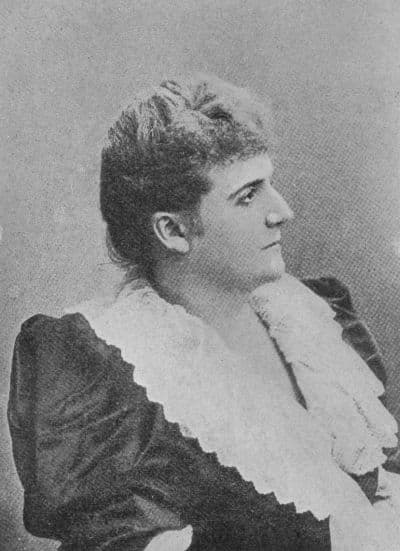
French, Irish · Arts · Activism
Augusta Holmès
December 18, 1847 – January 28, 1903
Early Life and Background
Augusta Holmès was born on December 18, 1847, in Paris, to an Irish family recently immigrated to France. Her parents, Charles William Scott Holmes and Mary Ann Holmes, were of Irish descent, and their heritage influenced much of Augusta's early life. Raised in Versailles, she was exposed to a culturally rich environment, fostering her interest in the arts. Although initially expected to follow the conventional life path prescribed for women at the time, her family's openness to education allowed her to explore music.
Despite societal norms that limited women’s participation in professional composition, Augusta defied expectations and pursued her passion for music, studying composition privately with various notable teachers, including César Franck. Her early guidance set the stage for her future career as a pioneer in music.
Career Beginnings and Development
Augusta's musical career began earnestly in the mid-1860s, with the debut of some of her compositions. Early in her career, she adopted the name Augusta Holmès to replace "Holmes," a choice possibly made to align more closely with her burgeoning identity in French society and as an artist.
Her dedication was evident when she self-funded the performance of her dramatic symphony "Ludus pro patria," a bold move that catapulted her into the public eye. Holmès continued to compose prolifically, producing symphonies, operas, mélodies, and a range of other musical works, blending Romanticism with her unique personal style.
Major Works and Accomplishments
Among Holmès' most renowned works is the symphonic ode "Irlande," which reflects both her French nationalism and Irish roots, marking 1882 as a significant milestone in her career. Another landmark work was "La Montagne Noire," an opera performed in 1895 at the Opéra Garnier in Paris, which continued to solidify her status as a leading composer in France.
Her compositions were notable for their integration of nationalist themes, grandeur in scale, and emotional depth. Augusta was one of the few women during her time to compose large-scale public symphonic works, a domain largely dominated by men.
Awards, Honors, and Recognition
Although largely unsung by contemporary critics, Holmès left an indelible mark on the music world, evidenced by her works’ continued performance beyond her lifetime. While formal accolades during her lifetime were scarce due to the pervasive gender biases, her legacy is celebrated in retrospective analyses of her work and its impact on 19th-century music.
Personal Life
Holmès’ personal life was as vibrant as her professional one. She never married but was known to have had a long-term romantic liaison with the poet Catulle Mendès. This relationship deeply influenced her musical expression, intertwining literary and musical themes in her compositions.
Legacy and Historical Impact
Augusta Holmès is remembered for her trailblazing role in fostering female composers' visibility in classical music. Her work is an inspiration, illustrating that women could ascend to prominence in the male-dominated world of classical music composition.
Later Life and Death
Augusta Holmès continued to compose until her death on January 28, 1903, in the midst of a changing musical landscape. Her passing marked the end of a remarkable career, yet she left behind a wealth of compositions that continue to be studied and celebrated for their innovation and emotional depth.
Dated achievements
2 indexed.
- Dec181847Arts
Birth of Augusta Holmès
Augusta Holmès was born in Paris, France, on December 18, 1847.
View details Presence Compositrices Biography of Augusta Holmès - Jan281903Arts
Death of Augusta Holmès
Augusta Holmès passed away on January 28, 1903, leaving a legacy in music.
View details