← All women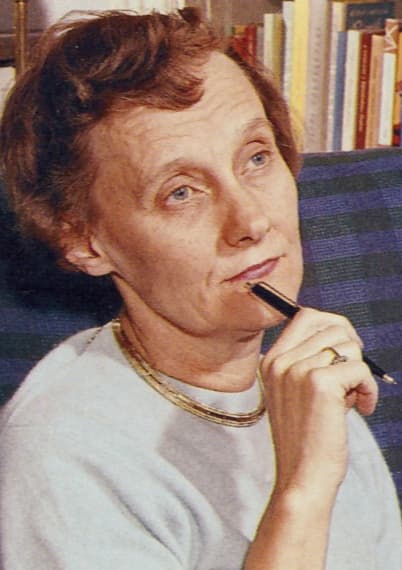
Swedish · Literature
Astrid Lindgren
November 14, 1907 – January 28, 2002
Early Life and Background
Astrid Lindgren, born Astrid Anna Emilia Ericsson, entered the world on November 14, 1907, in Vimmerby, Sweden. She was the second of four children in a warm, loving farming family. Her parents, Samuel August and Hanna Jonsson Ericsson, were significant influences in her life, instilling values of compassion and imagination. Lindgren's childhood in Småland, filled with forests and tales, profoundly shaped her storytelling prowess. Attending the local school, Astrid excelled in languages, showing an early inclination towards writing.
Career Beginnings and Development
After graduating from school, Lindgren worked as a secretary at a local newspaper, Landskrona. Her writing career began somewhat unexpectedly when a knee injury confined her to bed in 1944. This period of forced rest led to the creation of stories for her daughter, Karin, featuring the now-iconic character Pippi Longstocking. Encouraged by family and friends, Lindgren submitted her manuscript to publishers, and in 1945, "Pippi Longstocking" was published, marking the beginning of her illustrious career in children's literature.
Major Works and Accomplishments
Astrid Lindgren's repertoire expanded beyond Pippi with titles like "Emil of Lönneberga," "Karlsson-on-the-Roof," and "Ronia the Robber’s Daughter." Her ability to understand children's perspectives and articulate them authentically set her apart. Lindgren's work featured themes of independence, justice, and the power of imagination, resonating with both young and adult readers worldwide. Over her lifetime, Lindgren authored over 30 children's books, translated into more than 70 languages, making her one of the most translated authors globally.
Awards, Honors, and Recognition
Lindgren received numerous accolades, including the Hans Christian Andersen Medal in 1958 and the Lewis Carroll Shelf Award. Her works not only entertained but also challenged societal norms, advocating for children's rights and social justice. In recognition of her contributions, the Astrid Lindgren Memorial Award was established posthumously by the Swedish government, continuing her legacy of inspiring children through literature.
Personal Life
Astrid married Sture Lindgren in 1931, with whom she had two children, Lasse and Karin. Her familial relationships deeply influenced her writing, often reflecting the nurturing and adventurous spirit she cultivated at home. The loss of her husband in 1952 deepened her commitment to her literary career as a source of solace and purpose.
Legacy and Historical Impact
Lindgren is lauded for revolutionizing children's literature by creating characters who embody independence and strength, particularly for girls through figures like Pippi. Her creation of fantastical worlds while embedding real-life values transformed children's narratives, giving them complexity and depth that were rare in her time. Her stories still captivate audiences, ensuring her place as a timeless storyteller.
Later Life and Death
In her later years, Lindgren continued to write and was actively involved in advocating for children's rights. She passed away peacefully on January 28, 2002, in Stockholm, leaving behind a rich legacy celebrated worldwide. Lindgren's commitment to literature and children's welfare endures, embodying a transformative literary voice of the 20th century.
Dated achievements
2 indexed.
- Nov141907Literature
Astrid Lindgren's Birthday
Astrid Lindgren was born on November 14, 1907, in Vimmerby, Sweden.
View details About Astrid Lindgren - Jan282002Literature
Death of Astrid Lindgren
Astrid Lindgren passed away on January 28, 2002, in Stockholm, Sweden.
View details