← All women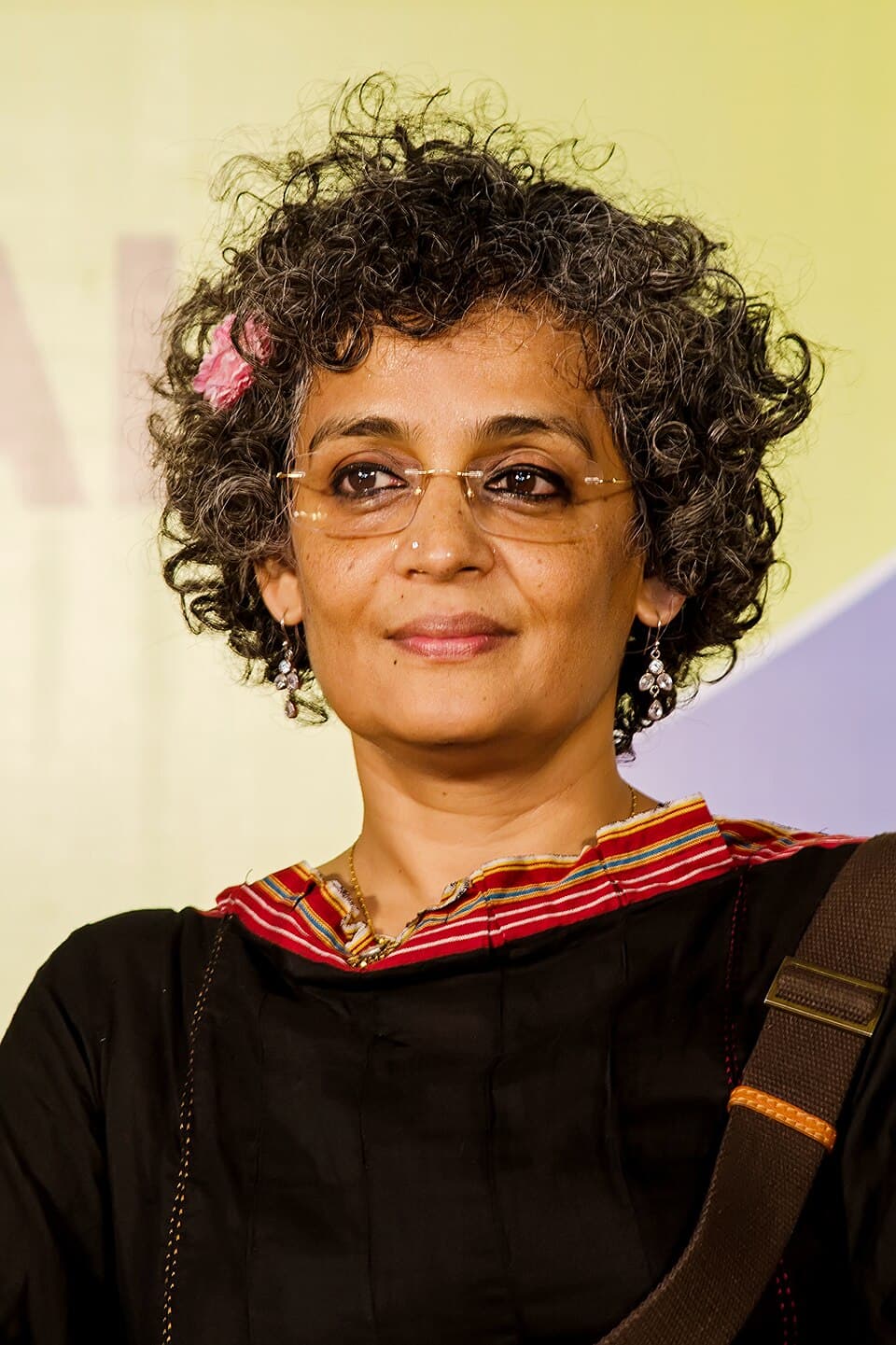
Indian · Arts · Literature · Activism
Arundhati Roy
November 24, 1961 – present
Early life and background
Suzanna Arundhati Roy was born on 24 November 1961 in Shillong, then in Assam and now in Meghalaya, India. She grew up in a family shaped by mixed religious and regional identities: her mother, Mary Roy, was a Syrian Christian educator and activist from Kerala, and her father, Rajib Roy, was a Bengali Hindu tea-estate manager. Roy’s parents later separated, and she and her brother spent much of their childhood in Kerala, especially in Aymanam, a riverside village that would later echo powerfully in her fiction. The social atmosphere of Kerala, the experience of family change, and the cultural life of her mother’s school all helped shape the sensibility that would later inform her writing.
Roy’s early education was unusual and formative. She studied at schools linked to her mother’s educational work and later left Kerala for Delhi as a teenager. She studied architecture at the Delhi School of Architecture, but her interests soon widened beyond the built environment. The training did not lead her into a conventional architectural career, yet it sharpened her attention to space, geography, inequality, and the material organization of life—concerns that recur in her novels and essays. Before she became known as a writer, she also worked in film and television, and these experiences gave her a strong command of visual storytelling and performance.
Career beginnings
Roy first entered public view through cinema and screenwriting. In 1988, she wrote and acted in the film In Which Annie Gives It Those Ones, a project that reflected her early creative range. The film later received institutional recognition for its social themes, and Roy’s screenplay earned the National Film Award for Best Screenplay in 1989. These early achievements established her as a writer with a distinctive voice long before she published fiction.
During this period Roy also took on a variety of jobs, including work connected to urban planning and creative production. Her path was not a straight ascent from training to literary fame; instead, it moved through architecture, film, and essay writing. That breadth gave her later prose a rare mix of narrative power, analytical precision, and political urgency. By the time she turned to fiction in the 1990s, she had already developed a public identity as a writer interested in social structures rather than merely private experience.
Breakthrough with The God of Small Things
Roy’s literary reputation was transformed in 1997 with the publication of The God of Small Things, her debut novel. Set in Kerala and drawing on the emotional terrain of childhood, family conflict, and social taboo, the novel was immediately praised for its language, structure, and originality. Its success was not simply a matter of sales; it became an international literary event and introduced Roy as a major new voice in English-language fiction.
The novel’s thematic concerns—love constrained by caste, social exclusion, gender expectations, and the lingering violence of family and community—gave it enduring relevance. Many readers noted the way Roy transformed intimate domestic life into a critique of broader social systems. The book was also notable for the clarity with which it rendered place, especially the world of Kerala’s backwaters, where landscape, history, and politics are deeply intertwined. Its success helped make Indian English fiction more visible to global audiences and confirmed that debut novels by women writers from South Asia could achieve both popular success and critical prestige.
On 14 October 1997, Roy won the Booker Prize for Fiction for The God of Small Things, and she became the first Indian winner of the prize. The award was a watershed moment in contemporary literary history. It brought Roy immediate global recognition and made her one of the most discussed Indian authors of her generation. In the years that followed, the novel was read across disciplines, used in classrooms, and translated widely, cementing Roy’s place in the international canon of late twentieth-century fiction.
Essay writing and political activism
After the Booker Prize, Roy increasingly became known for her nonfiction. Rather than using her literary fame simply to consolidate a novelistic career, she turned to essays on nuclear policy, environmental destruction, displacement, caste, militarism, global capitalism, and state violence. Her public writing often argued that literature could not be separated from political responsibility. This stance made her one of the most prominent and controversial intellectual figures in India.
Roy’s essays appeared in books such as The Algebra of Infinite Justice and later collections, and they often addressed conflicts in Kashmir, the impact of large dams, and the ethical costs of development policies. She became a visible critic of both Indian nationalism and transnational corporate power, writing in defense of those whose lives were most affected by state and economic violence. Her arguments were sometimes sharply disputed, but they ensured that she remained central to debates about democracy and dissent.
Her activism extended beyond India. In 2004, she received the Sydney Peace Prize for non-violent advocacy on social justice, and in 2005 she served as a judge in the World Tribunal on Iraq. These roles underscored her growing international profile as a public intellectual committed to anti-war and human-rights causes. Roy’s reputation was no longer limited to literary achievement; she had become an influential voice in global activism.
Awards and recognition
Roy’s career has been marked by a long series of honors that recognize both her literary and political work. In addition to the Booker Prize, she received the Lannan Foundation’s Cultural Freedom Prize in 2002, the Grand Prize of the World Academy of Culture in the same year, and the George Orwell Award in 2004. In 2006, the Sahitya Akademi conferred an award on her for The Algebra of Infinite Justice, which she declined, emphasizing her distance from some institutional forms of recognition.
Later honors continued to acknowledge the breadth of her work. She received the Norman Mailer Prize for Distinguished Writing in 2011, the Ambedkar Sudar award in 2015, the St. Louis Literary Award in 2022, and the PEN Pinter Prize in 2024. She also received the 45th European Essay Prize in 2023 for the French translation of Azadi. Together, these honors show the unusual range of her reputation: she is celebrated as a novelist, essayist, dissident, and moral critic.
Personal life
Roy’s personal life has at times attracted public attention, though she has generally kept it less central than her work. She was previously married to filmmaker Gerard da Cunha, and later married architect and filmmaker Pradip Krishen. She has not had children, and her public identity has remained rooted primarily in her writing and activism. Her life in Delhi has provided a base for her literary and political work over many years.
The most important family relationship in Roy’s life has often been understood to be with her mother, Mary Roy, whose activism and educational work shaped Arundhati Roy’s own sense of independence and dissent. Mary Roy is widely remembered for her legal struggle over Syrian Christian inheritance rights in Kerala, and Arundhati Roy has written and spoken about her with a mixture of admiration, complexity, and emotional candor. The family history is inseparable from Arundhati Roy’s own intellectual formation.
Writing style and themes
Roy’s prose is widely noted for its lyric intensity, satirical edge, and willingness to move between the intimate and the political. In fiction, she works with memory, repetition, and fragmented chronology; in essays, she often uses long-form argument, vivid analogy, and sharp polemic. Her work is distinctive in that it treats language as both an aesthetic and ethical instrument.
Recurring themes include caste, class, gender, religious identity, nationalism, environmental harm, militarization, and corporate power. She has repeatedly returned to the question of how ordinary lives are shaped by large systems that are often presented as abstract or inevitable. This concern is evident not only in her nonfiction but also in The God of Small Things, where the personal and political are inseparable. The result is a body of work that has helped expand the field of Indian English literature beyond the limits of conventional realism.
Legacy and historical impact
Roy’s historical importance rests on several overlapping achievements. She became one of the best-known Indian writers of her generation, won a major international prize with her first novel, and used that visibility to become a leading critic of state power and inequality. Her career helped normalize the idea that a novelist could also function as a sustained public intellectual without abandoning artistic seriousness.
As a woman writer from India, she broke through literary barriers that had long limited the global circulation of South Asian women’s voices. Her Booker Prize win in 1997 remains especially significant because it gave worldwide recognition to a debut novel rooted in regional Indian life and written from a distinctly female perspective. Her essays later extended that influence into politics, inspiring readers, activists, and scholars interested in postcolonial critique, environmental justice, and dissent.
Roy’s legacy is therefore twofold: she is both a major literary artist and a persistent public dissenter. That combination has made her one of the most consequential Indian women writers of the modern era, and her work continues to shape conversations about literature, justice, and the responsibilities of intellectual life.
Dated achievements
7 indexed.
- Nov241961Literature
Birth of Arundhati Roy
Suzanna Arundhati Roy was born in Shillong, Assam (now Meghalaya), India, later becoming a globally influential novelist and activist.
View details Arundhati Roy - Wikipedia - Oct141997Literature
Awarded the 1997 Booker Prize for Fiction
Roy's debut novel The God of Small Things won the Booker Prize for Fiction at a ceremony at London's Guildhall.