← All women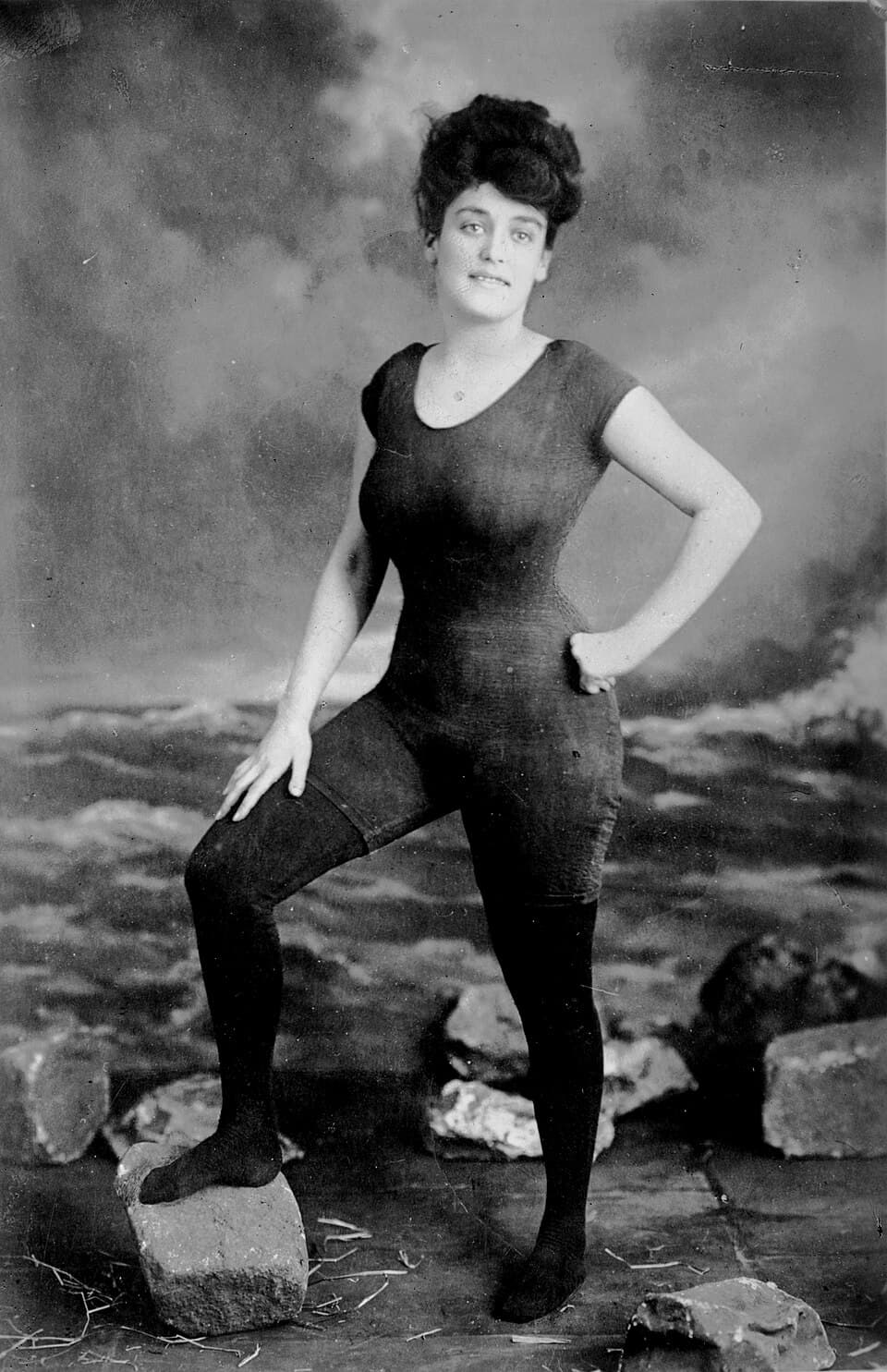
Australian · Sports · Arts
Annette Kellerman
July 6, 1886 – November 6, 1975
Early Life and Background
Annette Marie Sarah Kellerman was born on July 6, 1886, in Marrickville, New South Wales, Australia. She was the daughter of Frederick William Kellerman, an Australian-born violinist, and Alice Ellen Charbonnet, a French pianist and music teacher. Her family encouraged her to swim as a therapeutic measure to strengthen her legs, due to her early childhood bout with rickets, which later turned into a passion and lifelong career.
Career Beginnings and Development
By the age of 15, Kellerman had won her first amateur swim competition, quickly advancing due to her natural aptitude and hard work. Known for her daring and skilled approach, she began performing swimming and diving exhibitions, captivating audiences with her grace under water. Notably, Kellerman appeared as a mermaid in elaborate aquacade spectacles, which combined swimming with acrobatics and were a precursor to modern synchronized swimming. She was part of films as well, notably appearing in 1914's "Neptune's Daughter" and 1916's "A Daughter of the Gods," where she famously performed the first nude scene by a major actress in film history.
Major Works and Accomplishments
Kellerman was instrumental in the development and popularization of women's swimming. At a time when the Victorian era's constraints still limited female athletic attire, Annette challenged norms by advocating for and designing the one-piece bathing suit for women, enabling greater freedom of movement for female swimmers. Although arrested for indecent exposure in 1907 for wearing this suit, her stance triggered a movement that eventually led to more practical swimwear for women.
Awards, Honors, and Recognition
Throughout her career, Kellerman's impact on sporting fashion and performance arts garnered her considerable fame. She was once known as the "Australian Mermaid" in her early career and earned the nickname "The Million Dollar Mermaid" after one of her films. Her contribution to swimming and women's sports has been recognized with an induction into the International Swimming Hall of Fame in 1974.
Personal Life
Kellerman married her manager, James Sullivan, in 1912. The couple did not have children and led a fascinating life full of travels and ventures into various entertainment and health advocacy domains. Together, they pioneered several shows and films that bolstered her public persona as both a glamorous swimmer and a serious athlete.
Legacy and Historical Impact
Annette Kellerman left an indelible mark on both sports and the arts. Her one-piece swimsuit design is considered a catalyst in the evolution of women's swimwear. Furthermore, her advocacy for physical fitness, especially for women, was revolutionary at the time and laid the groundwork for future generations of female athletes. Her performances helped shape early cinema, merging visual storytelling with athletic prowess. The film "Million Dollar Mermaid" (1952), starring Esther Williams, celebrated her life and achievements.
Later Life and Death
In her later years, Kellerman retired from public performance but continued to advocate for health and fitness, authoring books about physical culture and beauty techniques. Annette Kellerman passed away on November 6, 1975, in Queensland, Australia, at the age of 89. Her legacy endures through her contributions to modern swimming attire, film, and her pioneering role as a female athlete in a male-dominated sporting world.
Dated achievements
2 indexed.
- Jul061886Sports
Birth of Annette Kellerman
Annette Kellerman was born on July 6, 1886, in Marrickville, Australia.
View details Encyclopedia.com on Annette Kellerman - Nov061975Sports
Death of Annette Kellerman
Annette Kellerman died on November 6, 1975, in Southport, Australia.