← All women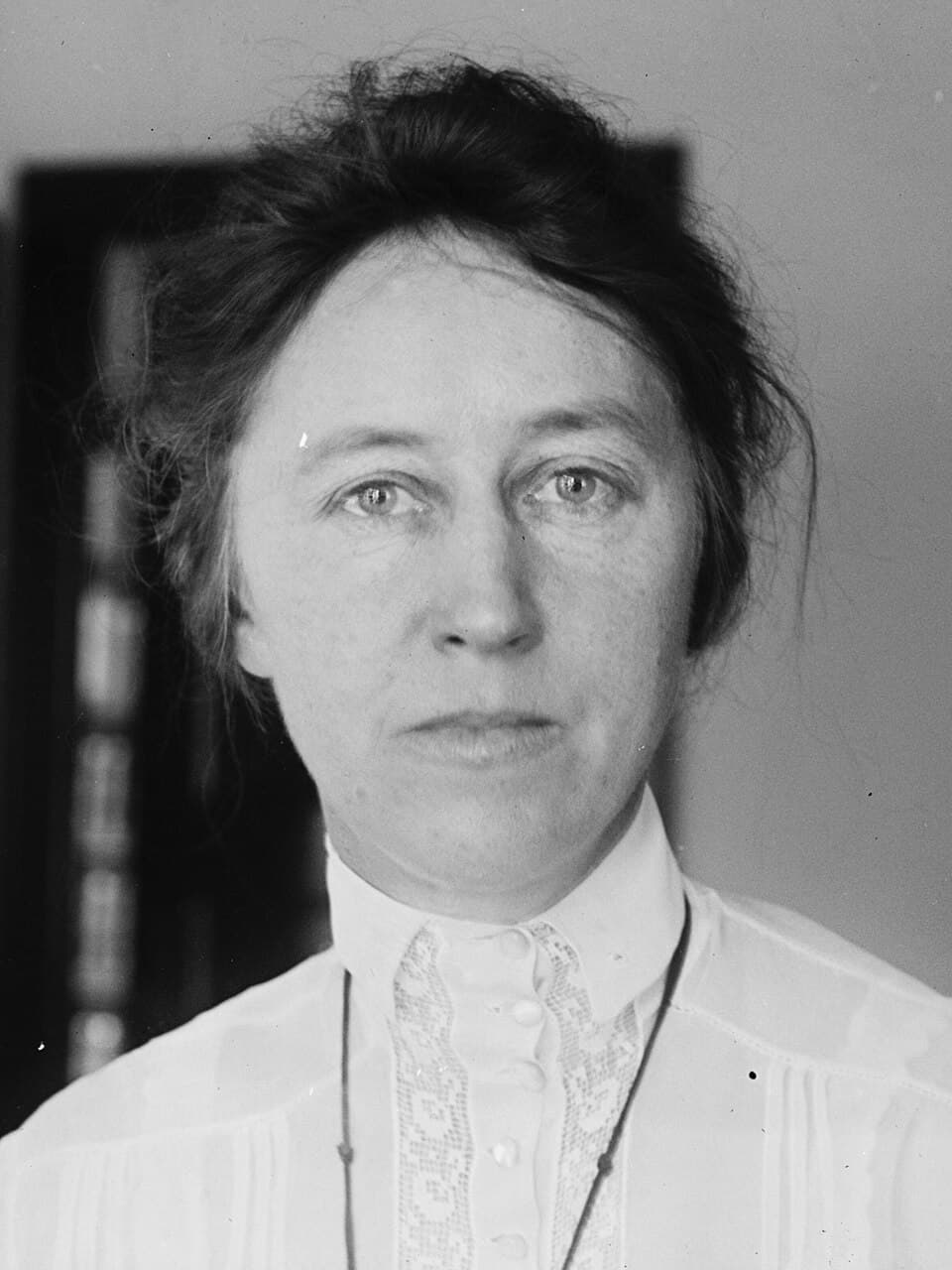
American · Law · Politics
Annette Abbott Adams
March 12, 1877 – October 26, 1956
Early Life and Family Background
Annette Grace Abbott, later known professionally as Annette Abbott Adams, was born on 12 March 1877 in Prattville, a small settlement in Plumas County, California, located in the Big Meadows region that is now associated with Lake Almanor. Her father, Hiram Brown Abbott, was a storekeeper, and her mother, Annette Frances Stubbs, was a teacher. These dual influences of commerce and education shaped her early environment and expectations.[1][2][8]
Prattville, in the northern Sierra Nevada, was a remote lumber and mining community in the late nineteenth century. Opportunities for advanced education, particularly for girls, were limited, and most women’s work centered on the home or local schools. Adams’s mother’s career as a teacher provided a visible model of female professionalism and underscored the importance of schooling in the Abbott household.[1][7]
From an early age, Adams displayed intellectual ambition and discipline. She attended Chico State Normal School, one of California’s early teacher-training institutions, where she prepared for a career in education.[3][10] Her path at this stage followed the typical trajectory for women interested in paid work outside the home—teaching—but she would later step far beyond those conventional boundaries.
Education and Formative Influences
After completing her normal-school training, Adams continued her education at the University of California, Berkeley. According to biographical accounts, she earned a Bachelor of Laws (B.L.) degree in 1904, an unusual credential for a woman at the time, and thus became one of the first women to obtain a law degree from Berkeley.[1][3][6][10]
Her studies took place during an era when American law schools were only beginning to admit women, and many male students and faculty still questioned women’s presence in professional legal training. Adams’s persistence through the rigorous curriculum at Berkeley’s law department and later at Boalt Hall, the law school that evolved from that department, reflected both personal resolve and the growing movement for women’s access to higher education. Some sources characterize her as the only woman in a class of twelve when she completed further legal studies around 1912.[7][3]
While at Berkeley, Adams was exposed to a vibrant intellectual and political climate. The early twentieth century saw intense debates over Progressivism, regulation of industry, and the role of law in social reform. These themes influenced her later work in government, particularly her willingness to engage with complex economic and regulatory cases as a prosecutor and high-level official in the Department of Justice.
Early Career: Teaching and School Administration
Before turning fully to law, Adams pursued a substantial career in education. She taught at Modoc County High School in Alturas, California, from approximately 1905 to 1910, and served as the school’s principal from 1907 to 1910.[10] These roles placed her in charge of secondary education in a rural county seat, managing both curriculum and administration.
Later accounts identify Adams as one of the first women high school principals in California, underscoring the novelty of her position in the state’s educational system.[8][7] At a time when many high schools were still relatively new institutions, principalship carried significant authority over staffing, discipline, and community relations. Her leadership in Alturas demonstrated that women could successfully head coeducational secondary schools, challenging lingering assumptions that school administration required male oversight.
This period of teaching and school administration honed skills that would prove essential in her legal career: organizational management, public speaking, and navigating local politics. It also reinforced her commitment to public service, which would later manifest in her decision to join federal law enforcement and, eventually, the judiciary.
Transition to Law and Admission to the Bar
In the years around 1910, Adams shifted her focus decisively from education to law. She returned to the University of California to deepen her legal studies, obtaining advanced degrees that sources describe as a Juris Doctor in 1912 and completing formal training at Boalt Hall.[1][10][7] At a time when the concept of the Juris Doctor was evolving, these credentials marked her as thoroughly trained in modern legal doctrine.
Adams was admitted to the California bar in 1912, joining the small cohort of women licensed to practice law in the state.[3][7][10] Contemporary commentary and later histories emphasize that she was among the first women admitted to the California bar, though exact rankings differ by source. Admission required passing stringent examinations and overcoming skepticism from many in the profession who doubted women’s suitability for adversarial courtroom work.
After admission, Adams began practicing law in San Francisco. Biographical notes indicate that she operated in private practice from June 1913 to October 1914, building expertise in trial advocacy and developing a reputation for tenacity and careful preparation.[10] Some accounts mention that she helped found an all-woman law firm, an initiative that would have been highly unusual at the time, although details are sparse.[7] Her move to San Francisco, the commercial and legal hub of Northern California, signaled her ambition to work at the center of the region’s legal activity rather than remaining in rural practice.
Federal Career Beginnings: Assistant U.S. Attorney
Adams’s federal career began on 14 October 1914, when she was appointed an Assistant United States Attorney for the Northern District of California.[10] This position made her a federal prosecutor responsible for representing the United States in criminal and civil cases in a district that encompassed San Francisco and major port and industrial facilities.
Her appointment was groundbreaking. Historical summaries and Department of Justice retrospectives note that Adams was the first woman to serve as an Assistant U.S. Attorney in the Northern District and one of the earliest women in any federal prosecutorial role.[3][8] At that time, the U.S. Attorney’s offices were overwhelmingly male, and women lawyers were rarely seen arguing federal cases.
In the years that followed, Adams built a strong reputation as a trial lawyer. She handled complex matters, including cases involving wartime regulations, shipping, and economic offenses. Later narratives describe her as having an “appetite for the toughest cases,” emphasizing that she did not shy away from litigation that required both legal sophistication and political sensitivity.[5][6]
First Woman U.S. Attorney
On 25 July 1918, President Woodrow Wilson appointed Adams United States Attorney for the Northern District of California, elevating her from her assistant role to the top prosecutorial post in the district.[10] This promotion made her the first woman to serve as a U.S. Attorney in the United States.[8][5]
Her appointment came before the ratification of the Nineteenth Amendment, meaning that she could not vote in the federal elections that selected the administration which appointed her.[5] Nevertheless, Adams had been politically active, campaigning for Wilson in California during the 1912 and 1916 elections, helping to build the support that underpinned his Progressive legislative agenda.[3][6]
As U.S. Attorney, Adams managed a staff of lawyers and oversaw prosecution and defense of federal interests in a district critical to the war effort and post-war transition. Contemporary and later accounts emphasize that she successfully tried several major cases, reinforcing her status as a formidable litigator.[4][7] Her success in this role provided concrete evidence that women could effectively lead a federal prosecutorial office, which, in turn, helped to erode resistance to women’s advancement in the legal profession.
First Female Assistant Attorney General of the United States
On 22 June 1920, Adams’s career reached a new national peak when she was appointed Assistant Attorney General of the United States.[10] Department of Justice historical materials and legal histories identify her as the first woman to hold an Assistant Attorney General position, a role that placed her among the highest-ranking officials in the department.[2][3][6]
As Assistant Attorney General, Adams moved from district-level casework to supervisory and policy responsibilities in Washington, D.C. While specific divisions she oversaw are not detailed in surviving summaries, the position typically involved authority over large categories of litigation and the power to approve strategies for major cases. Her tenure coincided with a period of significant legal challenges, including post–World War I economic readjustment and evolving federal regulatory schemes.
Adams served as Assistant Attorney General until 15 August 1921, resigning after the transition to the Harding administration.[10] Though her time in the role lasted just over a year, its impact was substantial: she demonstrated that women could successfully occupy senior leadership positions within the Department of Justice, managing complex legal portfolios at the national level. Later DOJ commemorations highlight her as part of a broader narrative of women expanding their presence in federal law.[3]
Return to Private Practice and Local Politics
After leaving Washington, Adams returned to California and resumed private practice in San Francisco, where she quickly re-established herself as a leading trial lawyer.[3][7] Her federal experience enhanced her stature among clients and colleagues, and she became known for her ability to handle intricate commercial and regulatory cases.
Adams also engaged in local politics. In 1923, she ran for a seat on the San Francisco Board of Supervisors, reflecting her interest in municipal governance and public policy.[6] While sources do not indicate that she won the election, her candidacy itself illustrates the intersection between women’s growing political rights and their professional authority, coming only a few years after women gained the federal vote.
Throughout the 1920s and 1930s, Adams remained active in the broader legal community. She belonged to professional organizations such as the American Bar Association and women’s groups including the American Association of University Women, as noted in her obituary.[9] These affiliations signaled her commitment to mentoring younger lawyers and contributing to the institutional development of the profession.
Judicial Career: First Woman on a California Appellate Court
Adams’s judicial career began in the early 1940s. In 1942, California Governor Culbert Olson appointed her to the California Court of Appeal, Third Appellate District, headquartered in Sacramento.[7][11][12] She was named presiding justice of the court, a role that combined judicial decision-making with administrative leadership.
Her appointment marked several historic firsts. Legal historians note that Adams was the first woman appointed to any California state appellate court and the state’s first female presiding justice of an appellate court.[11][12] At that time, women were rare even in trial-level judgeships, and virtually absent from appellate benches nationwide. Adams’s elevation therefore represented a major breakthrough in the judiciary’s gender barriers.
As presiding justice of the Third District, Adams sat on panels that heard civil and criminal appeals from a broad swath of Northern California. She helped shape state law in areas ranging from property and contract disputes to criminal procedure. Although detailed case lists are limited in brief biographical summaries, contemporaries and later scholars emphasize that she served with distinction and that her court developed a reputation for careful reasoning and collegiality during her tenure.[6][11]
Adams’s service on the Court of Appeal continued until 1952, when she retired for health reasons.[3][7] Over roughly a decade, she demonstrated that women could lead a major appellate court, further normalizing female judicial authority at a level that had previously been exclusively male.
First Woman to Sit on the California Supreme Court
In 1950, Adams reached another landmark when she was specially assigned to sit on a case before the California Supreme Court.[3][6][12] This temporary, or pro tempore, appointment made her the first woman ever to sit on the California Supreme Court bench, even though she did not hold a permanent seat.
Pro tempore assignments were used to fill vacancies or supplement the court’s capacity when justices were unavailable. Adams’s selection reflected both her seniority as a presiding justice on the Court of Appeal and the respect she commanded among state legal officials. Her participation in Supreme Court deliberations and decision-making, even for a single case, had symbolic weight far beyond the matter at hand.
The appointment underscored the gradual opening of the highest levels of the judiciary to women, foreshadowing the eventual appointment of women as permanent justices in California and other states. It also reinforced Adams’s place in legal history: she was not only the first woman on a California appellate court but also the first to cross the threshold into the state’s court of last resort.
Professional Associations, Honors, and Recognition
Throughout her career, Adams was active in professional and civic organizations. Her New York Times obituary notes membership in the American Bar Association and the Institute of the Native Daughters of the Golden West, a California heritage organization.[9] She also belonged to the American Association of University Women, reflecting her commitment to higher education and women’s intellectual advancement, and to the Women’s Athletic Club of San Francisco.[9]
Later in life, legal historians and women’s organizations began to highlight Adams’s trailblazing role. The California Federation of Women’s Clubs and local historical societies have produced profiles recognizing her as a suffragist, attorney, and Plumas County native who achieved an unprecedented legal career.[8] The Department of Justice has commemorated her as the first female Assistant Attorney General, and regional legal history groups, such as the Northern District of California Historical Society, have described her as a female trailblazer of the West.[3][5]
These honors, many conferred posthumously, reflect the growing scholarly interest in women’s legal history and in documenting the achievements of early female practitioners whose contributions were sometimes under-recognized during their lifetimes.
Personal Life
Biographical entries refer to her as Annette Abbott Adams, indicating that she married and took the surname Adams, though detailed information about her husband and any children is sparse in standard sources.[1][2][10] Contemporary accounts focus overwhelmingly on her professional career rather than domestic life, a pattern typical for coverage of women who broke gender barriers in public office.
She maintained close ties to Plumas County, where she was born, and later settled in Sacramento during her appellate-judicial career. Local histories emphasize that, despite her national and statewide prominence, she retained a sense of identity as a Plumas native, and she was remembered in the region as an example of how women from rural communities could achieve extraordinary professional success.[8]
Later Life, Retirement, and Death
In 1952, Adams retired from the California Court of Appeal, Third Appellate District, citing health reasons.[3][7] By then, she had served approximately a decade as presiding justice and had become widely acknowledged as the state’s highest-ranking female judge.
Following retirement, she lived quietly in Sacramento, remaining a respected figure in legal circles. On 26 October 1956, she died at the age of 79.[1][2][3][9] Obituaries noted her pioneering roles as U.S. Attorney, Assistant Attorney General, and appellate presiding justice, and described her as the highest-ranking female judge in California at the time.[9]
Her death marked the passing of one of the earliest generations of women to penetrate the upper echelons of American law and government. In the decades immediately following, her name was occasionally invoked in discussions about women’s progress in the profession, though systematic recognition of her achievements grew significantly only with the rise of women’s legal history as a scholarly field late in the twentieth century.
Legacy and Historical Impact
Annette Abbott Adams’s legacy rests on a series of historic firsts and on the sustained excellence of her legal and judicial work. She was among the first women to graduate from the University of California with a law degree and among the first women admitted to the California bar.[1][3][7][10] She became the first woman Assistant U.S. Attorney in the Northern District of California, the first woman U.S. Attorney anywhere in the United States, the first female Assistant Attorney General of the United States, the first woman appointed to a California state appellate court, the state’s first female presiding justice, and the first woman to sit on the California Supreme Court.[3][5][6][11][12]
Her achievements were not purely symbolic. Colleagues and later commentators emphasize that she excelled in demanding trial work, handled complex federal litigation, and earned appointments on merit rather than as a mere gesture toward inclusivity. Her success helped demonstrate that women could perform at the highest levels of the legal system, thereby weakening the arguments used to justify their exclusion.[4][5][6]
Adams’s career also illustrates the interplay between women’s professional advancement and broader political change. She reached many of her milestones—especially her appointment as U.S. Attorney and Assistant Attorney General—before or just as women gained nationwide suffrage. Her visible presence in federal leadership roles provided empirical support to suffragists’ claims that women were already contributing significantly to public life.
Legal historians and contemporary commentators now situate Adams within a wider narrative of women’s legal history in the American West. The California Supreme Court Historical Society and related publications have highlighted her as a foundational figure in the state’s judicial development, and modern blog series on California’s first women justices point to her career as a touchstone for later advances.[11][12]
In sum, Annette Abbott Adams stands as a key figure in the history of women in law and government. From her beginnings in a remote Plumas County town to her service in Washington and on California’s appellate bench, she broke multiple barriers, expanded the professional horizon for women lawyers, and left a legacy that continues to inform discussions about gender, justice, and representation in the legal system.
Dated achievements
6 indexed.
- Mar121877Law
Birth of Annette Grace Abbott in Prattville, California
Born Annette Grace Abbott on 12 March 1877 in Prattville, California, to Hiram Brown Abbott and Annette Frances Stubbs.
View details Annette Abbott Adams – Wikipedia - Oct141914Law
First woman Assistant U.S. Attorney in the Northern District of California
On 14 October 1914, Annette Abbott Adams became Assistant U.S. Attorney for the Northern District of California, a pioneering female federal prosecutor.