← All women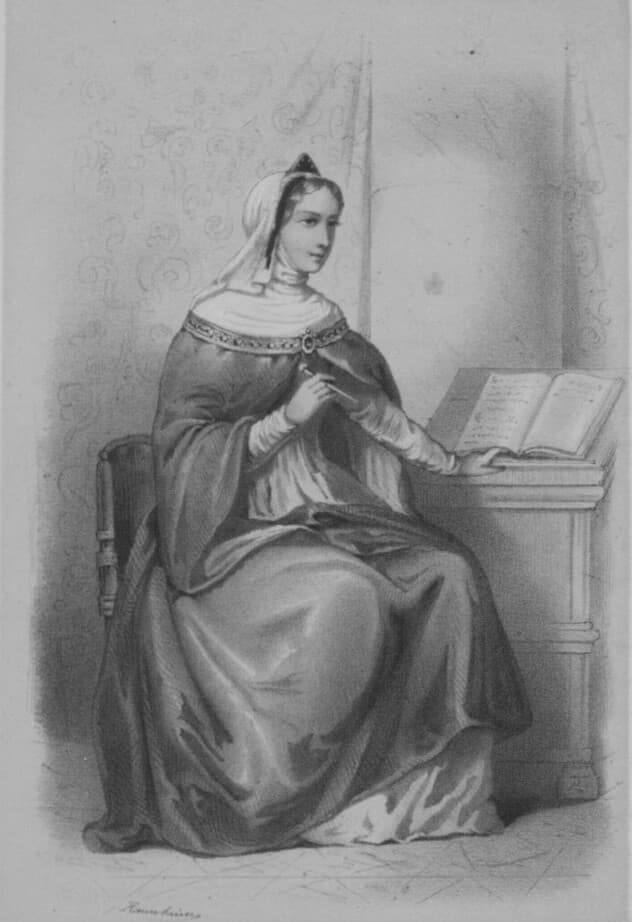
Byzantine · Literature · Politics
Anna Komnene
December 1, 1083 – January 1, 1153
Early Life and Background
Anna Komnene was born on December 1, 1083, in Constantinople, the capital of the Byzantine Empire, into a renowned imperial family. She was the daughter of Emperor Alexios I Komnenos and Empress Irene Doukaina. Raised in the opulent and politically charged environment of the Byzantine court, Anna was provided with a comprehensive education, uncommon for women of her era. Her studies included the classics, philosophy, medicine, and the sciences, facilitated by some of the most learned scholars of the empire. Her upbringing in such an intellectually stimulating atmosphere cultivated her future as an influential historical writer.
Career Beginnings and Development
Anna's career began amidst the tumult of court politics. Despite her pedigree and extensive education, her ambitions for direct political influence were challenged by the limitations imposed on women even in a cosmopolitan society like Byzantium. However, her intellect and political insight emerged, particularly through her marriage to Nikephoros Bryennios, a noble and historian in his own right. Throughout her life, she remained deeply embedded in the intricate political life of the empire, which would greatly inform her literary works.
Major Works, Discoveries, and Accomplishments
Anna's most significant accomplishment is her magnum opus, the Alexiad, a detailed historical account written in Greek of her father's reign from 1081 to 1118. Composed in the later years of her life, the work is not only a comprehensive biography of Emperor Alexios I but also an incisive analysis of the socio-political complexities of late 11th and early 12th century Byzantium. The Alexiad provides unparalleled insights into Byzantine interactions with the First Crusade, offering a perspective distinct from that of Western European chroniclers.
While the work praises her father and his achievements, it is also noted for its methodological rigor and critical approach, reflecting Anna's scholarly disposition. Her ability to intertwine political, military, and personal narratives uncovered dimensions of Byzantium's relations with its neighbors and the internal dynamics of the empire itself.
Awards, Honors, and Recognition
Although formal awards and recognitions of literary contributions were not a feature of Byzantine society, Anna's work has endured through centuries as a foundational text for understanding Byzantine history. Her Alexiad is esteemed for its erudition and unique perspective, making Anna a pivotal figure in historical scholarship.
Personal Life
Anna was married to Nikephoros Bryennios, a union that linked her closely with another prominent intellectual and political family in Byzantium. Together they had several children and shared a partnership marked by mutual scholarly interests. Despite initial support for her father's policies after his death, Anna's later political aspirations were thwarted, most notably in a failed coup attempt after the accession of her younger brother, John II.
Legacy and Historical Impact
Anna Komnene is often regarded as one of the first female historians, and her writings are fundamental to both Byzantine and Crusades studies. Her meticulous documentation provides critical insight into the Byzantine world, showcasing the intersection of gender, power, and scholarship in medieval history. Through her work, Anna broke the traditional gender roles prescribed by her society, highlighting the potential of women to contribute significantly to academic and political discourses.
Later Life and Death
Following her political defeat, Anna lived the latter part of her life in relative obscurity at the Kecharitomene Monastery, which her mother had founded. Her retreat was not one of defeat but rather one of strategic intellectual pursuit, during which she completed the Alexiad. Anna Komnene died in 1153, but her legacy endures through her writings, which continue to be studied for their historical validity and perspective.
Dated achievements
2 indexed.
- Dec021083Science
Birth of Anna Komnene, Byzantine princess and scholar
Anna Komnene was born on 2 December 1083 in Constantinople as the eldest child of Emperor Alexios I Komnenos and Empress Irene Doukaina.
View details Anna Komnene - Wikipedia - Jan151148Science
Death of Anna Komnene
Anna Komnene died on 15 January 1148, likely at the monastery of Kecharitomene in Constantinople, where she had lived after her failed political conspiracy.