← All women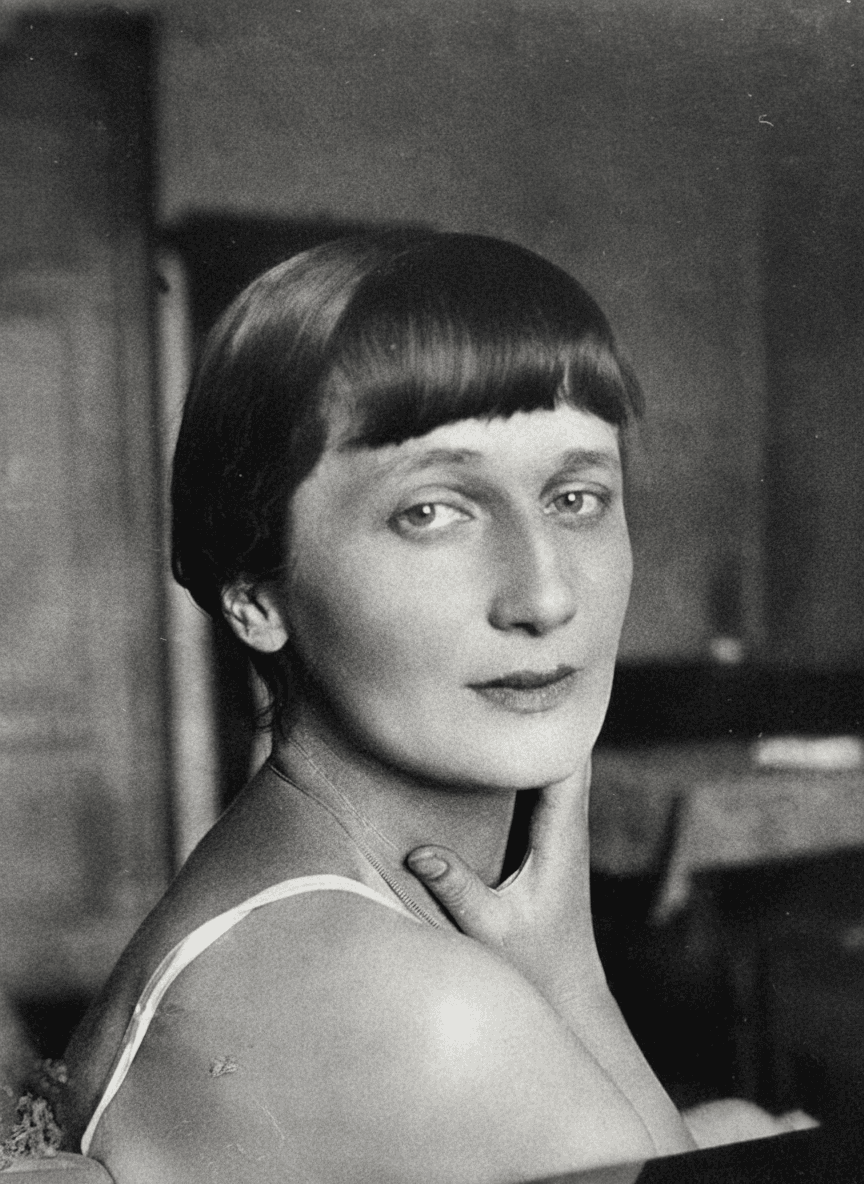
Russian · Literature
Anna Akhmatova
June 23, 1889 – March 5, 1966
Early life and background
Anna Akhmatova was born Anna Andreyevna Gorenko on 23 June 1889 at Bolshoy Fontan near Odessa in the Russian Empire. Sources also give the date in the old Russian calendar as 11 June 1889. She came from an upper-class family; her father was a naval engineer and her mother was associated with an educated, culturally aware milieu. Her childhood included time in Odessa and later in Tsarskoe Selo, an environment that exposed her to Russian imperial culture, classical literature, and the rich literary atmosphere that surrounded the former imperial capital.
From an early age Akhmatova was drawn to poetry. Her family did not encourage her to use the surname Gorenko in print, so she adopted the pen name Akhmatova, a name associated with a family line she linked to Tatar ancestry. This decision was more than a literary gesture. It signaled the creation of a public artistic identity in a culture where women writers still had to negotiate social expectations, family authority, and the conventions of literary publication.
She studied at the Fundukleyevskaya Gymnasium in Kiev and later continued to move through circles associated with Russian literary modernism. Her early reading and formation were shaped by the Russian classical tradition, especially the legacy of Pushkin, as well as by the emerging currents of Symbolism and, later, Acmeism. The precision, discipline, and emotional restraint that distinguish her mature verse can already be traced to this formative period.
Career beginnings and the Acmeist context
Akhmatova began publishing verse in the first decade of the twentieth century. Her earliest poem appeared in Sirius, the journal associated with Nikolai Gumilyov, who would later become her husband. This early publication brought her into the orbit of the Guild of Poets and the literary circle that helped shape the Acmeist movement. Acmeism emphasized clarity, craftsmanship, and a concrete relationship to the material world, in contrast to the more mystical tendencies of Symbolism. Akhmatova became one of its defining voices.
Her first major collection, Evening (Vecher), appeared in 1912 under the pen name Anna Akhmatova. The book made her reputation almost immediately. Readers and critics noticed the intensity of its emotional compression and the directness of its voice. In place of expansive rhetoric, she offered short, finely structured poems that captured moments of love, separation, jealousy, and memory. The collection established her as a major poet of the prerevolutionary period.
Her second major collection, Rosary (Chyotki), appeared in 1914 and further consolidated her standing. The White Flock followed in 1917, during the upheaval of the Russian Revolution. These books helped define her as one of the leading poets of the Silver Age of Russian literature. While her early work was often intimate and personal in subject, its formal control and psychological depth gave it lasting power.
Marriage, family, and personal life
On 25 April 1910, Akhmatova married the poet Nikolai Gumilyov. Their relationship connected her to one of the most important literary circles of the era and placed her at the center of the Acmeist milieu. The marriage was complicated, and the couple later separated, but it remained historically significant because it linked her private life to the literary culture that first recognized her talent.
Their son, Lev Gumilyov, was born in September 1912. Motherhood became central to Akhmatova’s later life, especially under Soviet repression. Her son’s arrests and periods of imprisonment would weigh heavily on her, and the anguish of waiting for news of him became one of the great emotional realities transformed into poetry in Requiem.
After the collapse of her marriage, Akhmatova also formed a long relationship with the scholar and editor Nikolai Punin. He, too, would be arrested during the Stalin era. Her personal life was thus repeatedly entangled with the machinery of repression, making the boundary between biography and history unusually thin. Her poetry records not only private emotion but also the pressures of living under a state that entered and distorted intimate life.
Revolution, censorship, and survival
The Russian Revolution and the consolidation of Soviet power transformed Akhmatova’s career. In the early 1920s her work was increasingly criticized by Soviet cultural authorities for its independence from ideological demands. In 1922, Anno Domini MCMXXI was published, and in 1923 Plantain appeared; after that, Soviet authorities largely barred her from print. The result was a long period of semi-official silence.
The repression of the 1930s deepened her isolation. In 1935 her son Lev and her partner Nikolai Punin were arrested. During those years, Akhmatova began composing the poems that would later be gathered into Requiem. The work is among the most important poetic responses to Stalinist terror. It bears witness to the lines of women outside prisons, to the suffering of families waiting for news, and to the emotional destruction caused by arbitrary state violence. Because publication would have been dangerous, the poem circulated only in manuscript and memory for decades.
During World War II and the Siege of Leningrad, Akhmatova continued to write. She produced patriotic poems and broadcasts, including the poem Courage, while remaining engaged with the larger national struggle against fascism. Her wartime writing added another layer to her reputation: she was not only a poet of private grief but also a voice capable of addressing collective endurance during catastrophe.
War, denunciation, and later rehabilitation
After the war, Soviet cultural policy hardened again. On 14 August 1946, the Central Committee issued the Zhdanov decree condemning Akhmatova’s work as ideologically unacceptable. She was expelled from the Union of Soviet Writers and her poetry was banned. This was one of the harshest official attacks on a major literary figure in the Soviet period, and it symbolized the precariousness of artistic autonomy under Stalinism.
Despite that denunciation, Akhmatova survived as a poet through informal networks of readers, friends, and younger writers. Her stature among the next generation remained strong. In 1956, after Stalin’s death, she began to be rehabilitated gradually. Some of her work was again published in the Soviet Union, though the process was incomplete and cautious. In the cultural thaw that followed, her presence became increasingly important to younger poets who saw in her a model of integrity and survival.
Akhmatova’s later years were marked by renewed recognition beyond Soviet borders. In 1962 she completed the extended cycle Poem Without a Hero, a work that summed up decades of reflection on pre-revolutionary Petersburg, memory, and historical catastrophe. It is often considered one of her greatest achievements. In 1964, Oxford University awarded her an honorary Doctor of Letters degree, bringing international recognition to a writer whose work had long been marginalized at home.
Major works and literary significance
Akhmatova’s early collections—Evening, Rosary, and The White Flock—made her famous for poems of love, loss, and psychological intensity. Her middle and late work expanded into historical and moral witness. Requiem stands as her most enduring testament to Stalinist terror and the suffering of ordinary citizens caught in it. Poem Without a Hero extends her art into a dense, allusive meditation on memory, artistic community, and the collapse of an era.
She also wrote prose, memoirs, and literary scholarship, and she translated poetry from several languages. Her range helped preserve classical Russian culture through periods of avant-garde radicalism and later socialist realism. Rather than adopting the slogans of official culture, she remained committed to formal mastery, emotional exactness, and continuity with the Russian poetic tradition.
Honors, influence, and legacy
Although Soviet institutions denied her full recognition for many years, Akhmatova was widely regarded by readers and fellow writers as one of the great poets of the twentieth century. She was nominated for the Nobel Prize in Literature in 1965 and 1966, and her Oxford honorary degree testified to her standing in the international literary world. Late in life, she became a revered figure for younger Russian poets, including members of the post-Stalin generation who saw in her a moral and artistic authority.
Her legacy rests on several achievements. She transformed short lyric poetry into an instrument of psychological precision. She turned private suffering into public testimony without sacrificing artistic discipline. She survived censorship, loss, and state hostility while preserving a voice that many readers found indispensable to understanding twentieth-century Russia. Her poetry remains central to the canon of Russian literature and to the broader history of women writers who confronted political violence with artistic endurance.
Death
Anna Akhmatova died on 5 March 1966 at a sanatorium in Domodedovo near Moscow of heart trouble. By that time, her reputation had begun to recover in the Soviet Union, and abroad she was already honored as one of Russia’s greatest poets. Her death closed a life that had traversed empire, revolution, terror, and rehabilitation, leaving behind a body of work that continues to define the lyric and moral possibilities of modern poetry.
Dated achievements
10 indexed.
- Jun231889Literature
Birth of Anna Akhmatova
Born Anna Andreyevna Gorenko at Bolshoy Fontan near Odessa on June 23, 1889.
View details Wikipedia - Anna Akhmatova - Apr251910Literature
Marriage to Nikolai Gumilyov
Married fellow poet Nikolai Gumilyov on April 25, 1910.
View details