← All women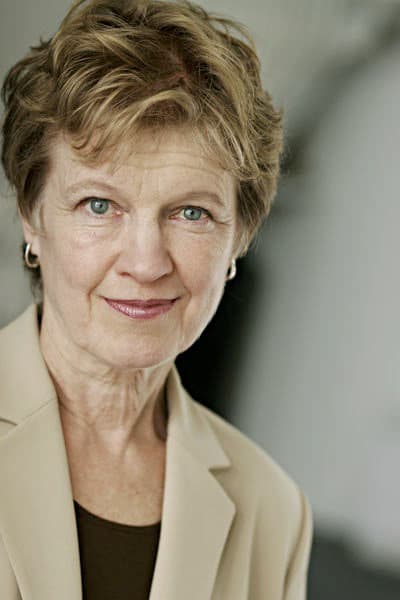
American · Science · Medicine
Ann Kiessling
March 29, 1942 – present
Early life and education
Ann Drue Anderson Kiessling was born in 1942 in Baker, Oregon, and was raised in Klamath Falls. Later biographical accounts consistently describe her as an Oregon native whose early life was shaped by the state’s public schools and by an enduring interest in science. She graduated from Klamath Falls High School in 1960 and went on to pursue higher education in the sciences. Accounts of her education note study at Georgetown University, the University of Virginia, and Central Washington University before she completed doctoral work at Oregon State University.
At Oregon State, Kiessling entered graduate study in biochemistry and biophysics during the late 1960s, a period when women in advanced biomedical science still faced substantial institutional barriers. She earned her doctorate in 1971. Her thesis, defended in February 1971 and later published under her married name, was titled Nucleic Acid Polymerases Associated with Neoplasms. That work placed her at the intersection of cancer biology, molecular enzymology, and virology, foreshadowing the interdisciplinary character of her later career.
Her early training matters historically because it situated her in a generation of women scientists who advanced through the academy at a time when senior scientific leadership remained overwhelmingly male. Kiessling’s later career would repeatedly move across institutional and disciplinary lines, but her Oregon education provided the technical foundation for that mobility.
Career beginnings
After completing her doctorate, Kiessling pursued postdoctoral research that continued her interest in viruses and cancer. By 1979, she had made one of the findings for which she is best known: the detection of reverse transcriptase activity in normal human cells. This result extended a discovery first associated with retroviruses into a broader biological setting and helped challenge the assumption that such enzyme activity was confined to infectious retroviral systems. Although the date of the discovery’s first publication is not always given precisely in later accounts, the finding is consistently dated to 1979 in biographical summaries.
During the 1970s and 1980s, Kiessling built a research career that bridged virology, reproductive biology, and cell biology. She held positions at Oregon Health Sciences University and later at Harvard Medical School, where she eventually became an associate professor of surgery and worked closely with reproductive and biomedical research programs. Her career path reflected both scientific versatility and an ability to build research agendas in areas that were often institutionally marginal or politically sensitive.
Biographical accounts and institutional records also associate her with the creation of the first laboratory for in vitro human fertilization in Oregon in the early 1980s. That work placed her among the scientists helping to translate reproductive biology into clinical application, a field that was rapidly evolving and highly controversial at the time. Her research program increasingly linked infertility, assisted reproduction, and the biology of viruses and embryos.
HIV research and reproductive biology
In the 1980s, Kiessling’s work moved into the emerging AIDS crisis. By 1988, she had co-authored a paper reporting the detection of HIV in cell-free seminal fluid, an important contribution to understanding how the virus could be present in semen and potentially transmitted through reproductive fluids. This line of research was part of a broader effort to identify routes of HIV transmission and develop safer reproductive and laboratory practices during the epidemic.
The following year, in 1989, she co-authored work on microinjection of antisense c-mos oligonucleotides in mouse oocytes, contributing to research on meiosis and egg maturation. The publication connected molecular biology with reproductive development and demonstrated her continuing interest in the biology of the egg. Across these projects, Kiessling maintained a rare research profile: she worked on infectious disease while also pursuing questions central to reproduction and embryology.
These decades were a period of significant scientific and social change. HIV research was urgent and often emotionally charged, while reproductive biology was transforming through in vitro fertilization and embryo research. Kiessling’s ability to move between these fields gave her a distinctive place in biomedical science and helped lay the groundwork for her later stem-cell work.
Founding Bedford Research Foundation
In 1996, Kiessling founded the Bedford Stem Cell Research Foundation in Bedford, Massachusetts, later known as the Bedford Research Foundation. The foundation was established as an independent, nonprofit laboratory devoted to stem cell and related biomedical research. Institutional histories emphasize that she created the foundation in part because she wanted a research environment less constrained by political pressures and better suited to controversial but potentially transformative biomedical questions.
By 1999, the foundation’s work was formally established enough that its founding is remembered as a major milestone in her career. Under Kiessling’s direction, Bedford became a place where reproductive biology, HIV-related clinical questions, and embryonic stem cell science could be studied together. In the early 2000s, when human embryonic stem cell research was still in its infancy and subject to public controversy, this was a significant institutional achievement.
At Bedford, Kiessling also helped develop the Special Program of Assisted Reproduction (SPAR), designed to help couples affected by HIV disease have children safely. This initiative reflected the practical application of her scientific interests: the same researcher who studied viruses and reproductive cells also helped create clinical pathways that addressed the needs of patients living with HIV.
Stem cell science and ethics leadership
By the early 2000s, Kiessling’s attention had increasingly shifted to human embryonic stem cell science and the ethical issues surrounding egg donation. In 2003, the Bedford Research Foundation launched its first annual Stem Cell Ethics lecture and forum, turning ethical debate into a recurring public event. That move was important because stem cell research was not just a technical field; it was also a political and moral battleground. Kiessling’s decision to institutionalize public discussion signaled her belief that scientific legitimacy depended on ethical transparency.
Her book Human Embryonic Stem Cells: An Introduction to the Science and Therapeutic Potential appeared in the early 2000s and is widely described as the first textbook on the subject. It helped explain an emerging field to scientists, students, and policymakers at a time when public understanding lagged behind the speed of laboratory innovation. The book further established Kiessling as both a researcher and a communicator.
She also chaired a 2008 Harvard Medical School Center for Bioethics forum on Egg Donation for Research, reinforcing her role as a scientist deeply involved in the ethics of the materials required for stem cell work. These activities show that Kiessling’s influence extended beyond experiments and publications into the governance and public framing of controversial biomedical research.
Patents, publications, and professional recognition
Kiessling’s professional record includes both scientific publications and patent work. In 2002, she received U.S. Patent No. 6,474,946 for a process for simultaneously disinfecting and fixing biological fluids, a method relevant to safer handling of potentially infectious samples. The patent was published later that year, documenting her inventive contribution in a formal legal record.
In addition to her patenting activity, her bibliographic record includes a long series of papers spanning molecular virology, reproductive biology, and stem-cell science. She remained active for decades in research and teaching, including work associated with Harvard Medical School and Beth Israel Deaconess Medical Center. Institutional profiles describe her as retired from Harvard after long service, while continuing as director of Bedford Research Foundation.
In 2009, she received the Jacob Heskel Gabbay Award for Biotechnology and Medicine, an honor that recognized her impact in research at the interface of biotechnology and medicine. Later public recognition continued to build on that record. In 2017, she was formally described in a press release as a pioneer in HIV and stem cell research, and in 2019 a profile in the Young Scientists Journal highlighted her career for a broader audience.
Personal life
Biographical sources indicate that Kiessling was born Ann Drue Anderson and later took the surname Kiessling through marriage. Publicly available records emphasize her scientific career more than her family life, and detailed information about spouse, children, or other personal relationships is not consistently documented in the sources provided here. For editorial purposes, the strongest reliable biographical facts are those connected to her education, career, and institutional leadership.
What is clear is that her personal trajectory was closely tied to place. She maintained strong Oregon roots, and several profiles stress her identity as a native Oregonian who rose from local schools to national prominence in biomedical science. That geographic continuity appears to have shaped her professional ethos, particularly her interest in building independent research institutions and in pursuing lines of inquiry that larger establishments sometimes avoided.
Legacy
Ann Kiessling’s legacy lies in the unusual breadth of her work. She helped advance understanding of reverse transcriptase activity in normal human cells, contributed to early HIV-related reproductive research, supported the development of safer assisted-reproduction programs for people living with HIV, and became a visible leader in human embryonic stem cell research. She also built institutions and public forums that made controversial science more accessible and ethically legible.
Her career is historically important in women’s history because it illustrates how a woman scientist could build authority across multiple fields while operating in an era when biomedical leadership remained male-dominated. She did not limit herself to one specialty; instead, she combined molecular biology, reproductive medicine, virology, ethics, and institutional entrepreneurship. That combination helped her shape debates that continue to matter in stem-cell science and reproductive biomedicine.
Kiessling’s work has also endured through teaching, public speaking, and oral history. By preserving her own account of her career, institutions such as Oregon State University have ensured that her contributions remain available to future researchers interested in the development of late twentieth- and early twenty-first-century biomedical science.
Dated achievements
8 indexed.
- Sep011999Science
Founds Bedford Stem Cell Research Foundation
Ann Kiessling founded the Bedford Stem Cell Research Foundation (now Bedford Research Foundation), an independent nonprofit lab for stem cell and reproductive biology research.
View details Bedford Research Foundation - Director - Oct282002