← All women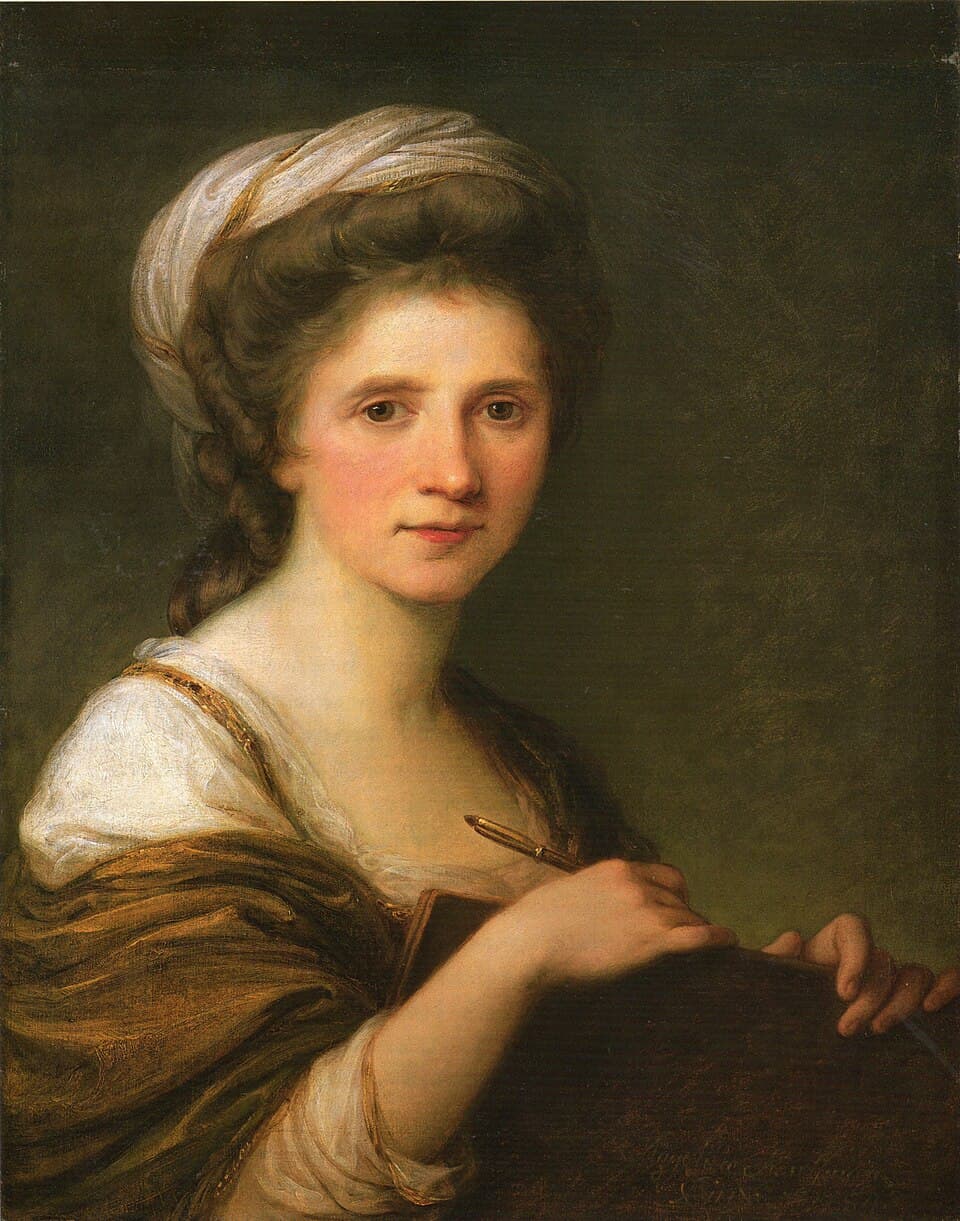
Swiss, Austrian · Arts
Angelica Kauffmann
October 30, 1741 – November 5, 1807
Early Life and Background
Angelica Kauffmann, born on October 30, 1741, in Chur, Switzerland, was the only child of Joseph Johann Kauffmann, a painter from Austria, and Cleophea Luz from Switzerland. From a young age, she demonstrated exceptional talent in both art and music. Her father played a crucial role in her artistic education, bringing her up in a culturally rich environment. By the time she was 12, Kauffmann was recognized as both a talented portraitist and a gifted singer, though she eventually decided to pursue art professionally.
Career Beginnings and Development
Kauffmann's early career was marked by extensive travel. In Italy, she immersed herself in the work of the great Renaissance and Baroque masters, spending time in cities rich with artistic heritage such as Milan, Rome, Florence, and Bologna. Her exposure to this culture influenced her neoclassical style. In 1766, she moved to London, where she gained the patronage of prominent figures and was encouraged by the artist Joshua Reynolds.
Major Works and Accomplishments
In 1768, Angelica Kauffmann became one of the founding members of the Royal Academy of Arts in London, an extraordinary achievement given the gender biases of the time. Her works, often historical and allegorical, found favor with the British aristocracy. Notable paintings include "Self-Portrait with Bust of Minerva" and "The Family of the Earl of Gower." Her art was celebrated for its graceful line and color, influencing future generations of artists.
Awards, Honors, and Recognition
As a founding member of the Royal Academy, Kauffmann received substantial recognition throughout her career. She maintained a prominent position in society, often depicted in portraits by other artists of her time, including contemporary Sir Joshua Reynolds. Her role in the Academy underscored her significant contributions to the art world.
Personal Life
Kauffmann's personal life was marked by controversy and tragedy. In 1767, she married Count de Horn, later revealed to be an impostor. The marriage was annulled, resulting in social embarrassment. In 1781, she married artist Antonio Zucchi, with whom she shared a harmonious partnership until his death in 1795.
Legacy and Historical Impact
Kauffmann's legacy endures not only through her paintings but also by paving the way for future generations of women artists. Her involvement in the Royal Academy broke the artistic glass ceiling of the 18th century. She is remembered for her dedication to classical ideals in art and for addressing themes of personal identity and femininity.
Later Life and Death
In her later life, Kauffmann suffered personal losses with the death of her second husband. She returned to Rome, where she continued to work and participate in the artistic community until her death on November 5, 1807. Her funeral in Rome was a large, public event, testament to her impact and esteem as a beloved artist.
Dated achievements
2 indexed.
- Oct301741Arts
Angelica Kauffmann's Birth
Angelica Kauffmann was born on October 30, 1741, in Chur, Switzerland.
View details Wikipedia - Angelica Kauffman - Nov051807Arts
Angelica Kauffmann's Death
Angelica Kauffmann died on November 5, 1807, in Rome, marking the end of her influential life and career.
View details