← All women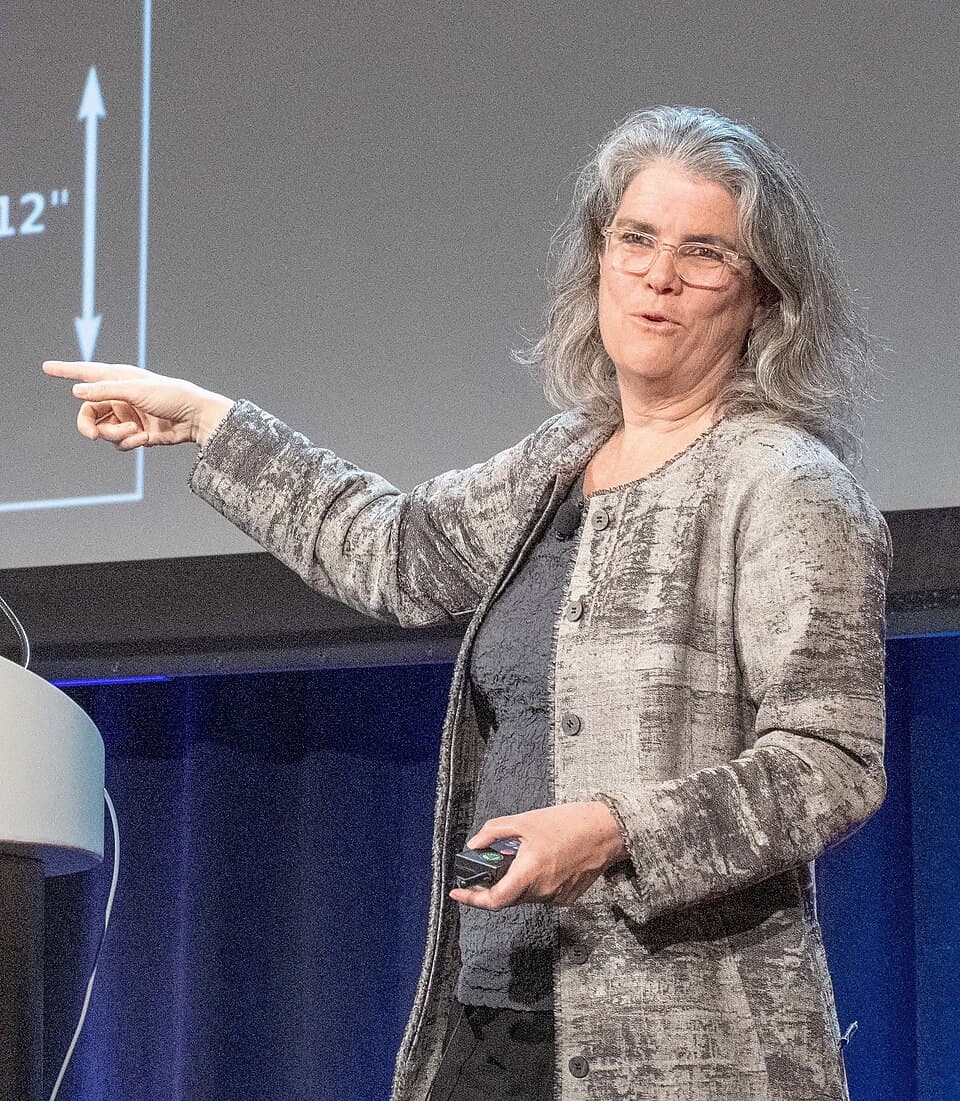
American · Science
Andrea Mia Ghez
June 16, 1965 – present
Early Life and Background
Andrea Mia Ghez was born on June 16, 1965, in New York City, U.S. Raised in an intellectually stimulating environment, she displayed an early passion for science. Her father, of Italian descent, was a significant influence, inspiring her scientific curiosity. Ghez attended the University of Chicago Laboratory Schools, which nurtured her burgeoning interest in physics and astronomy. She pursued her undergraduate studies at the Massachusetts Institute of Technology (MIT), majoring in Physics, and went on to earn her Ph.D. from the California Institute of Technology (Caltech), focusing on Astronomy.
Career Beginnings and Development
After completing her doctorate, Ghez began her career as a researcher, swiftly establishing herself in the field of astrophysics. Her early work focused on utilizing high-resolution imaging to study star formation and celestial bodies. Her commitment to observational astrophysics soon led her to the Galactic Center, where she focused on studying the mysterious compact radio source Sagittarius A*.
Major Works
Ghez's landmark research, using the Keck Observatory's advanced telescopic technologies, enabled her and her team to track the motion of stars near the center of the Milky Way. This work provided compelling evidence for the existence of a supermassive black hole at the core of our galaxy. Her pioneering use of adaptive optics revolutionized observational astrophysics, allowing more precise images of the cosmos.
Awards and Recognition
Over her illustrious career, Andrea Ghez has received numerous honors. In 2008, she was awarded a MacArthur Fellowship, recognizing her bold and innovative research. Her most notable accolade came in 2020 when she received the Nobel Prize in Physics, shared with Reinhard Genzel and Roger Penrose, for their collective advancements in understanding black holes.
Personal Life
Andrea Ghez is married to Tom LaTourrette, a geologist and fellow scientist. She is also a dedicated mother of two children. Her personal life is deeply intertwined with her professional pursuits, as her family supports her expansive academic career.
Legacy and Historical Impact
Ghez's work has fundamentally altered our understanding of the universe's most enigmatic phenomena—black holes. Her contributions to adaptive optics have not only enabled breakthroughs in galactic astronomy but have also influenced techniques in various scientific fields. As a female scientist in a predominantly male field, Ghez has broken barriers, offering inspiration to future generations of women in STEM.
Later Life
Andrea Ghez continues to teach and conduct research at the University of California, Los Angeles (UCLA). Her ongoing work promises to yield further scientific insights, making her a pivotal figure in contemporary astrophysics.
Dated achievements
2 indexed.
- Jun161965Science
Born in New York City
Andrea Mia Ghez was born on June 16, 1965, in New York City, later raised partly in Chicago.
View details Andrea Ghez - Biographical, Nobel Prize - Oct062020Science
Awarded the Nobel Prize in Physics
Andrea Ghez became the fourth woman to win the Nobel Prize in Physics, honored for discovering a supermassive black hole at the Milky Way's center.