← All women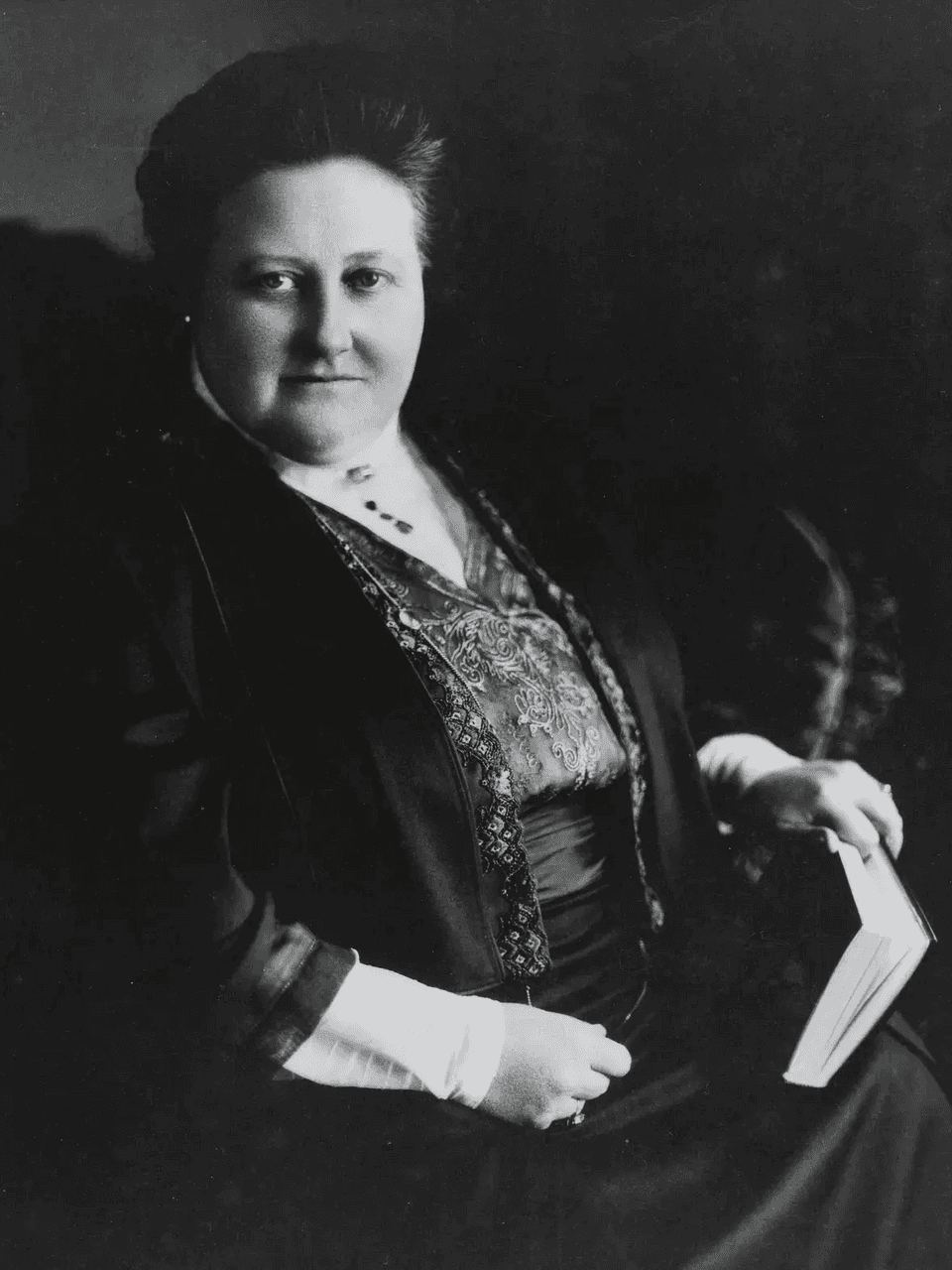
American · Literature · Arts
Amy Lowell
February 9, 1874 – May 12, 1925
Early Life and Background
Amy Lowell was born on February 9, 1874, in Brookline, Massachusetts, into the prominent Lowell family, deeply embedded in New England cultural and political life. Her family background offered her a world of educational and intellectual stimulation, although Lowell herself was mainly homeschooled due to improper behavior, according to her family. Despite not attending university, she used her family’s extensive library to educate herself, developing a passion for literature and poetry.
Career Beginnings and Development
Amy Lowell's literary career took off relatively late. She began writing poetry in her mid-thirties, with her first collection, A Dome of Many-Coloured Glass, published in 1912. Her early work was influenced by English poets, but she gradually moved towards a distinct style, becoming a key figure in the Imagist movement. Her second collection, Sword Blades and Poppy Seed (1914), marked a shift in her poetic voice, embracing free verse and vivid imagery.
Major Works and Accomplishments
Lowell's commitment to Imagism, a movement emphasizing clarity of expression and precision, was profound. Her prominent works include Men, Women and Ghosts (1916) and Can Grande's Castle (1918), among others. Her What's O'Clock won the Pulitzer Prize for Poetry in 1926, posthumously acknowledging her immense contribution to literature. She was known not only for her poetry but also for her essays, particularly Tendencies in Modern American Poetry (1917), which sought to promote the modernist agenda in the United States.
Awards, Honors, and Recognition
Amy Lowell was awarded the Pulitzer Prize for Poetry in 1926 for her collection What's O'Clock. This recognition came right after her death, cementing her legacy as a leading figure in American poetry.
Personal Life
As a prominent lesbian figure, Amy Lowell’s personal life was as boldly unconventional as her literary work. She had a significant relationship with actress Ada Dwyer Russell, who became her muse and was the inspiration for much of her romantic poetry. Their relationship was widely recognized, though discreet by necessity due to the social norms of the time.
Legacy and Historical Impact
Amy Lowell is remembered as a staunch advocate for modernism in literature and a champion of women's roles in the arts. Her impact is seen in the way she challenged the literary status quo, encouraged women to explore their creative voices, and supported the publication of other poets. Her bold approach to both literary and personal life made her a leading figure in the burgeoning modernist movement.
Later Life and Death
Amy Lowell continued writing and influencing the literary world until her death on May 12, 1925, in Brookline, Massachusetts. She battled health issues throughout her later years, but her commitment to poetry and literature never waned. Her burial at Mount Auburn Cemetery signifies her lasting connection to her Massachusetts roots.
Dated achievements
2 indexed.
- Feb091874Literature
Birth of Amy Lowell
Amy Lowell was born in Brookline, Massachusetts, to a prominent New England family.
View details Encyclopaedia Britannica - Amy Lowell - May121925