← All women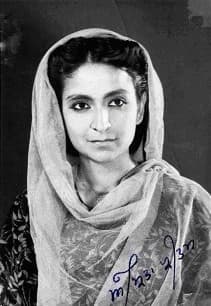
Indian · Literature · Activism
Amrita Pritam
August 31, 1919 – October 31, 2005
Early Life and Background
Amrita Pritam was born on August 31, 1919, in Gujranwala, Punjab, now in Pakistan. She was the only child of Kartar Singh, a schoolteacher and a preacher, and Raj Bibi, a poet, which fostered her early interest in literature. Her mother's death in 1930 deeply affected her, nurturing her poetic voice from a young age. Amrita faced cultural challenges as society was traditionally male-dominated; however, she overcame these to embrace her passion for writing.
Career Beginnings and Development
Amrita published her first anthology of poems, 'Amrit Lehran' (Immortal Waves), at the young age of 16 in 1936. She soon became known for her unique voice and deep sensibility. After moving to Lahore, she became an editor for a magazine that addressed women's issues and feminism, themes that heavily influenced her writing throughout her career.
Major Works and Accomplishments
Amrita Pritam's literary career spanned over 50 years. Her poignant poem "Ajj Aakhaan Waris Shah Nu" from 1947 expressed the trauma of the Partition of India. Her novel 'Pinjar' is an intricate narrative of the effects of the Partition which was later adapted into a popular Indian film. Her works often dealt with themes of love, pain, separation, and the female experience during societal upheaval.
Awards, Honors, and Recognition
Pritam received numerous accolades, including the prestigious Sahitya Akademi Award in 1956, the Padma Shri in 1969, and India's highest literary award, the Jnanpith Award, in 1982. In 2004, she was honored with the Padma Vibhushan, India's second-highest civilian award, reflecting her enduring impact on Indian literature.
Personal Life
Amrita's personal life was marked by a quest for love and companionship. Originally married to Pritam Singh in 1935, she later separated from him. Her deep, intimate friendship with lyricist Sahir Ludhianvi was another significant part of her personal narrative, inspiring some of her most impassioned poetry. Later in life, she found lasting companionship with the artist Imroz, who remained with her until her death.
Legacy and Historical Impact
Amrita is remembered as the first prominent female Punjabi writer, who broke the boundaries set by a patriarchal society. Her writing served as a voice for women and laid the groundwork for feminist discourse in modern Indian literature. Her candidness about women's rights, sexuality, and identity continues to inspire writers and activists globally.
Later Life and Death
In her later life, Amrita continued to write prolifically and lived with Imroz in New Delhi. Despite her health issues, she remained intellectually active and engaged with her readers. Amrita Pritam passed away on October 31, 2005, leaving behind an indelible mark on the world of literature.
Dated achievements
2 indexed.
- Aug311919Literature
Birth of Amrita Pritam
Amrita Pritam was born on August 31, 1919, in Gujranwala, Punjab.
View details Wikipedia - Oct312005Literature
Death of Amrita Pritam
Amrita Pritam passed away on October 31, 2005, in New Delhi, India.
View details