← All women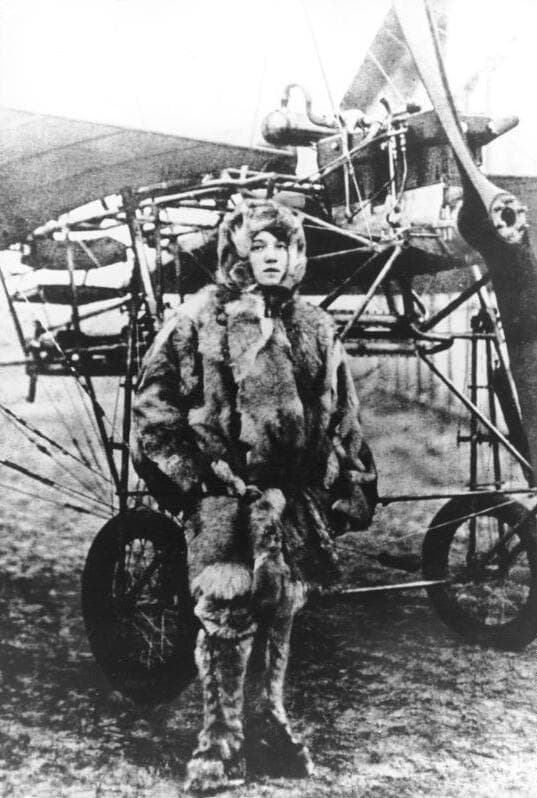
German · Aviation · Exploration
Amelie "Melli" Beese
September 13, 1886 – December 22, 1925
Early Life and Background
Amelie Hedwig Boutard-Beese, commonly known as Melli Beese, was born on September 13, 1886, in Dresden, Germany. She was the daughter of a naval architect, which sparked her early interest in engineering and mechanics. Known for her determination and intellect, she pursued studies in sculpture at the Dresden Academy of Fine Arts, reflecting her diverse talents and dedication to breaking traditional gender roles.
Career Beginnings and Development
Melli Beese's ambition took her to the skies at a time when aviation was in its infancy and primarily a male domain. Her interest in flying was piqued after witnessing a display of planes in Dresden, compelling her to pursue a pilot's license. She faced numerous obstacles, including prejudice and restrictions that barred women from accessing flight schools. Undeterred, she moved to France, where she took private lessons and made a significant breakthrough by earning her pilot’s license on September 13, 1911. This achievement made her Germany's first licensed female pilot.
Major Works, Discoveries, or Accomplishments
Following her qualification, Beese returned to Germany and established her flying school and aircraft manufacturing business with her future husband, Charles Boutard. Their endeavor, "Beese & Boutard-Flugzeugbau," focused on aircraft design and innovation. Despite legal and social challenges, the school became an influential center for aspiring pilots and contributed to aviation advancements during the early 20th century.
Awards, Honors, and Recognition
Throughout her career, Melli Beese was celebrated for her contributions to aviation and recognized as a trailblazer for women in technology. Although honors were scarce for women in her time, her achievements in breaking gender barriers and establishing a presence in aviation are significant legacies. She also took part in various aviation competitions, receiving accolades for her skills.
Personal Life
Melli Beese married Charles Boutard, a fellow aviator and business partner. Their partnership was both personal and professional, marked by common goals in advancing aircraft technology. Together, they faced difficulties, particularly during World War I due to Boutard's French nationality, which led to his internment and Beese's professional struggles in a war-torn Germany.
Legacy and Historical Impact
Beese's legacy lies in her pioneering spirit and contributions to aviation. As an early female aviator, she represents resilience in the face of societal restrictions. Her work paved the way for future generations of women in aviation and engineering, proving the barriers of her time could be broken with perseverance and vision.
Later Life and Death
After World War I, Beese's business suffered from financial difficulties and societal changes. On December 22, 1925, Melli Beese tragically passed away in Berlin. Her death marked the end of an era for pioneering female aviators, but her influence and achievements continue to inspire women in aviation and beyond.
Dated achievements
3 indexed.
- Sep131886Aviation
Birth of Amelie Beese
Amelie Hedwig Beese was born on September 13, 1886, in Dresden, Germany.
View details Amelie Beese - Wikipedia - Sep131911Aviation
Melli Beese Earns Pilot's License
On September 13, 1911, Melli Beese became Germany's first licensed female pilot.
View details