← All women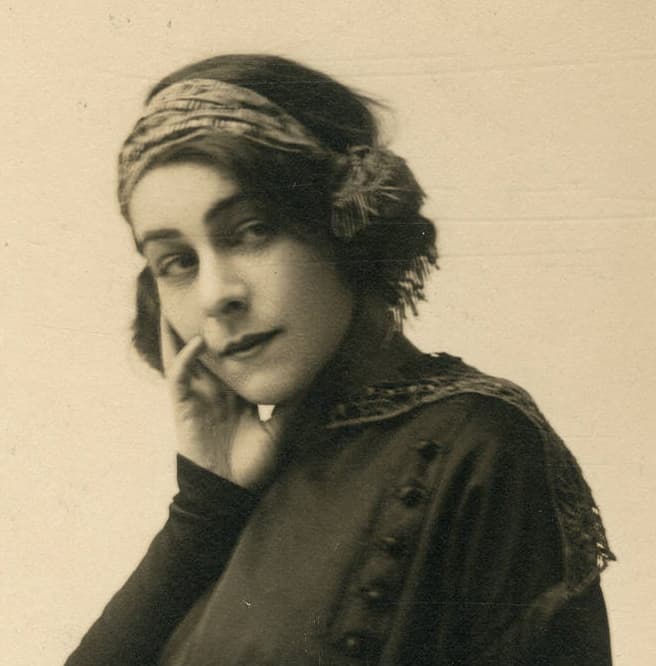
Russian, American · Arts · Literature
Alla Nazimova
June 3, 1879 – July 13, 1945
Early Life and Background
Alla Nazimova was born as Marem-Ides Leventon on June 3, 1879, in Yalta, Crimea, now part of Ukraine. Coming from a Jewish family, she had a tumultuous childhood. Her father, Yakov Leventon, was a pharmacist, and her mother left the family when Nazimova was very young. Her fraught family life led her to leave home at an early age, seeking refuge in her creativity and the arts.
She showed early interest in music and acting, entering the Drama School of the Moscow Philharmonic at the age of seventeen. She studied under greats like Vladimir Nemirovich-Danchenko, one of the founders of the Moscow Art Theatre, which significantly influenced her future career.
Career Beginnings and Development
Upon completing her studies, Nazimova joined Konstantin Stanislavski's Moscow Art Theatre, where she honed her acting skills. Her performance style, marked by strong emotional expressiveness and intense stage presence, quickly gained acclaim. In 1905, she emigrated to the United States, adopting the name "Nazimova," a reference to one of her characters in an Ibsen play, and began performing in New York City.
Her career quickly gained momentum as she transitioned from stage to film. Nazimova was one of the most celebrated actresses on Broadway, performing in productions such as Ibsen's "Hedda Gabler" and Chekhov's "The Cherry Orchard." Her nuanced portrayal of complex characters captivated audiences and critics alike.
Major Works and Accomplishments
Nazimova entered the film industry in 1916 with the film "War Brides," which was a success and catapulted her into stardom. She became one of the highest-paid actresses of her time, famous for films such as "Revelation" (1918) and "Salome" (1923). Her work on "Salome" was particularly groundbreaking for its use of Art Nouveau motifs, marking it as a significant piece in avant-garde cinema.
By producing many of her films, Nazimova contributed significantly to the art form, often pushing the boundaries of film expression. Despite the success of her bold projects, their high production costs took a financial toll on her.
Awards, Honors, and Recognition
Nazimova's pioneering work was recognized in both live theatre and the burgeoning film industry. Although there were few formal awards during her time, her legacy was cemented with a star on the Hollywood Walk of Fame, honoring her lasting contributions to the arts.
Personal Life
Nazimova was openly bisexual, a fact that was both a personal truth and part of her public persona during a time when such openness was rare. Her notoriously influential personal circle included numerous famous figures, often dubbed the "sewing circle," a nod to the gatherings of prominent queer women of Hollywood.
She married actor Sergei Golovin in a marriage of convenience, but her enduring relationships included that with actress Glesca Marshall. This personal life openness further emphasized her role as a defiant cultural figure in Hollywood.
Legacy and Historical Impact
Nazimova’s audacity in both her personal and professional life made her an icon in early Hollywood. Despite facing industry sexism and veering often from conventional storytelling norms, she forged a path for future generations of women in film and theatre. Her innovative approach continues to inspire artists and historians.
Later Life and Death
As sound films took over, Nazimova’s career declined, and she was all but forgotten in the film industry by the mid-1930s. She returned to the stage and continued to act until her death. On July 13, 1945, she passed away from coronary thrombosis in Los Angeles, California. Her legacy remains significant within the context of silent film history and the evolution of women's roles within the arts.
Dated achievements
2 indexed.
- Jun031879Arts
Birth of Alla Nazimova
Alla Nazimova was born on June 3, 1879, in Yalta, Crimea.
View details Alla Nazimova - Encyclopædia Britannica - Jul131945