← All women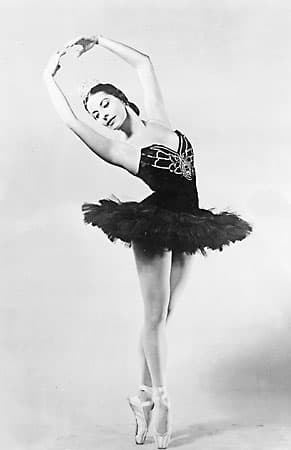
Cuban · Arts
Alicia Alonso
December 21, 1920 – October 17, 2019
Early Life and Background
Alicia Alonso was born Alicia Ernestina de la Caridad del Cobre Martínez Hoyo on December 21, 1920, in Havana, Cuba. She was the youngest of four children born to Antonio Martínez Arango, a colonel in the Cuban army, and Ernestina Hoyo. Though her family had no direct connection to the performing arts, young Alicia became captivated by ballet at around age nine after seeing a children's dance recital. This chance encounter sparked a lifelong devotion to an art form that had virtually no institutional presence in Cuba at the time.
She began her formal training at the Sociedad Pro-Arte Musical in Havana, one of the few organizations in the country offering serious classical dance instruction. Her early teachers included Russian émigré dancers who had settled in Havana, exposing her to the rigorous Vaganova-influenced Russian ballet tradition that would later inform the distinctive Cuban style she helped create.
Career Beginnings and Development
At age 15, Alicia met and married fellow dance student Fernando Alonso, and the couple soon moved to New York City to pursue professional training and opportunities unavailable in Cuba. She studied at the School of American Ballet and began performing on Broadway in musical theater productions, including choreographed works by George Balanchine, before joining the newly formed Ballet Theatre (later American Ballet Theatre) in 1940.
Her early career coincided with a devastating health crisis: in 1941, Alonso suffered a detached retina, the first of several eye ailments that would eventually require multiple surgeries and periods of complete bed rest with her eyes bandaged. Physicians warned she might never dance again, and even after partial recovery she suffered recurring detachments that gradually and permanently compromised her eyesight. Remarkably, she trained her limbs to memorize choreography with extraordinary precision and relied on strategically placed stage lights and trusted partners to navigate the stage, allowing her to continue performing at the highest level despite near-total blindness in her later years.
Major Accomplishments and the Founding of Ballet Nacional de Cuba
Alonso's defining breakthrough came on November 2, 1943, when she stepped in as a last-minute replacement for an injured Alicia Markova in the title role of Giselle with Ballet Theatre. Her performance was a triumph, and the role of Giselle became inseparably linked to her artistic identity for the rest of her career. She was celebrated for her dramatic intensity, technical precision, and deeply emotional interpretations of Romantic and classical repertoire, and she went on to dance leading roles in works such as Swan Lake, Coppélia, and numerous new creations by choreographers including Agnes de Mille, Antony Tudor, and Michel Fokine.
In 1948, Alicia, her husband Fernando, and his brother Alberto Alonso founded the Ballet Alicia Alonso in Havana, using earnings from her international engagements to sustain the company through its precarious early years. The company struggled financially until the Cuban Revolution of 1959, after which Fidel Castro's new government, recognizing the propaganda and cultural value of a flourishing national ballet, provided state subsidies that transformed the troupe into the Ballet Nacional de Cuba. Alonso served as its prima ballerina, artistic director, and chief choreographer for the rest of her life, building an internationally acclaimed institution and a rigorous training school, the Cuban National Ballet School, that produced generations of dancers celebrated worldwide for their explosive technique and dramatic expressiveness—a style now recognized globally as the "Cuban school" of ballet.
Despite the U.S. trade embargo and Cuba's political isolation, Alonso and her company toured internationally to great acclaim, and she remained one of the few Cuban public figures permitted to travel freely between Cuba and the United States for extended periods, even performing with American companies during periods of eased tension. She choreographed and restaged numerous full-length ballets for her company and international guest companies alike, and continued performing into her 70s, an extraordinary feat given her blindness and age.
Awards, Honors, and Recognition
Alonso received numerous prestigious honors throughout her career, including:
- Cuba's National Dance Award and lifetime recognition as a Hero of Labor of the Republic of Cuba
- France's title of Chevalier and later Officier of the Légion d'Honneur
- Numerous honorary doctorates from universities across Latin America, Europe, and the United States
- UNESCO recognition for her contributions to international dance and culture
- Induction into the International Dance Hall of Fame
- Cuba named its national theater, the Gran Teatro de La Habana, partly in her honor with a hall bearing her name
She was widely regarded, alongside figures such as Margot Fonteyn and Maya Plisetskaya, as one of the greatest ballerinas of the twentieth century, and Fidel Castro personally championed her as a symbol of Cuban cultural achievement and revolutionary pride.
Personal Life
Alonso married Fernando Alonso in 1937; the couple had one daughter, Laura, who also became a dancer and later ran her own ballet school in Havana. Alicia and Fernando divorced in the 1970s, though they continued to collaborate professionally for years afterward given their shared commitment to the Ballet Nacional de Cuba. She later married Pedro Simón, a dance historian and critic who became her close companion and biographer, chronicling her life and the company's history extensively. Throughout her life, Alonso's determination to continue dancing and directing despite blindness became a defining and widely admired aspect of her personal story, often cited as an example of extraordinary willpower and adaptation to disability.
Legacy and Historical Impact
Alicia Alonso's legacy is twofold: as a performer, she redefined the interpretation of Romantic-era ballets, particularly Giselle, bringing psychological depth and dramatic urgency to roles that had often been performed with more restrained classicism. As an institution-builder, she created, essentially from nothing, one of the world's most respected ballet companies and training schools in a country previously without a classical dance tradition, cementing Cuba's place on the global ballet map alongside Russia, France, and the United Kingdom.
Her insistence on training dancers to a uniquely expressive and technically demanding standard produced internationally celebrated principal dancers who went on to join major companies around the world, spreading the influence of the "Cuban style" globally. She is also remembered as a trailblazer for dancers with disabilities, having continued a decades-long performing career despite severe visual impairment, relying on memory, muscle memory, and trusted collaborators to execute some of ballet's most demanding choreography.
Later Life and Death
Alonso remained active as director of the Ballet Nacional de Cuba into her 90s, overseeing productions, coaching dancers, and representing Cuban culture at international events, despite being almost completely blind and using a wheelchair in her final years. She died in Havana on October 17, 2019, at the age of 98. The Cuban government declared three days of official mourning, and tributes were paid by dance companies, governments, and cultural institutions across the world, honoring her as one of the towering figures in the history of ballet and a defining symbol of Cuban national culture.
Dated achievements
4 indexed.
- Dec211920Science
Birth of Alicia Alonso in Havana, Cuba
Alicia Ernestina de la Caridad del Cobre Martínez Hoyo was born in Havana, Cuba, on December 21, 1920.
View details Alicia Alonso - Wikipedia - Nov021943Science
Breakthrough performance in Giselle with Ballet Theatre
Alonso stepped in as a last-minute replacement to dance the title role in Giselle with Ballet Theatre in New York, launching her international career.