← All women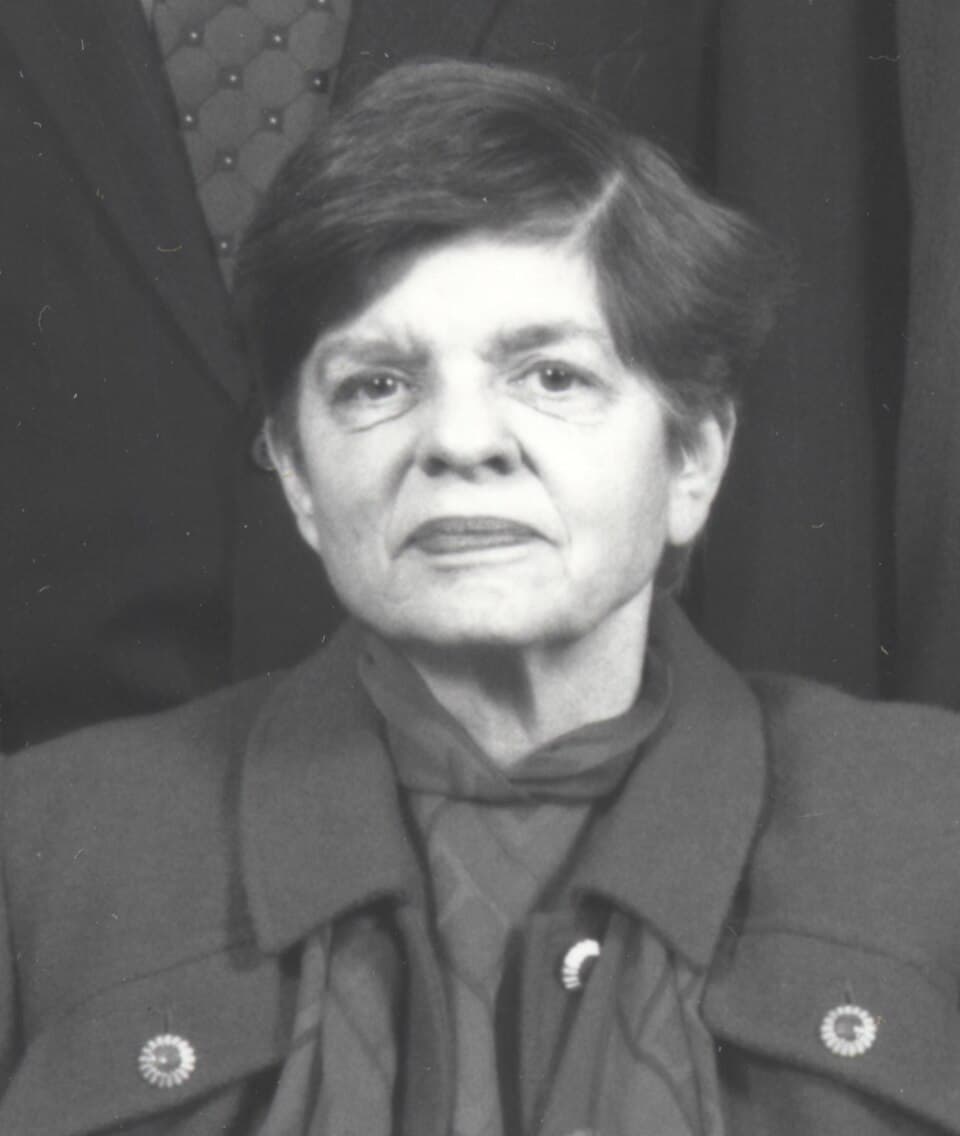
American · Politics · Science
Alice Rivlin
March 4, 1931 – May 14, 2019
Early Life and Background
Alice Mitchell Rivlin was born on March 4, 1931, in Philadelphia, Pennsylvania, to a family deeply involved in academics and public service. Her father, Allan C. Mitchell, was a pediatrician, and her mother, Georgianna Tucker Mitchell, was a writer and a member of the Board of Deaconesses of the Congregational Church. These influences imbued Alice with a strong sense of civic duty and intellectual curiosity from a young age. She pursued her undergraduate studies at Bryn Mawr College, where she graduated with a degree in economics in 1952. Rivlin then furthered her education at Radcliffe College, earning a Ph.D. in economics in 1958 from Harvard University, where she honed her research skills in public finance and macroeconomics.
Career Beginnings and Development
Rivlin's career began with a position at the Brookings Institution, where she worked on various economic topics. Her analytical skills and keen understanding of fiscal policy led her to roles in the federal government during the 1960s, where she contributed to policy development across multiple administrations. Notably, she served in the Johnson administration, working on the War on Poverty, which honed her expertise in public policy and budgetary matters.
Major Works and Accomplishments
In 1975, Rivlin became the first director of the Congressional Budget Office (CBO), a position she held until 1983. Her leadership in crafting the framework for the CBO helped establish it as a nonpartisan, credible source of budgetary analysis and projections, emphasizing transparency and accountability. This tenure was marked by numerous reports that influenced fiscal policy and legislation significantly.
Following her successful stint at the CBO, Rivlin served as the director of the Office of Management and Budget (OMB) from 1994 to 1996 under President Clinton, becoming the first woman to hold the position. Her tenure at the OMB was characterized by efforts to reduce the federal deficit and streamline federal operations.
Awards, Honors, and Recognition
Rivlin's extensive contributions to public policy and economics were recognized with numerous accolades, including the MacArthur Foundation Fellowship in 1983. She also received the Paul A. Volcker Lifetime Achievement Award for Economic Policy from the National Association for Business Economics in 2008. Her influence was notable in various economic initiatives that promoted fiscal discipline and informed budgetary policy-making across the nation.
Personal Life
Alice Rivlin was married twice, first to Lewis Allen Rivlin, with whom she had three children. After their divorce, she was married to Sidney G. Winter, a fellow economist. Her personal relationships were integral to her professional environment, bolstering her collaborative approach to economic policy and budgeting.
Legacy and Historical Impact
Rivlin's legacy is deeply embedded in the field of economic policy analysis and budget reform. The systems and processes she put in place at the CBO continue to facilitate informed legislative decision-making, and her advocacy for fiscal responsibility remains influential in contemporary budgetary policy debates. She was a trailblazer for women in economics and public service, setting a benchmark for subsequent generations.
Later Life and Death
After her tenure at the OMB, Rivlin continued to be a force in economic policy as a senior fellow at the Brookings Institution, where she conducted research and wrote prolifically on economic strategy and federal budgeting. Alice Rivlin passed away from cancer on May 14, 2019, in Washington, D.C., leaving behind a notable legacy of public service and economic analysis.
Dated achievements
3 indexed.
- Mar041931Politics
Born in Philadelphia, Pennsylvania
Alice Mitchell Rivlin was born on March 4, 1931, in Philadelphia, Pennsylvania.
View details Wikipedia: Alice Rivlin - Feb241975Politics
Became first Director of the Congressional Budget Office
Rivlin was appointed the first Director of the newly created Congressional Budget Office (CBO), serving until 1983.