← All women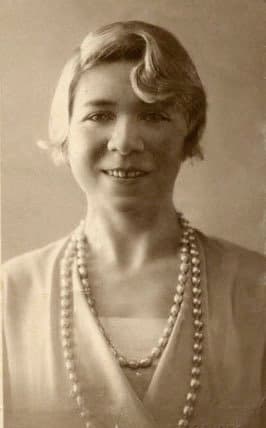
Argentine, Swiss · Literature · Activism
Alfonsina Storni
May 29, 1892 – October 25, 1938
Early Life and Background
Alfonsina Storni was born on May 29, 1892, in Capriasca, a village in the canton of Ticino, Switzerland, to Paulina and Alfonso Storni, an Italian-Swiss couple. Her parents had already lived for a time in Argentina, where her father operated a small brewery and store in San Juan, before returning temporarily to Switzerland. When Alfonsina was about three or four years old, the family emigrated once more to Argentina, settling first in San Juan and later relocating to Rosario, in Santa Fe province, around 1901, seeking better economic opportunities.
Storni's childhood was marked by financial hardship. Her father struggled with alcoholism and eventually lost the family business, forcing young Alfonsina and her siblings to contribute to the household income. She worked in her mother's small café serving customers, and later took a job in a hat factory. Despite—or perhaps because of—this difficult environment, she developed an early love of performance and language, joining a traveling theater company at around age 15, touring the provinces performing in plays by Ibsen and other dramatists. This period, though brief, exposed her to literature, stagecraft, and public expression that would shape her poetic sensibility.
Recognizing her intellectual promise, Storni's mother enrolled her in a rural teacher-training school, the Escuela Normal Mixta de Maestros Rurales in Coronda, where she earned a teaching certificate in 1910. This formal education, though modest by elite standards, was a crucial stepping stone, granting her both a profession and the literary grounding to begin writing seriously.
Career Beginnings and Move to Buenos Aires
After completing her teaching credential, Storni worked briefly as a rural schoolteacher, an experience that deepened her awareness of social inequality and the constrained roles available to women. In 1911, pregnant and unmarried—a scandalous situation in conservative Argentine society—she moved to Buenos Aires to start a new life away from the judgment of her provincial community. Her son, Alejandro Alfonso Storni, was born in 1912; she never revealed the identity of the father, a decision that itself constituted a quiet act of defiance against social convention.
In Buenos Aires, Storni supported herself and her son through various jobs, including work as a cashier, in a pharmaceutical warehouse, and eventually as a journalist and teacher. She began publishing poems in magazines and newspapers, gradually integrating into the city's literary and bohemian circles. Her early poetry appeared in publications such as Caras y Caretas and Fray Mocho, and she became associated with literary groups including the famed literary café gatherings where writers like Horacio Quiroga, Manuel Gálvez, and José Enrique Rodó circulated.
Major Works and Literary Development
Storni's first poetry collection, La inquietud del rosal (\"The Unrest of the Rosebush\"), was published in 1916. Though still influenced by conventional Romantic and modernist styles, it already displayed her characteristic themes: female desire, emotional vulnerability, and resistance to imposed gender roles. This was followed by El dulce daño (\"The Sweet Harm,\" 1918), Irremediablemente (\"Irremediably,\" 1919), and Languidez (\"Languor,\" 1920), which won her the Second Municipal Prize and the First Provincial Prize for poetry, cementing her national literary reputation.
Her poetry evolved from the sentimental, love-focused verse of her early period toward a more incisive, ironic, and socially critical voice. Collections such as Ocre (1925) and Mundo de siete pozos (\"World of Seven Wells,\" 1934) reveal a shift toward more experimental, avant-garde forms, engaging with themes of urban alienation, the body, aging, and mortality. Her final collection, Mascarilla y trébol (\"Mask and Clover,\" 1938), published shortly before her death, is considered her most avant-garde and philosophically dense work, employing what she termed \"antisonetos\" (anti-sonnets) that broke from traditional rhyme schemes.
Beyond poetry, Storni was a prolific essayist and playwright. She wrote for the newspaper La Nación under the pseudonym \"Tao Lao,\" contributing satirical and critical columns on social issues, particularly the status of women. She also wrote several plays, including El amo del mundo (1927) and children's theater works, and taught drama and elocution at institutions including the Teatro Infantil Lavardén and a school she helped found for children's theater education.
Feminism and Social Critique
Storni is widely regarded as one of the most important feminist voices in early 20th-century Latin American literature. Her poetry and essays directly confronted the hypocrisy of a society that condemned women for behaviors it tolerated or celebrated in men, particularly regarding sexuality, motherhood outside marriage, and professional ambition. Poems like \"Tú me quieres blanca\" (\"You Want Me White\") satirized the double standard demanding female purity while men were free of such expectations.
She was an active participant in Buenos Aires's intellectual and feminist circles, engaging in public debates about women's suffrage, education, and labor rights. Her outspokenness made her a controversial figure; she clashed publicly with fellow poet Juan Ramón Jiménez and later engaged in a famous literary rivalry-turned-mutual respect with Chilean poet Gabriela Mistral, with whom she shared a close friendship rooted in their common experience as prominent women writers navigating a male-dominated literary establishment.
Personal Life
Storni never married. She raised her son, Alejandro, as a single mother while building her literary career, a circumstance that was highly unconventional and subject to social stigma in Argentina at the time. She maintained close friendships with major literary figures of her generation, including Uruguayan writer Horacio Quiroga, with whom some scholars believe she shared a romantic relationship, and the poet Leopoldo Lugones.
In 1935, Storni was diagnosed with breast cancer and underwent a mastectomy. Her health declined over the following years, and the illness, combined with the emotional devastation of Horacio Quiroga's suicide in February 1938, contributed to a period of profound despair in her final months.
Death and the Legend of "Alfonsina y el Mar"
On October 25, 1938, Storni traveled to the seaside city of Mar del Plata and walked into the ocean at La Perla beach; she died by drowning, in what is understood to have been a deliberate suicide. Days earlier, she had submitted her final poem, \"Voy a dormir\" (\"I Am Going to Sleep\"), to La Nación, where it was published on October 25, the very day of her death—verses widely interpreted as a calm, resolved farewell to life.
Her death profoundly affected Argentine cultural life and became legendary, immortalized in the 1969 song \"Alfonsina y el mar\" by composer Ariel Ramírez and lyricist Félix Luna, performed famously by Mercedes Sosa among many others. The song transformed Storni's death into a poetic myth, cementing her image in the popular imagination far beyond literary circles.
Legacy and Recognition
Alfonsina Storni is remembered today as one of the towering figures of Latin American modernist poetry and an early, courageous voice for women's rights in a deeply patriarchal society. Her work anticipated many themes later central to feminist literary criticism, and she is studied alongside contemporaries such as Gabriela Mistral, Juana de Ibarbourou, and Delmira Agustini as part of the generation of great female poets of the Southern Cone.
Numerous schools, streets, and cultural institutions across Argentina bear her name, and her poetry remains a staple of Spanish-language literature curricula throughout Latin America and Spain. Her life and death continue to inspire films, documentaries, songs, and academic studies exploring the intersection of gender, creativity, and mental health in the early twentieth century.
Dated achievements
2 indexed.
- May291892Literature
Birth of Alfonsina Storni
Alfonsina Storni was born in Capriasca, Switzerland, on May 29, 1892, later emigrating to Argentina as a child.
View details Alfonsina Storni - Wikipedia - Oct251938Literature
Death of Alfonsina Storni by suicide in Mar del Plata
Alfonsina Storni died on October 25, 1938, after entering the sea at Mar del Plata, an apparent suicide linked to illness and despair.