← All women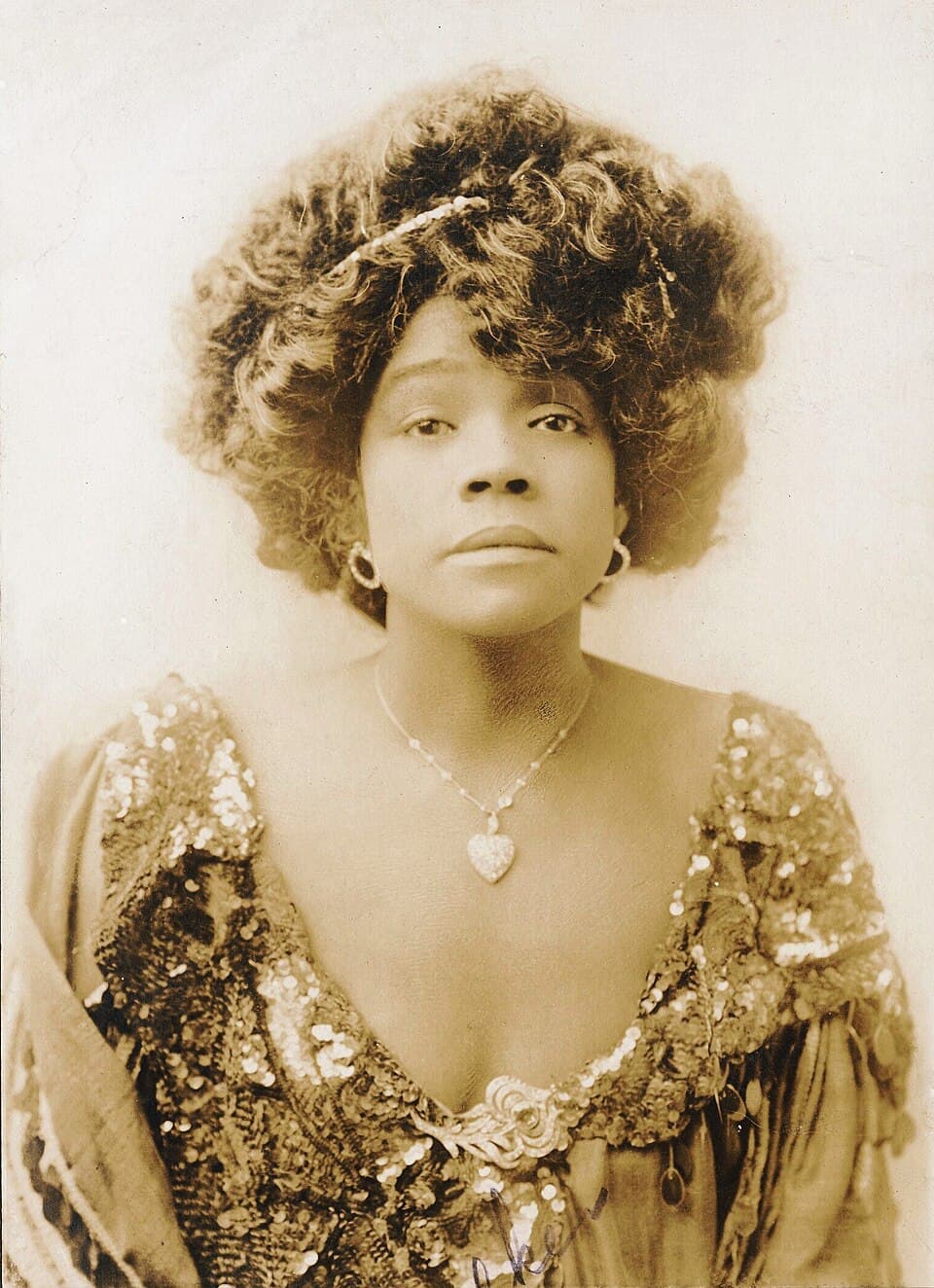
American · Arts · Activism
Aida Overton Walker
February 14, 1880 – October 11, 1914
Early Life and Background
Aida Overton Walker was born Ada Overton on February 14, 1880, in New York City, though some sources list her birth year as 1870 or 1878, creating minor discrepancies in the historical record. She was raised in a working-class Black family in Manhattan during a period of intense racial segregation and limited economic opportunity for African Americans, particularly in the years following Reconstruction. Details of her early education are sparse, but it is known that she developed an early passion for dance and performance, training in various dance styles that would later inform her innovative choreographic work.
By her teenage years, Overton had begun performing professionally, joining the chorus of various touring shows and revues. New York's burgeoning Black entertainment scene, centered in neighborhoods like the Tenderloin district and later Harlem, provided a crucial, if precarious, space for young Black performers to develop their craft, even as they contended with the pervasive influence of blackface minstrelsy and demeaning racial stereotypes that dominated American popular entertainment at the time.
Career Beginnings
Overton's professional breakthrough came when she joined the cast of The Octoroons and other touring companies in the mid-1890s, quickly establishing herself as a skilled dancer and singer. Her talent brought her into contact with the era's most significant Black entertainers, and in 1898 she performed in Clorindy, or the Origin of the Cakewalk, composed by Will Marion Cook with lyrics by Paul Laurence Dunbar. This production, which opened on the Casino Theatre Roof Garden in New York, was groundbreaking as one of the first all-Black musical productions to achieve mainstream success, helping to popularize the cakewalk dance across the United States and eventually Europe.
It was around this period that Overton met and began working with the comedy duo Bert Williams and George Walker, then rising stars of Black vaudeville. She soon married George Walker, becoming both his professional and personal partner, and took the stage name Aida Overton Walker. The Williams and Walker company became one of the most successful and influential Black entertainment enterprises of the era, and Aida quickly became its leading female star, celebrated for her singing, dancing, and comedic timing.
Major Works and Accomplishments
Throughout the early 1900s, Aida Overton Walker starred in a string of highly successful musical productions produced by the Williams and Walker company, including Sons of Ham (1900), In Dahomey (1903), Abyssinia (1906), and Bandanna Land (1908). In Dahomey was particularly historic: it became the first full-length musical written and performed entirely by African Americans to be produced on Broadway, and the show later toured to London, England, where the cast famously performed the cakewalk for King Edward VII at Buckingham Palace—a remarkable achievement given the racial barriers of the time.
Beyond performing, Overton Walker distinguished herself as a talented choreographer, staging elaborate dance numbers for these productions and later for other performers and companies. She was known for her innovative approach to the cakewalk, elevating it from a comedic or novelty dance into a sophisticated art form characterized by grace, precision, and theatrical flair. Her choreography helped shape the visual and rhythmic vocabulary of early twentieth-century American musical theater.
In 1912, following George Walker's death from complications related to syphilis in 1911, Aida continued to perform and push artistic boundaries. She took on the role of Salome, staging her own interpretation of the "Dance of the Seven Veils" that had become a sensational trend on both American and European stages. Her performance was notable for its artistic restraint and dramatic depth, distinguishing it from the more sensationalized, orientalist interpretations common among white performers of the era. This bold artistic choice underscored her range and ambition as a performer capable of dramatic as well as comedic work.
Overton Walker also choreographed for other notable performers and used her platform to advocate for greater respect and opportunity for Black artists. She wrote articles and gave interviews emphasizing the artistic legitimacy of Black performance traditions, pushing back against the demeaning stereotypes perpetuated by blackface minstrelsy, even as she and her collaborators worked within an entertainment industry still deeply shaped by those very stereotypes.
Awards, Honors, and Recognition
While formal awards for Black performers were essentially nonexistent during her lifetime due to the era's racial exclusion from mainstream institutions, Aida Overton Walker received substantial recognition within the Black press and community. She was widely celebrated in publications such as the New York Age, the Indianapolis Freeman, and the Colored American Magazine as one of the era's premier performers. She earned the informal but widely used title "Queen of the Cakewalk" for her mastery of the dance, and her performance for British royalty during the London run of In Dahomey was considered a landmark achievement for Black American performers on the international stage.
In more recent decades, historians and cultural institutions have increasingly recognized her importance, with retrospectives, academic studies, and museum exhibitions—including features by institutions such as the National Portrait Gallery in London—highlighting her contributions to American theater and dance history.
Personal Life
Aida Overton married George Walker, one half of the famous Williams and Walker comedy duo, around 1899. Their marriage was both a personal and professional partnership; she frequently performed alongside him and Bert Williams, and her career was deeply intertwined with the fortunes of the Williams and Walker company. The couple did not have children.
George Walker's health declined sharply beginning around 1908, reportedly due to complications from syphilis, which forced him to leave the stage. He died in 1911. Aida cared for him during his illness and, after his death, continued performing and choreographing, both to sustain her career and to honor his legacy, occasionally leading touring productions that had once starred him and Williams.
Legacy and Historical Impact
Aida Overton Walker is remembered as one of the most important African American performers of the late nineteenth and early twentieth centuries, and one of the first Black women to achieve significant crossover fame and critical respect in mainstream American theater. She played a crucial role in transforming the cakewalk from a folk dance into a widely recognized and celebrated performance art, influencing the trajectory of American musical theater and popular dance more broadly.
Her insistence on artistic dignity and refusal to simply replicate demeaning minstrel stereotypes helped open doors for subsequent generations of Black performers, choreographers, and theatrical producers. She is frequently cited in scholarship on African American theater history, Black feminism, and the history of American dance as a foundational figure whose work anticipated later movements toward greater creative autonomy and representation for Black artists in mainstream entertainment.
Contemporary historians, including scholars of the Harlem Renaissance and early Black Broadway, have increasingly highlighted her contributions, noting that her career bridged the minstrel-influenced entertainment of the nineteenth century and the more artistically ambitious Black theater of the early twentieth century that would later flourish during the Harlem Renaissance.
Later Life and Death
In her final years, Overton Walker continued to perform and choreograph despite failing health. She died on October 11, 1914, at her home in Harlem, New York, at the age of 34 (though some sources suggest she may have been slightly older). Her death was widely reported to be due to kidney disease, though some accounts suggest complications possibly related to the same illness that afflicted her husband. Her funeral drew a large crowd of admirers and fellow performers, and tributes appeared throughout the Black press, honoring her as one of the defining stars of her generation.
Though her life was relatively short, Aida Overton Walker's impact on American theater, dance, and the broader struggle for dignified Black representation in entertainment remains significant, and she continues to be studied and celebrated as a pioneering figure in African American cultural history.
Dated achievements
4 indexed.
- Feb141880Science
Birth of Aida Overton Walker
Aida Overton Walker was born in New York City on February 14, 1880, later becoming the leading African American female performer of the early Vaudeville and Black Broadway era.
View details - Jan081898Science
Joins the cast of "Clorindy, or the Origin of the Cakewalk"
Aida Overton Walker performed in the groundbreaking musical "Clorindy," one of the first all-Black musicals to play on Broadway, helping popularize the cakewalk nationally.
View details