← All women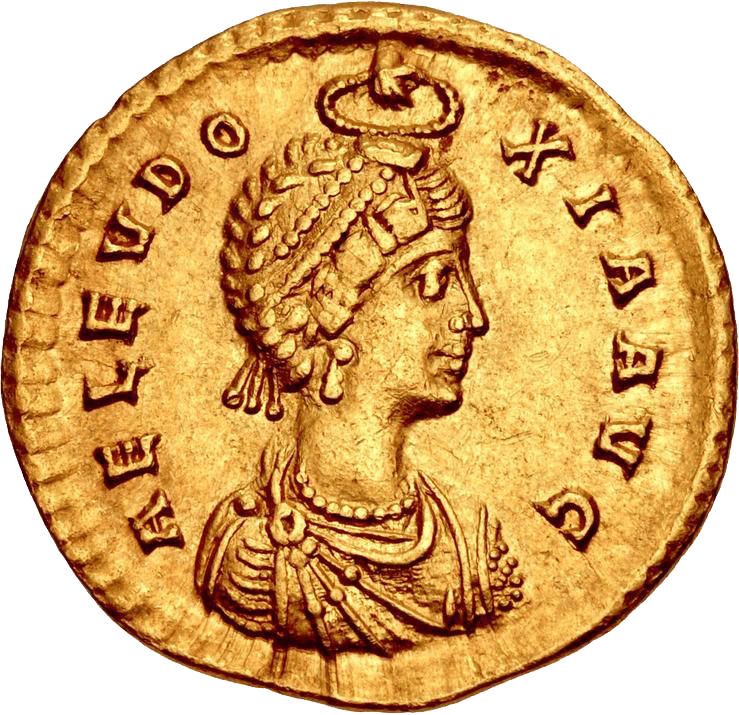
Roman · Politics
Aelia Eudoxia
Unknown – October 6, 404
Early Life and Background
Aelia Eudoxia was born into a prominent family in the late 4th century. The precise details of her birth are shrouded in the mists of history, but she is known to have been the daughter of a high-ranking Frankish officer in the Roman army. Her marriage into the imperial family signified both a personal elevation and a strategic alliance, bolstering her husband's reign over the Eastern Roman Empire.
Marriage and Rise to Power
In 395 AD, Eudoxia married Arcadius, the young Emperor of the Eastern Roman Empire. This union was politically astute, entwining Eudoxia with the imperial lineage and providing her opportunities to exert influence over political proceedings. Her rise to prominence was catalyzed by her sharp political instincts and capacity to navigate the intricacies of court life.
Political and Religious Influence
Eudoxia wielded substantial power in the royal court. She was integral in political maneuvers and eliminating rivals such as Eutropius, the consul whose authority she helped diminish. Her religious influence was profound; however, it often embroiled her in ecclesiastical disputes, most notably with John Chrysostom, the Archbishop of Constantinople. Eudoxia's patronage of churches and support of certain bishops underscore her pivotal role in the religious sphere.
Legacy and Historical Impact
Queen Eudoxia's legacy is intertwined with both political machinations and religious sponsorship. Despite controversies, her impact on the cohesion and direction of the Eastern Roman Empire was significant. Through her actions, she demonstrated the latent power queens could exert, both within the palace and throughout the broader socio-religious landscape of Constantinople.
Later Life and Death
Eudoxia's life met a premature end in 404 AD. Her death, like parts of her life, is not thoroughly recorded in contemporary annals, but it is clear that her influence outlasted her years. The circumstances surrounding her death remain less detailed, reflecting the opaque historical records from which knowledge of this era is distilled.
Dated achievements
1 indexed.
- Oct06404Politics
Death of Aelia Eudoxia
Aelia Eudoxia passed away on October 6, 404.
View details Wikipedia - Aelia Eudoxia