← All women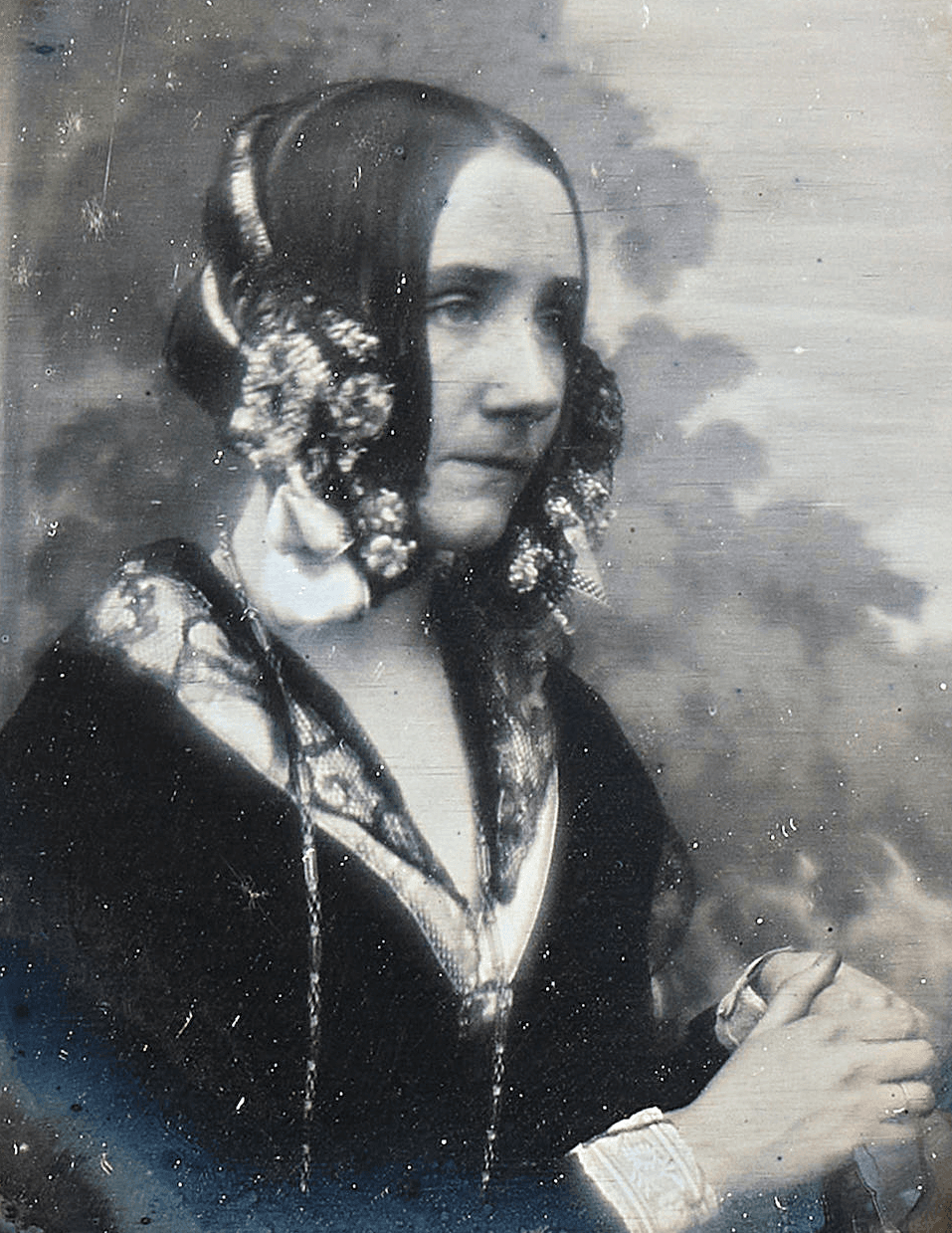
British · Science · Literature
Augusta Ada King, Countess of Lovelace (née Byron)
December 10, 1815 – November 27, 1852
Early Life and Family Background
Augusta Ada Byron was born on December 10, 1815, in London, the only legitimate child of the celebrated Romantic poet Lord Byron and his wife, Anne Isabella "Annabella" Milbanke, herself a woman of considerable intellectual accomplishment who had been informally nicknamed the "Princess of Parallelograms" by Byron for her own mathematical interests. The marriage between Ada's parents was famously turbulent and short-lived; Lady Byron separated from her husband just five weeks after Ada's birth, amid rumors of Byron's instability, debts, and scandalous personal conduct. Byron left England permanently in April 1816 and Ada never developed a relationship with her father, who died in Greece in 1824 when she was only eight years old. Despite this absence, Byron's legacy loomed large over Ada's life, and she was fascinated by the father she never knew, eventually requesting to be buried beside him.
Determined that her daughter would not inherit what she perceived as her father's dangerous poetic temperament and moral volatility, Lady Byron oversaw an unusually rigorous education for Ada, one steeped in mathematics, logic, and science rather than the literary and classical studies typically reserved for young women of the aristocracy. Ada was tutored by a series of accomplished figures, including William Frend, a social reformer and mathematician, and William King, the family's physician. Her most significant early influence came from Mary Somerville, a distinguished scientist and mathematician in her own right, who not only tutored Ada but also introduced her to the wider scientific community of the era, including the mathematician and logician Augustus De Morgan, who would become one of her most important later instructors.
Meeting Charles Babbage and the Analytical Engine
In June 1833, at the age of seventeen, Ada was introduced through Mary Somerville to Charles Babbage, a mathematician, inventor, and mechanical engineer who had already begun designing his Difference Engine, a machine intended to automate the calculation of mathematical tables. Babbage was struck by Ada's intellectual precocity, and the two began a lasting friendship and intellectual correspondence. Ada was given the rare opportunity to see the partially completed Difference Engine, and she became captivated by its mechanical elegance and the broader implications of automated calculation.
Babbage went on to conceive of a far more ambitious machine, the Analytical Engine, a general-purpose mechanical computer that, unlike the Difference Engine, would be capable of performing any calculation that could be expressed through its instructions, using a system of punched cards adapted from the Jacquard loom to control its operations. Although the Analytical Engine was never built in Babbage's lifetime due to funding and engineering limitations, it represented a conceptual leap toward what would later be recognized as the architecture of the modern computer, including a "store" (memory) and a "mill" (processor).
The 1843 Notes: Foundations of Computer Programming
Ada's most enduring contribution to history emerged from a translation project. In 1842, Italian military engineer Luigi Menabrea published a paper in French describing the Analytical Engine, based on lectures Babbage had given in Turin. Ada was asked to translate the paper into English, which she completed and published in 1843 in Taylor's Scientific Memoirs. Babbage encouraged her to add her own commentary, and the resulting set of notes—labeled Notes A through G—dwarfed the original article in length and depth, running to roughly 20,000 words compared to Menabrea's original 8,000.
Within these notes, Ada laid out, in extraordinary technical detail, a method for the Analytical Engine to calculate a sequence of Bernoulli numbers. This algorithm, detailed in what is known as "Note G," is widely regarded by historians of computing as the first published algorithm specifically designed for execution by a machine—leading to Ada's modern recognition as the first computer programmer, though this title has been debated by some historians who note Babbage's own earlier internal work on similar problems.
Beyond the algorithm itself, what makes Ada's notes truly visionary is her broader conceptual insight into the nature of computation. She recognized that the Analytical Engine was not limited to numerical calculation, but could manipulate any symbols according to defined rules, writing that the Engine "might act upon other things besides number" and could, for instance, compose elaborate pieces of music if musical notes and harmony could be expressed in the machine's numerical language. This insight anticipated, by roughly a century, the modern concept of a general-purpose, programmable computer capable of processing any information that could be symbolically represented—a foundational idea in computer science.
Ada's notes also contained a philosophically important caveat about the limits of mechanical intelligence. She wrote that the Analytical Engine "has no pretensions whatever to originate anything," asserting that it could only execute the instructions it was given and could not think or create independently. This observation, often referred to today as "Lady Lovelace's Objection," became a touchstone in later debates about artificial intelligence, notably discussed and challenged by computing pioneer Alan Turing in his seminal 1950 paper "Computing Machinery and Intelligence."
Personal Life, Marriage, and Family
In July 1835, Ada married William King, who was created Earl of Lovelace in 1838, making Ada the Countess of Lovelace. The couple had three children together: Byron, Anne Isabella (known as Annabella), and Ralph Gordon. Despite her domestic responsibilities, Ada continued to pursue her mathematical studies and her collaboration with Babbage throughout her marriage, corresponding extensively with him and other scientific figures of the era.
Ada's personal life was marked by chronic ill health from childhood onward, including a period of paralysis following a bout of measles in her youth, from which she gradually recovered. In her adult years, she developed a fascination with gambling on horse races, reportedly attempting to develop a mathematical model for successful betting, which led to significant financial difficulties and debts. She was also rumored to have had extramarital relationships in her final years, though the historical record on this remains incomplete and contested, partly due to her mother's later efforts to control and edit her correspondence and legacy after her death.
Illness, Death, and Burial
Ada Lovelace's health declined significantly in the late 1840s and into 1852, when she was diagnosed with uterine cancer. Her condition was worsened by the contemporary medical practice of bloodletting, which likely accelerated her physical decline rather than providing any therapeutic benefit. She endured a lengthy and painful final illness, during which her mother took an active and controlling role in managing her care and affairs. Ada died on November 27, 1852, at the age of 36—coincidentally the same age at which her father, Lord Byron, had died. At her own request, she was buried beside Byron at the Church of St. Mary Magdalene in Hucknall, Nottinghamshire, a symbolic reunion with the father she had never known but whose legacy had shaped so much of how she was perceived and raised.
Legacy and Historical Recognition
For over a century after her death, Ada Lovelace's contributions to the conceptual foundations of computing remained largely obscure, overshadowed by both her father's fame and the general lack of recognition for women's scientific contributions in the 19th and early 20th centuries. It was not until the mid-20th century, with the advent of electronic digital computers, that historians and computer scientists rediscovered her 1843 notes and recognized their remarkable prescience.
In 1980, the United States Department of Defense named a newly developed programming language "Ada" in her honor, cementing her place in the popular history of computer science. Her image and story have since become emblematic of women's often-overlooked contributions to science and technology. Ada Lovelace Day, an international celebration held annually in October, was established in 2009 to raise the profile of women in science, technology, engineering, and mathematics (STEM), directly inspired by her legacy.
Today, Ada Lovelace is widely regarded as a foundational figure in the history of computing and a powerful symbol of women's potential contributions to fields historically dominated by men. Numerous institutions, awards, scholarships, and even a University College London building bear her name, and her life continues to be the subject of biographies, academic study, and popular culture, including graphic novels and documentaries that seek to illuminate both her scientific insight and the constrained circumstances under which she achieved it.
Dated achievements
3 indexed.
- Dec101815Science
Birth of Ada Lovelace
Augusta Ada Byron was born in London, the only legitimate child of poet Lord Byron and Anne Isabella Milbanke.
View details Wikipedia: Ada Lovelace - Aug251843Science
Publication of Notes on the Analytical Engine (First Computer Program)
Lovelace's translation and extensive Notes on Babbage's Analytical Engine were published, including what is recognized as the first published computer algorithm.