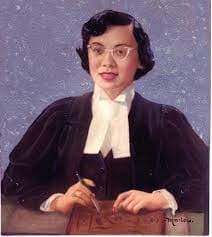
Maggie Gee was born on August 5, 1923, in Berkeley, California. Her family had come from China. Life was hard for them because of a tough time in America called the Great Depression. During this time, many people did not have much money or many jobs. But Maggie worked hard in school. She loved airplanes and dreamed of flying, even when she was young.
When World War II started, many countries were fighting. Maggie wanted to help. She joined a group called the Civil Air Patrol. This group helped watch the skies and support the country during the war.
In 1944, Maggie did something amazing. She became a WASP, which stands for Women's Airforce Service Pilot. She was one of the few Asian American women to become a WASP. Some people were unfair to her because of her race and because she was a woman. But Maggie did not give up. She showed everyone she could fly just as well as anyone else.
As a WASP, Maggie had important jobs. She flew planes to test how well they worked. She flew planes to carry soldiers and workers from place to place. She even flew planes that pulled targets in the sky. Other pilots used these targets for shooting practice. This helped soldiers get ready for the war. Maggie's work was very important, even though it was dangerous.
For many years, people did not think of the WASPs as real soldiers. This was not fair. The WASPs had worked hard and taken big risks, just like other members of the military. But it took a long time for the country to say thank you.
Finally, in 2010, something wonderful happened. Maggie and the other WASPs received a special award called the Congressional Gold Medal. This is one of the highest honors a person can get in the United States. It was the country's way of saying, "Thank you for your bravery and your service." Even though the award came late, it meant a lot to Maggie and the other WASPs.
Maggie did not stop helping others after the war. She spent much of her life working for fairness. She wanted everyone, no matter their race or gender, to have equal chances. She spoke up for civil rights. She worked to help her community. Many people were inspired by her strength and her story.
Maggie's legacy, or the mark she left on the world, is very special. She showed that women could be excellent pilots. She proved that people should be judged by their skills, not by their race or gender. Because of pioneers like Maggie, more women were able to become pilots in both the military and in regular jobs. Young women who want to fly airplanes or rockets often look up to her as an example of courage.
Maggie Gee kept helping her community even when she got older. She never stopped standing up for what was right. She passed away on February 1, 2013. But her story did not end there. People still remember her today. There are memorials and plaques that honor her and the other WASPs. These special markers help everyone remember the brave women who flew planes to help their country, even when it was hard to be recognized for their courage.